Chionodes phalacra
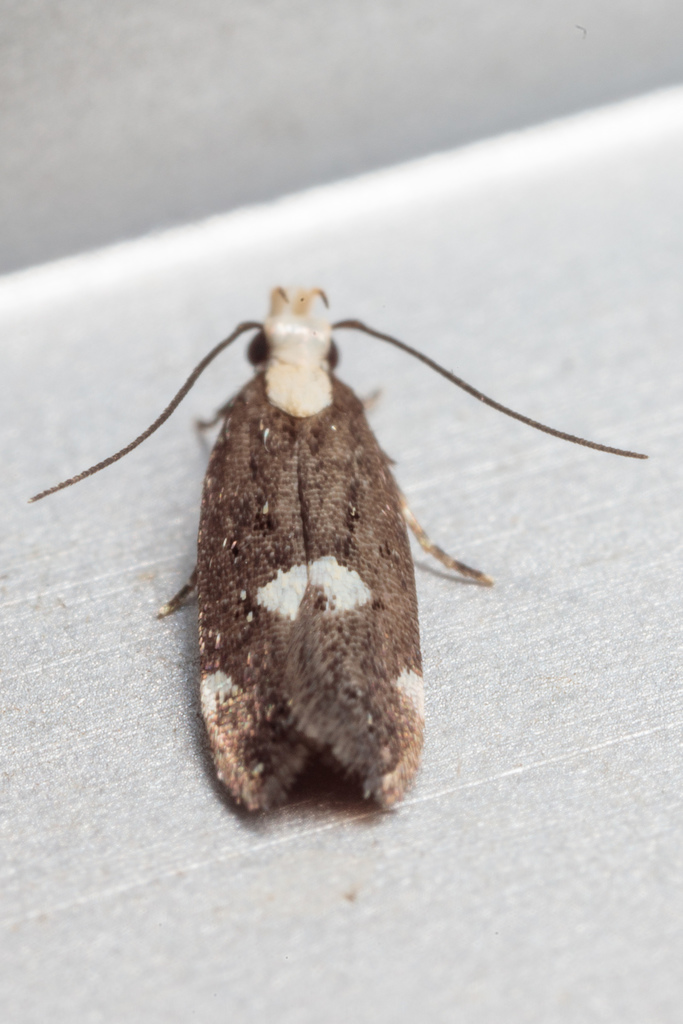
(c) Victor Engel, some rights reserved (CC BY) · licence
Family: Gelechiidae · Class: Insecta · Order: Lepidoptera
Chionodes phalacra is a California animal in the Gelechiidae family.
Chionodes phalacra is a small moth in the family Gelechiidae, a diverse group of microlepidoptera commonly known as twirler moths. Like other members of this family, C. phalacra likely has a wingspan ranging from 8 to 20 millimeters, though specific measurements for this species are not well documented in the literature. Adult moths typically display muted coloration patterns characteristic of gelechiids, with forewings that may show various shades of brown, gray, or ochre, often with subtle markings or scaling patterns that aid in species identification. The geographic range and distribution of Chionodes phalacra remain poorly documented in current taxonomic and ecological literature. The species appears to be part of the North American Chionodes fauna, a genus containing numerous species distributed across diverse habitats throughout the continent. However, specific locality records, county-level distributions, and range maps for C. phalacra are not readily available in major lepidopteran databases or field guides as of December 2025. Habitat requirements and ecological preferences for Chionodes phalacra are not well established in the scientific literature. Most Chionodes species are associated with specific host plants during their larval stage, and adults are typically found in habitats where these host plants occur. The genus includes species that utilize various plant families, including Asteraceae, Chenopodiaceae, and others, though the specific host plant associations for C. phalacra have not been documented in accessible sources. The life cycle and behavioral ecology of C. phalacra follow the general pattern of gelechiid moths. Adults likely emerge during specific seasonal periods, with timing dependent on local climate conditions and host plant phenology. Larvae presumably develop within or on host plant tissues, possibly as leaf miners, stem borers, or external feeders, which are common feeding strategies within the Gelechiidae. Adult moths are typically nocturnal or crepuscular, attracted to artificial lights, and may be collected using standard lepidopteran sampling methods including light traps and blacklight sheets. The conservation status of Chionodes phalacra is not currently assessed by major conservation organizations. The species does not appear on federal endangered species lists, state wildlife action plans, or IUCN Red List assessments as of December 2025. This absence from conservation databases may reflect either a stable population status or, more likely, insufficient data on the species' distribution, abundance, and ecological requirements. Many microlepidoptera remain poorly studied compared to larger, more conspicuous butterfly and moth species, creating significant knowledge gaps in our understanding of their conservation needs. The taxonomic status and systematic relationships of C. phalacra within the genus Chionodes may require further research using modern molecular techniques. Historical descriptions of Chionodes species often relied primarily on morphological characters, particularly wing patterns and genitalic structures, which can be variable within species or convergent between species. Comprehensive surveys targeting microlepidoptera in various habitats could help clarify the distribution, host associations, and conservation status of this and other poorly known gelechiid species.
Classification
Class: Insecta · Order: Lepidoptera · Family: Gelechiidae
Frequently asked questions
How is Chionodes phalacra classified?
Chionodes phalacra belongs to class Insecta, order Lepidoptera, family Gelechiidae.
What family does Chionodes phalacra belong to?
Chionodes phalacra is in the Gelechiidae family.
What is Chionodes phalacra?
Chionodes phalacra is a small moth in the family Gelechiidae, a diverse group of microlepidoptera commonly known as twirler moths.
Is Chionodes phalacra found in California?
Yes. Chionodes phalacra is recorded in California in The California Species Project's catalogue.
Related species
Other California species in the same genus, family, or bioregion.
Data from The California Species Project — 14,000+ California species with verified data from CNPS, CDFW, USFWS, and more.