Chlidonias niger
Black Tern
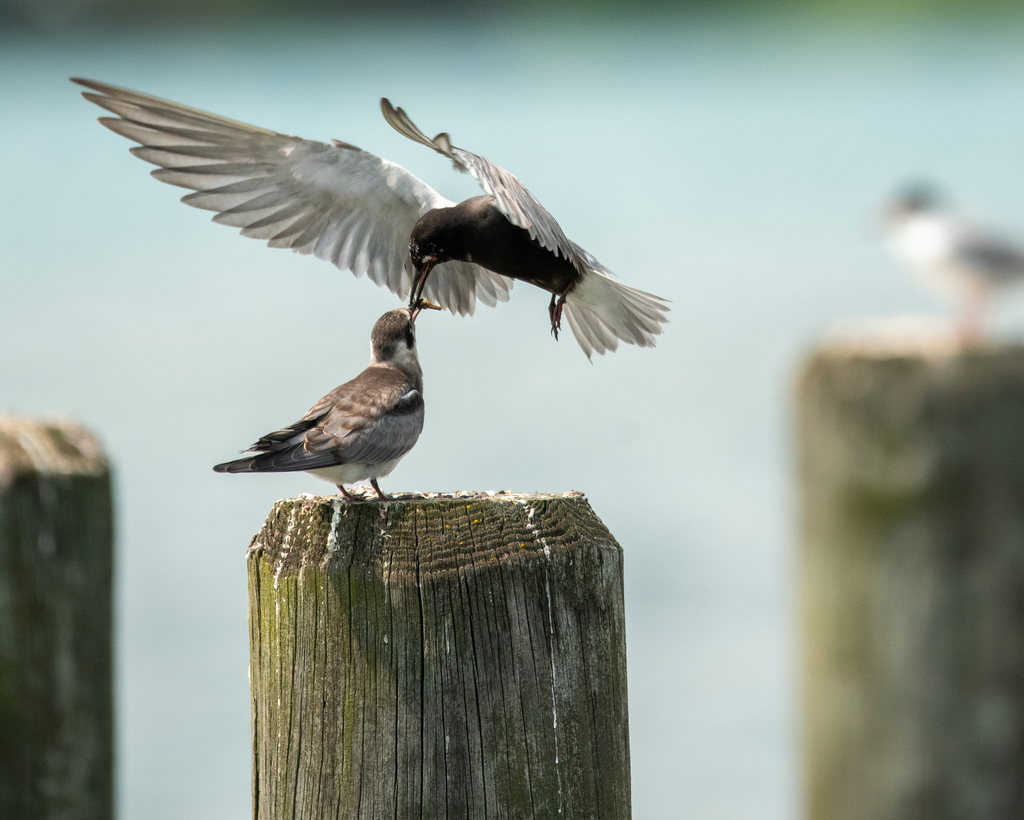
(c) Becca, some rights reserved (CC BY) · licence
Family: Laridae · Class: Aves · Order: Charadriiformes
Conservation status: G4G5 S2
Chlidonias niger (Black Tern) is a California animal in the Laridae family.
The Black Tern is a small, distinctive waterbird measuring 23 to 26 cm (9 to 10 inches) in length with a wingspan of 61 to 68 cm (24 to 27 inches). During breeding season, adults display distinctive black plumage on the head, neck, and underparts, contrasting sharply with dark gray wings and back. The bill is black and pointed, adapted for catching small fish and aquatic invertebrates. In winter plumage, the black coloration is replaced by white underparts with a distinctive dark ear patch and partial black cap. Juveniles resemble winter adults but with brownish mottling on the back and wings. Historically, Black Terns bred widely across California's Central Valley wetlands and northeastern plateau regions. The species has experienced severe range contraction, with current breeding populations primarily restricted to scattered locations in the Sacramento Valley, San Francisco Bay Area, and intermountain basins of northeastern California. Small breeding colonies persist at locations including the Suisun Marsh, San Pablo Bay, and select managed wetlands in the Central Valley. The species is considered extirpated from much of its former range in southern California. Black Terns require shallow freshwater or brackish marshes with emergent vegetation for nesting. Optimal breeding habitat includes water depths of 15 to 60 cm (6 to 24 inches) with abundant cattails, bulrushes, or sedges. Nests are typically constructed as floating platforms anchored to emergent vegetation or placed on mats of dead plant material. During migration and winter, the species utilizes a broader range of aquatic habitats including lakes, reservoirs, coastal bays, and agricultural flood fields. The species exhibits a semi-colonial nesting pattern, with breeding occurring from May through July. Females typically lay 2 to 3 olive-brown eggs marked with dark spots. Incubation lasts 20 to 22 days, with both parents sharing duties. Black Terns are opportunistic foragers, capturing small fish, aquatic insects, and crustaceans through surface dipping and shallow diving. The diet varies seasonally and includes dragonfly larvae, water boatmen, small minnows, and tadpoles. Adults are highly aerial, often hawking insects over water surfaces. While not federally listed, Black Terns are designated as a California Species of Special Concern due to significant population declines and habitat loss. The species' Global Rank of G4G5 indicates it is apparently secure to secure globally, but the California State Rank of S2 reflects imperiled status at the state level. Primary threats include wetland habitat loss and degradation, water diversions that alter marsh hydrology, and predation by introduced species. Agricultural conversion eliminated vast expanses of Central Valley wetlands that historically supported large breeding populations. Current conservation efforts focus on managing water levels in remaining wetlands and restoring degraded marsh habitats to support breeding colonies.
Classification
Class: Aves · Order: Charadriiformes · Family: Laridae
Conservation status
G4G5 S2
Frequently asked questions
How is Chlidonias niger classified?
Chlidonias niger belongs to class Aves, order Charadriiformes, family Laridae.
What family does Chlidonias niger belong to?
Chlidonias niger is in the Laridae family.
Is Chlidonias niger protected or of conservation concern?
Chlidonias niger carries the following status: G4G5 S2.
What is Chlidonias niger?
The Black Tern is a small, distinctive waterbird measuring 23 to 26 cm (9 to 10 inches) in length with a wingspan of 61 to 68 cm (24 to 27 inches).
Is Chlidonias niger found in California?
Yes. Chlidonias niger is recorded in California in The California Species Project's catalogue.
Related species
Other California species in the same genus, family, or bioregion.
Data from The California Species Project — 14,000+ California species with verified data from CNPS, CDFW, USFWS, and more.