Chloridea virescens
Tobacco Budworm Moth
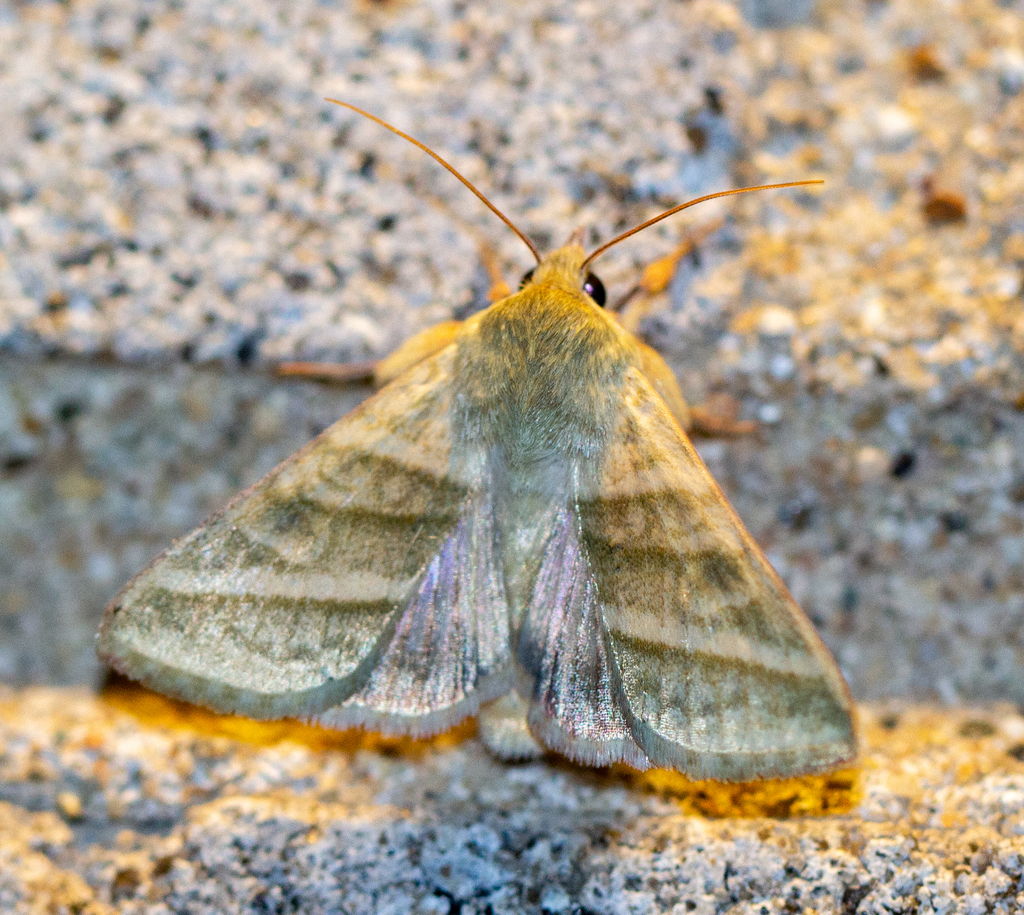
(c) threelark, some rights reserved (CC BY) · licence
Family: Noctuidae · Class: Insecta · Order: Lepidoptera
Chloridea virescens (Tobacco Budworm Moth) is a California animal in the Noctuidae family.
The tobacco budworm moth (Chloridea virescens) is a medium-sized noctuid moth with forewings measuring 16-20 mm in length and a wingspan of 32-40 mm. Adults display sexually dimorphic coloration: males have olive-green to brownish forewings with darker zigzag lines and pale hindwings with dark borders, while females are typically paler with cream to light brown forewings marked with similar patterns. Both sexes have feathery antennae, though males' are more pronounced. The hindwings are cream-colored with a distinctive dark marginal band. This species ranges from Maine and southern Ontario south to Florida, extending westward to Nebraska and Texas. The moth occurs throughout much of the eastern and central United States, with populations documented across the Great Plains and southeastern regions. In California, the species has been reported but is not considered established, likely representing occasional migrants or temporary introductions. Tobacco budworm moths inhabit agricultural areas, gardens, and disturbed habitats where host plants are abundant. Adults are active from late spring through fall, with peak flight periods varying by latitude. The species thrives in warm climates and can complete multiple generations per year in southern regions, while northern populations typically produce fewer broods. Larvae are polyphagous herbivores that feed primarily on plants in the nightshade family (Solanaceae), making them significant agricultural pests. The caterpillars are particularly damaging to tobacco crops, where first brood larvae consume flower buds and second brood larvae feed on flowers and developing seedpods. Beyond tobacco, larvae also attack tomatoes, peppers, cotton, soybeans, and various ornamental plants including ageratum, geraniums, and roses. Adult moths are nocturnal and feed on flower nectar using their coiled proboscis. Females deposit eggs singly on host plant surfaces, preferring flower buds and young leaves. Larvae undergo five instars over 18-25 days, depending on temperature. Mature caterpillars are 25-40 mm long with variable coloration ranging from green to brown or pink, often with longitudinal stripes. Pupation occurs in soil chambers 5-10 cm below the surface. In warmer regions, the species can complete 3-4 generations annually, while northern populations typically produce 1-2 broods per season. The tobacco budworm moth is not federally or state listed and is considered a common species throughout most of its range. However, it faces management pressure as an agricultural pest, with widespread use of insecticides and genetically modified crops affecting local populations. The species has developed resistance to various pesticides, including Bacillus thuringiensis toxins, making it a challenging pest to control. Climate change may expand its range northward and increase generation numbers in currently marginal areas. Unlike many native Lepidoptera, this species benefits from agricultural landscapes and human-modified environments where host plants are cultivated.
Classification
Class: Insecta · Order: Lepidoptera · Family: Noctuidae
Frequently asked questions
How is Chloridea virescens classified?
Chloridea virescens belongs to class Insecta, order Lepidoptera, family Noctuidae.
What family does Chloridea virescens belong to?
Chloridea virescens is in the Noctuidae family.
What is Chloridea virescens?
The tobacco budworm moth (Chloridea virescens) is a medium-sized noctuid moth with forewings measuring 16-20 mm in length and a wingspan of 32-40 mm.
Is Chloridea virescens found in California?
Yes. Chloridea virescens is recorded in California in The California Species Project's catalogue.
Related species
Other California species in the same genus, family, or bioregion.
Data from The California Species Project — 14,000+ California species with verified data from CNPS, CDFW, USFWS, and more.