Chlorosea banksaria
Bank's Emerald Moth
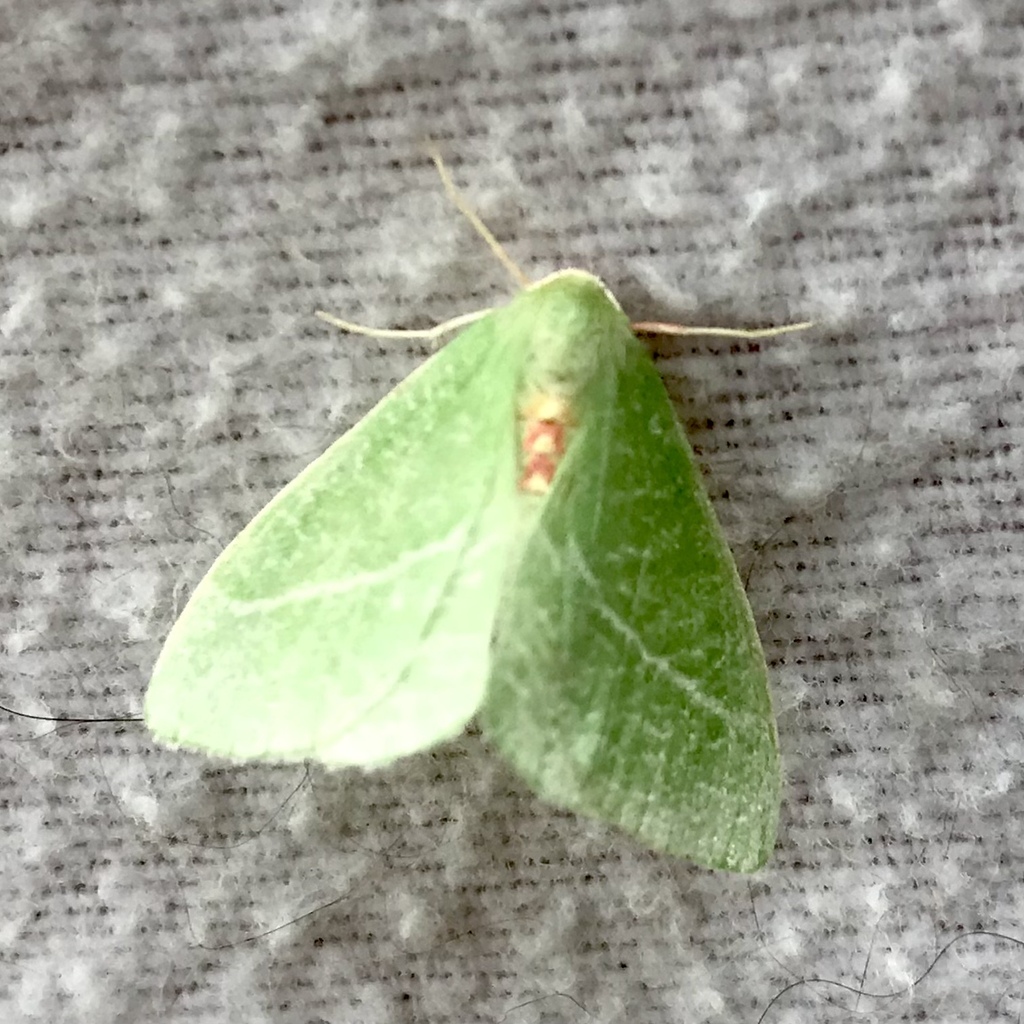
no rights reserved · CC0
Family: Geometridae · Class: Insecta · Order: Lepidoptera
Chlorosea banksaria (Bank's Emerald Moth) is a California animal in the Geometridae family.
Bank's Emerald Moth (Chlorosea banksaria) is a geometrid moth in the subfamily Geometrinae, first described by Sperry in 1944. This species belongs to the emerald moth group, characterized by their typically green coloration, though specific morphological details for this species remain poorly documented in the scientific literature. The species occurs in North America, with confirmed records from California and Oregon. In California, Bank's Emerald Moth has been documented in the San Francisco Bay Area, specifically in the San Bruno Mountains, where specimens were collected in June (Butterflies and Moths of North America). The species appears to have a limited distribution within the state, though comprehensive surveys may reveal additional localities. Habitat preferences for Chlorosea banksaria have not been extensively studied or documented. Based on collection localities in the San Bruno Mountains and similar emerald moth species in the genus, the species likely inhabits areas with diverse vegetation that can support its larval development. Many geometrid moths in this subfamily are associated with woodland and shrubland environments where their host plants occur. Ecological information for Bank's Emerald Moth remains largely undocumented. Like other members of the Geometridae family, larvae are likely leaf-feeders that develop through several instars before pupating. The June collection date suggests adult flight activity occurs during early summer months, though the full extent of the flight period is unknown. Host plant relationships have not been definitively established for this species, representing a significant gap in our understanding of its biology. Reproductive behavior and life cycle details are not well documented for Chlorosea banksaria. As with most geometrid moths, adults likely mate shortly after emergence, with females depositing eggs on or near suitable host plants. Development time from egg to adult and the number of generations per year remain unknown. Bank's Emerald Moth has no formal conservation status at federal or state levels. The species does not appear on any special concern lists, though this may reflect limited survey effort rather than actual population stability. The restricted known range in California, particularly the San Bruno Mountains locality, suggests the species may have a narrow distribution that could make it vulnerable to habitat loss or environmental changes. The limited scientific documentation for this species represents a common challenge in lepidopteran conservation, where many species remain poorly studied despite potential conservation needs. Systematic surveys and biological studies are needed to better understand the distribution, habitat requirements, and population status of Bank's Emerald Moth in California. Such research would be essential for developing appropriate management strategies if future assessments indicate conservation concern. Scientific documentation for this species remains limited. The information presented here is based on available sources including iNaturalist records and the Butterflies and Moths of North America database. If you have additional verified information about this species' biology, distribution, or ecology, please contact us to help improve this species account.
Classification
Class: Insecta · Order: Lepidoptera · Family: Geometridae
Frequently asked questions
How is Chlorosea banksaria classified?
Chlorosea banksaria belongs to class Insecta, order Lepidoptera, family Geometridae.
What family does Chlorosea banksaria belong to?
Chlorosea banksaria is in the Geometridae family.
What is Chlorosea banksaria?
Bank's Emerald Moth (Chlorosea banksaria) is a geometrid moth in the subfamily Geometrinae, first described by Sperry in 1944.
Is Chlorosea banksaria found in California?
Yes. Chlorosea banksaria is recorded in California in The California Species Project's catalogue.
Related species
Other California species in the same genus, family, or bioregion.
Data from The California Species Project — 14,000+ California species with verified data from CNPS, CDFW, USFWS, and more.