Chlorosea nevadaria
Nevada Chlorosea
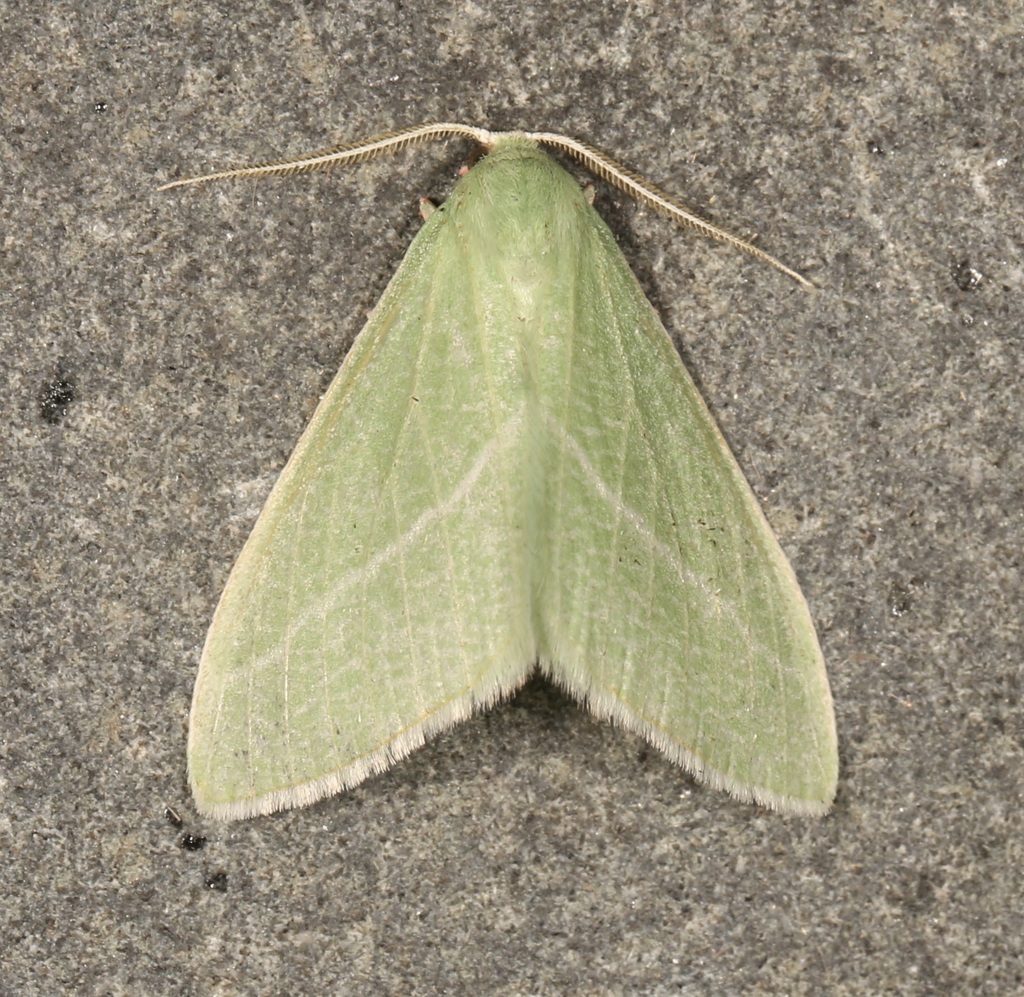
(c) Laura Gaudette, some rights reserved (CC BY) · licence
Family: Geometridae · Class: Insecta · Order: Lepidoptera
Chlorosea nevadaria (Nevada Chlorosea) is a California animal in the Geometridae family.
The Nevada chlorosea is a geometrid moth native to western North America. Adult moths display the typical geometrid body plan with relatively broad wings and a slender abdomen. The forewings are pale green to gray-green, often with subtle darker markings, while the hindwings are similarly colored but typically lighter. The wingspan measures approximately 25-30 mm across. Like other members of the family Geometridae, adults rest with wings spread horizontally rather than folded tent-like over the body. This species occurs throughout the Rocky Mountains and Great Basin from the southern interior of British Columbia southward through Idaho, Wyoming, Colorado, Utah, and Nevada to northern Arizona and New Mexico. The distribution is primarily montane, with most populations occurring at elevations between 5,000 and 9,000 feet. Records from lepidopterist surveys document the species from various locations including Bryce Canyon National Park in Utah, Deadwood Campground in Boise County, Idaho, and Casino Creek Campground in Custer County, Idaho (Lepidopterists' Society News 1992, 2019). Nevada chlorosea inhabits montane forest and woodland environments within its elevation range. The species appears to favor areas with mixed coniferous forests, including sites with Pinus, Abies, and Pseudotsuga species. Specific microhabitat preferences and host plant relationships have not been thoroughly documented in the scientific literature, though the species' distribution suggests an association with cooler, higher elevation forest communities characteristic of the Intermountain West. Adult flight period extends from late June through August, based on collection records from multiple states. Specimens have been recorded from early July through mid-August in Idaho, with peak activity appearing to occur in July (Lepidopterists' Society News 2019). Adults are attracted to artificial lights, as evidenced by UV light trap collections. Like other Geometridae, larvae likely feed on the foliage of woody plants, though specific host plant relationships remain undocumented. The species presumably overwinters in the egg or early larval stage, emerging as adults during the brief montane summer season. Nevada chlorosea currently holds no federal or state conservation listing status. The species appears to maintain stable populations across much of its range, with consistent records reported from lepidopterist surveys over several decades. However, like many montane forest species, Nevada chlorosea may face long-term challenges from climate change as warming temperatures potentially shift suitable habitat to higher elevations. Forest management practices and wildfire patterns within its range could also influence population dynamics, though specific population trends and conservation needs have not been formally assessed. The species' relatively broad geographic distribution across multiple states and provinces suggests moderate resilience to localized habitat changes.
Classification
Class: Insecta · Order: Lepidoptera · Family: Geometridae
Frequently asked questions
How is Chlorosea nevadaria classified?
Chlorosea nevadaria belongs to class Insecta, order Lepidoptera, family Geometridae.
What family does Chlorosea nevadaria belong to?
Chlorosea nevadaria is in the Geometridae family.
What is Chlorosea nevadaria?
The Nevada chlorosea is a geometrid moth native to western North America.
Is Chlorosea nevadaria found in California?
Yes. Chlorosea nevadaria is recorded in California in The California Species Project's catalogue.
Related species
Other California species in the same genus, family, or bioregion.
Data from The California Species Project — 14,000+ California species with verified data from CNPS, CDFW, USFWS, and more.