Chlorostrymon simaethis
Silver-banded Hairstreak
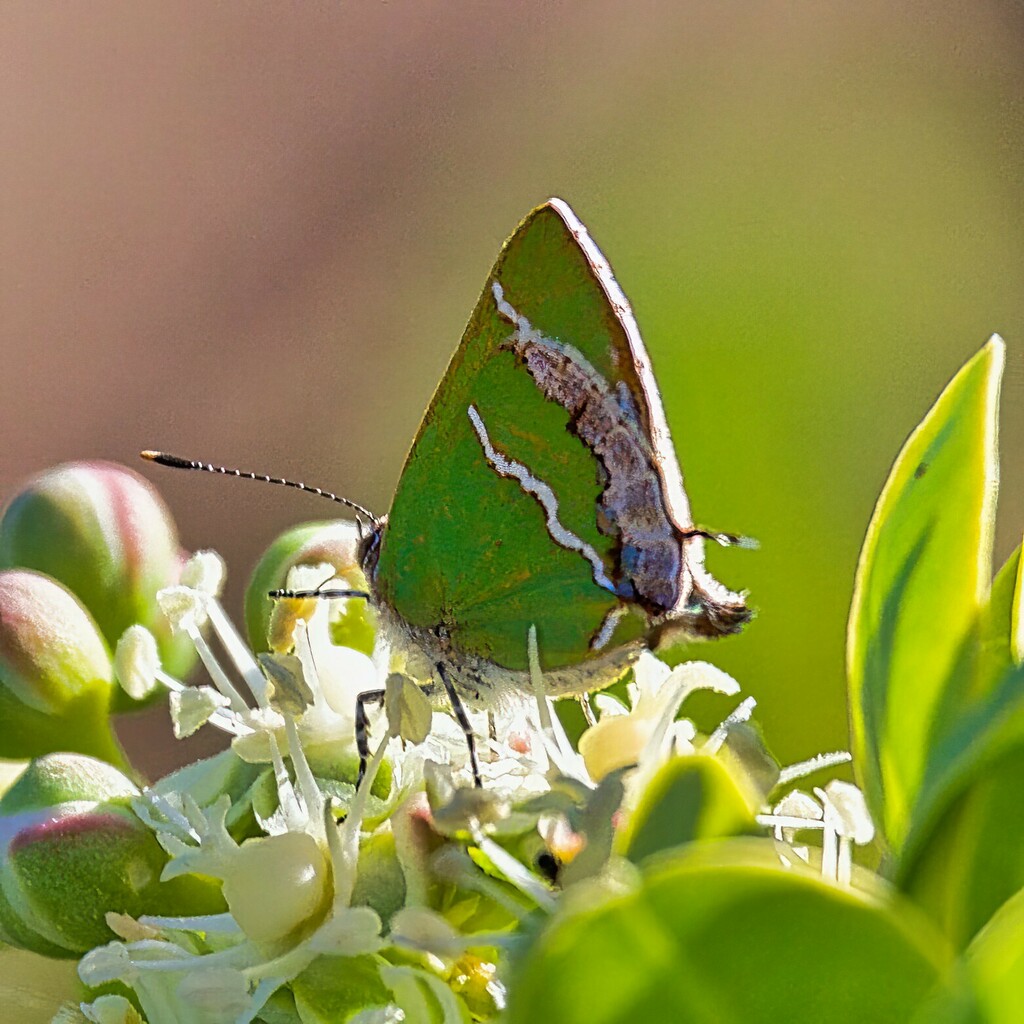
(c) Bill Levine, some rights reserved (CC BY) · licence
Family: Lycaenidae · Class: Insecta · Order: Lepidoptera
Chlorostrymon simaethis (Silver-banded Hairstreak) is a California animal in the Lycaenidae family.
The Silver-banded Hairstreak (Chlorostrymon simaethis) is a small butterfly in the family Lycaenidae, characterized by its distinctive wing pattern and wide neotropical distribution. Adults measure approximately 25-30 mm (1.0-1.2 inches) in wingspan. The dorsal wing surfaces are dark brown to blackish, while the ventral surfaces display a complex pattern of white, silver, and dark bands that give this species its common name. The hindwings feature thin tails typical of hairstreak butterflies, along with small eyespots near the wing margins that may deflect predator attacks away from vital body parts. The Silver-banded Hairstreak has one of the most extensive ranges among New World lycaenids, occurring from Argentina north through Central America and Mexico to southern Arizona, South Texas, southern Florida, and the Florida Keys. In the United States, this species represents the northern limit of its distribution and is considered a tropical butterfly at the edge of its range. The species exhibits considerable geographic variation across this broad distribution, with populations in different regions showing variation in size, coloration, and host plant associations. This species inhabits a variety of warm, subtropical to tropical environments including hammocks, forest edges, gardens, and disturbed areas where host plants are present. In Florida, populations occur primarily in tropical hardwood hammocks and residential areas with appropriate vegetation. The species shows a preference for areas with partial shade and protection from strong winds, typical habitat requirements for many tropical lycaenids. Silver-banded Hairstreak larvae feed on plants in the soapberry family (Sapindaceae). In Florida, the primary host plant is balloon vine (Cardiospermum halicacabum), a climbing herbaceous vine. Throughout other parts of the range, many other Sapindaceae species serve as hosts, reflecting the butterfly's ability to adapt to locally available resources. Adults are active during daylight hours and feed on nectar from various flowering plants. Males establish territories and engage in perching behavior, typically selecting sunny spots along forest edges or in clearings. The species exhibits multiple generations per year in tropical areas, with breeding activity closely tied to rainfall patterns and host plant availability. The Silver-banded Hairstreak is not federally listed or considered a species of special concern in the United States. However, populations at the northern edge of the range, particularly in Florida and Texas, may face pressure from habitat loss due to urban development and changes in land use patterns. Climate change could potentially affect the species' distribution, possibly allowing range expansion northward while threatening populations in areas experiencing increased temperature extremes or altered precipitation patterns. The species' broad host plant range and adaptability to disturbed habitats suggest relatively stable populations throughout most of its range, though local populations may fluctuate based on habitat availability and weather conditions.
Classification
Class: Insecta · Order: Lepidoptera · Family: Lycaenidae
Frequently asked questions
How is Chlorostrymon simaethis classified?
Chlorostrymon simaethis belongs to class Insecta, order Lepidoptera, family Lycaenidae.
What family does Chlorostrymon simaethis belong to?
Chlorostrymon simaethis is in the Lycaenidae family.
What is Chlorostrymon simaethis?
The Silver-banded Hairstreak (Chlorostrymon simaethis) is a small butterfly in the family Lycaenidae, characterized by its distinctive wing pattern and wide neotropical distribution.
Is Chlorostrymon simaethis found in California?
Yes. Chlorostrymon simaethis is recorded in California in The California Species Project's catalogue.
Related species
Other California species in the same genus, family, or bioregion.
Data from The California Species Project — 14,000+ California species with verified data from CNPS, CDFW, USFWS, and more.