Chlosyne acastus
Sagebrush Checkerspot
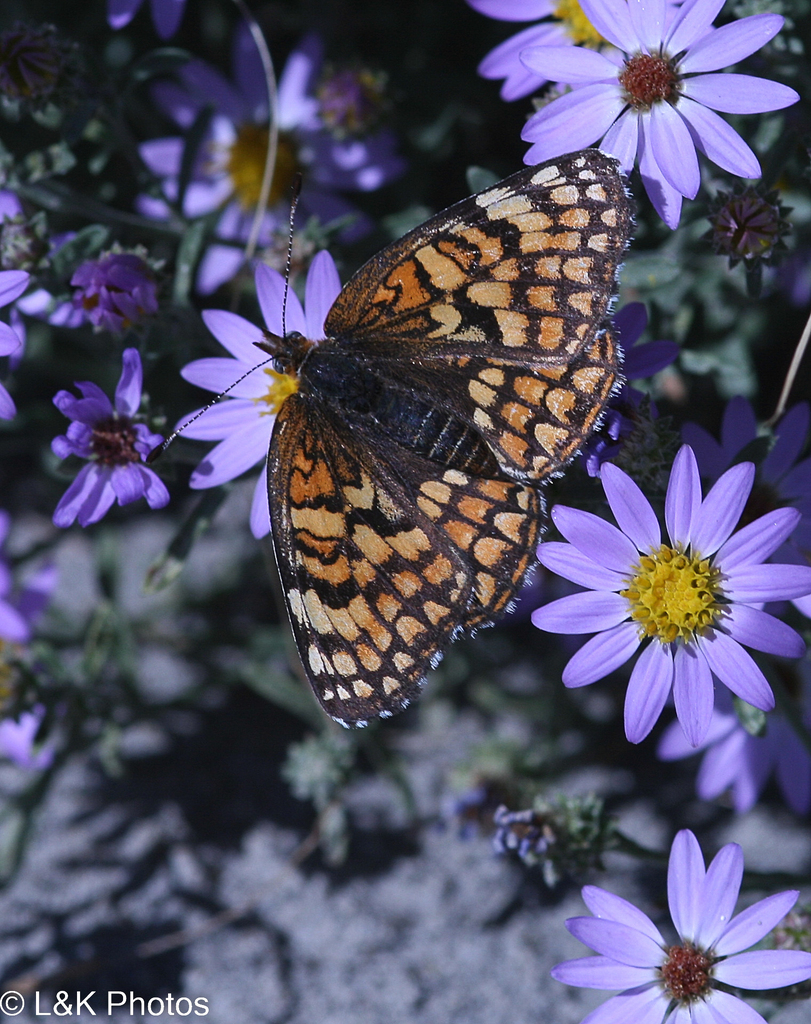
no rights reserved · CC0
Family: Nymphalidae · Class: Insecta · Order: Lepidoptera
Chlosyne acastus (Sagebrush Checkerspot) is a California animal in the Nymphalidae family.
The Sagebrush Checkerspot is a medium-sized butterfly with distinctive orange, black, and white checkered wing patterns typical of the Nymphalidae family. Adults display orange-brown forewings with black markings and white spots arranged in a checkerboard pattern. The hindwings feature similar coloration with prominent white spotting along the margins. Males are typically smaller than females, with wingspans ranging from 32 to 38 mm (1.3 to 1.5 inches) for males and 35 to 42 mm (1.4 to 1.7 inches) for females. The undersides of the wings are lighter, with cream and pale orange hues that provide camouflage when the butterfly rests with wings closed. The species ranges from eastern North Dakota west to eastern Washington, extending south to New Mexico, southern Arizona, and eastern California. In California, populations occur primarily in the eastern regions, particularly in areas with suitable sagebrush habitat. The distribution follows the Great Basin and intermountain regions where appropriate host plants and habitat conditions exist. Sagebrush Checkerspots inhabit arid and semi-arid environments characterized by sagebrush scrub communities. These butterflies are typically found at elevations ranging from 1,200 to 2,400 meters (4,000 to 8,000 feet) in areas dominated by their primary host plants. The species occurs in open sagebrush flats, hillsides, and meadow edges where rabbitbrush and asters grow in association with big sagebrush (Artemisia tridentata). Adults prefer areas with scattered shrubs that provide both nectar sources and shelter from wind. Larvae feed exclusively on plants in the sunflower family (Asteraceae), with rabbitbrush (Chrysothamnus viscidiflorus) and aster (Machaeranthera) serving as primary host plants. Adult females lay clusters of yellow eggs on the underside of host plant leaves, typically in late spring or early summer. Caterpillars are black with orange spots and white tubercles, developing through five instars before pupating. The species is univoltine in most locations, producing one generation per year. Adults are active from May through August, depending on elevation and local climate conditions. Males patrol territories around host plants and nectar sources, engaging in courtship flights with receptive females. The Sagebrush Checkerspot currently lacks federal or state conservation listing status. However, populations may face pressure from habitat loss due to agricultural conversion, urban development, and invasive plant species that compete with native host plants. Livestock grazing and altered fire regimes can also impact sagebrush communities. Climate change poses potential long-term threats through shifts in precipitation patterns and temperature ranges that may affect the distribution of suitable habitat. Conservation efforts focus on maintaining intact sagebrush ecosystems and managing invasive species that threaten native plant communities essential for the species' survival.
Classification
Class: Insecta · Order: Lepidoptera · Family: Nymphalidae
Frequently asked questions
How is Chlosyne acastus classified?
Chlosyne acastus belongs to class Insecta, order Lepidoptera, family Nymphalidae.
What family does Chlosyne acastus belong to?
Chlosyne acastus is in the Nymphalidae family.
What is Chlosyne acastus?
The Sagebrush Checkerspot is a medium-sized butterfly with distinctive orange, black, and white checkered wing patterns typical of the Nymphalidae family.
Is Chlosyne acastus found in California?
Yes. Chlosyne acastus is recorded in California in The California Species Project's catalogue.
Related species
Other California species in the same genus, family, or bioregion.
Data from The California Species Project — 14,000+ California species with verified data from CNPS, CDFW, USFWS, and more.