Chlosyne californica
California Patch
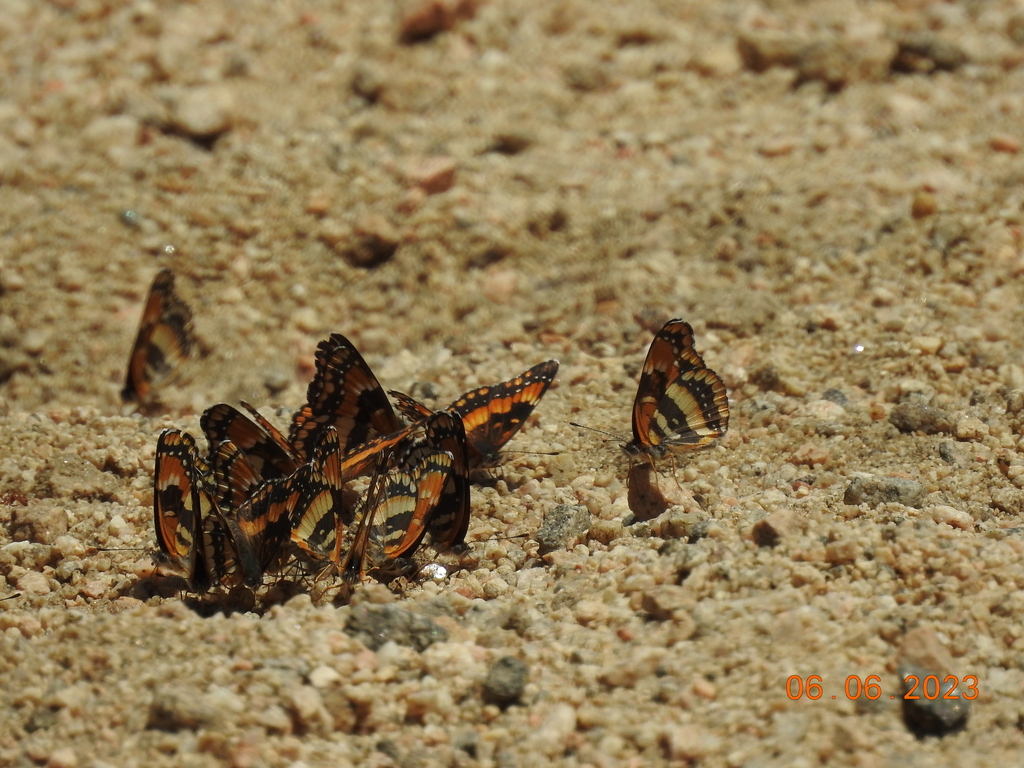
(c) Diana, some rights reserved (CC BY) · licence
Family: Nymphalidae · Class: Insecta · Order: Lepidoptera
Chlosyne californica (California Patch) is a California animal in the Nymphalidae family.
The California patch (Chlosyne californica) is a small to medium-sized butterfly in the family Nymphalidae, subfamily Melitaeinae. Adults have a wingspan of approximately 25 to 38 mm (1.0 to 1.5 inches). The dorsal wing surfaces display a checkered pattern of orange and black markings typical of patch butterflies, with distinctive white spots along the wing margins. The ventral surfaces are lighter, showing cream to pale orange coloration with black markings and white spotting that provides camouflage when the butterfly rests with wings closed. Males and females exhibit similar coloration patterns, though females are typically slightly larger. The California patch occurs in southern Nevada south through southwestern Arizona and southeastern California, extending into Baja California and Sonora, Mexico. Within California, the species is found primarily in the southeastern desert regions, including areas of the Sonoran and Mojave deserts. The distribution corresponds closely with that of its host plant, limiting the butterfly's range to specific desert habitats where suitable vegetation occurs. This species inhabits desert washes, canyon bottoms, and rocky slopes where its obligate host plant grows. The California patch is entirely dependent on desert sunflower (Viguiera deltoidea var. parishii) in the sunflower family (Asteraceae). Adults are typically found at elevations ranging from sea level to approximately 1,200 meters (3,900 feet) in areas with scattered desert vegetation. The habitat is characterized by sparse shrubland and desert scrub communities, often in areas that receive seasonal moisture from winter rains or summer monsoons. Adult California patches are active during warmer months, typically from March through October, with peak activity occurring during spring and fall when temperatures are moderate and host plants are most vigorous. Males engage in patrolling behavior, flying low over suitable habitat in search of females. Mating occurs near host plants, where females subsequently deposit eggs on the leaves and flower heads of desert sunflower. Larvae feed exclusively on the host plant, developing through several instars before pupating. The species likely produces multiple generations per year when conditions are favorable, with development synchronized to host plant availability and seasonal moisture patterns. The California patch does not currently hold federal or state conservation status listings. Population trends are not well documented, but the species' distribution appears stable within its specialized habitat range. Primary conservation concerns include habitat loss from urban development, particularly in desert areas of California and Arizona, and potential impacts from climate change affecting precipitation patterns and host plant distribution. The butterfly's narrow host plant specialization makes it vulnerable to factors affecting desert sunflower populations, including drought, invasive plant species, and habitat fragmentation. Long-term monitoring would be beneficial to assess population stability and habitat quality throughout the species' range.
Classification
Class: Insecta · Order: Lepidoptera · Family: Nymphalidae
Frequently asked questions
How is Chlosyne californica classified?
Chlosyne californica belongs to class Insecta, order Lepidoptera, family Nymphalidae.
What family does Chlosyne californica belong to?
Chlosyne californica is in the Nymphalidae family.
What is Chlosyne californica?
The California patch (Chlosyne californica) is a small to medium-sized butterfly in the family Nymphalidae, subfamily Melitaeinae.
Is Chlosyne californica found in California?
Yes. Chlosyne californica is recorded in California in The California Species Project's catalogue.
Related species
Other California species in the same genus, family, or bioregion.
Data from The California Species Project — 14,000+ California species with verified data from CNPS, CDFW, USFWS, and more.