Chlosyne hoffmanni
Hoffmann's Checkerspot
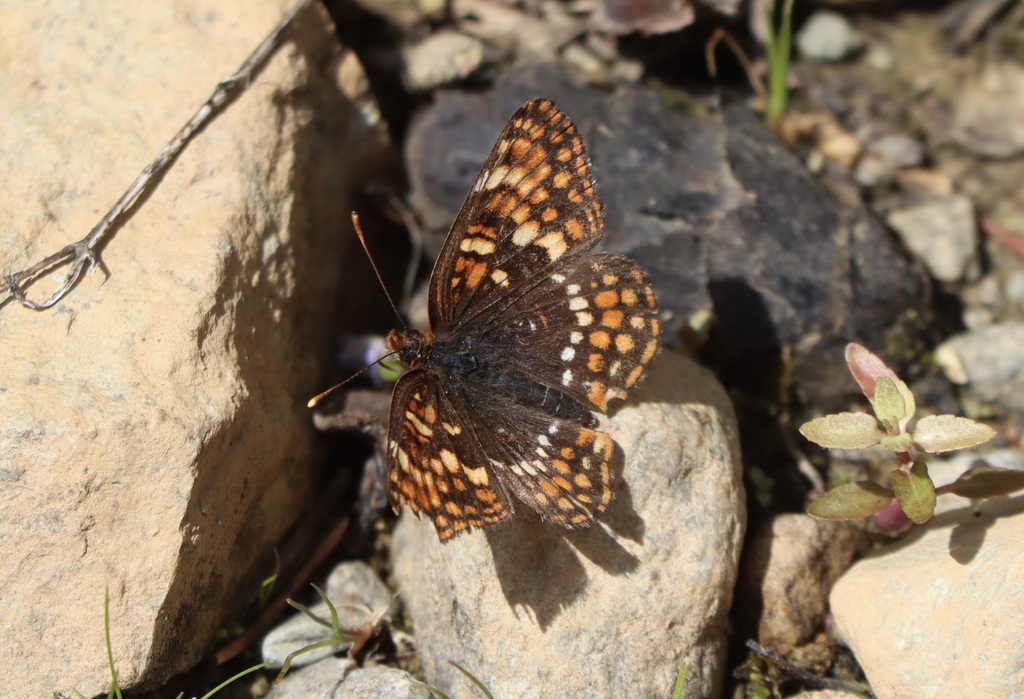
no rights reserved · CC0
Family: Nymphalidae · Class: Insecta · Order: Lepidoptera
Chlosyne hoffmanni (Hoffmann's Checkerspot) is a California animal in the Nymphalidae family.
Hoffmann's checkerspot is a medium-sized butterfly with a wingspan ranging from 32 to 44 millimeters (1.3 to 1.7 inches). The dorsal wing surfaces display a distinctive checkerboard pattern of orange, black, and white markings that gives the species its common name. The forewings feature orange patches bordered by black lines, with white spots scattered throughout the darker areas. The hindwings exhibit similar coloration but with more pronounced white spotting. The ventral surfaces are lighter, with cream and pale orange coloration and reduced dark markings. Males are typically smaller than females and may display slightly more vibrant coloration. Hoffmann's checkerspot ranges from British Columbia south through the mountains to Tulare County, California, in the Sierra Nevada. The species exhibits a patchy distribution throughout this range, occurring primarily in montane environments. In California, populations are documented from the northern Sierra Nevada southward, with the southernmost known populations in Tulare County representing the species' range limit. This butterfly inhabits montane meadows, forest openings, and woodland edges at elevations typically ranging from 1,200 to 2,400 meters (3,900 to 7,900 feet). The species favors areas with abundant flowering plants and nearby stands of its host plants. Hoffmann's checkerspot requires habitats that provide both nectar sources for adults and suitable conditions for larval development. The butterfly is often found in areas with partial shade and protection from strong winds, such as meadow edges adjacent to coniferous forests. Adults are active from late spring through summer, with peak flight periods varying by elevation and latitude. The species exhibits a single generation per year in most locations. Mating occurs during the flight period, with females seeking appropriate host plants for oviposition. Larvae feed exclusively on various asters (Asteraceae family), including species such as Symphyotrichum and Eurybia. The caterpillars develop through multiple instars before pupating, with the timing of development synchronized with host plant availability and seasonal conditions. Adults feed on nectar from a variety of flowering plants, including their host species and other members of the sunflower family. Hoffmann's checkerspot faces conservation challenges related to habitat fragmentation and climate change impacts on montane ecosystems. The species' dependence on specific host plants and elevation zones makes it vulnerable to environmental changes. Habitat loss from development, logging, and recreational activities poses ongoing threats to local populations. Climate warming may force populations to higher elevations, potentially reducing available habitat. Fire suppression has altered natural fire regimes in some areas, affecting meadow habitats and plant community composition. The species' patchy distribution and relatively small population sizes increase vulnerability to local extinctions. While not currently listed under federal or state endangered species acts, monitoring of population trends and habitat conditions is important for long-term conservation of this montane specialist.
Classification
Class: Insecta · Order: Lepidoptera · Family: Nymphalidae
Frequently asked questions
How is Chlosyne hoffmanni classified?
Chlosyne hoffmanni belongs to class Insecta, order Lepidoptera, family Nymphalidae.
What family does Chlosyne hoffmanni belong to?
Chlosyne hoffmanni is in the Nymphalidae family.
What is Chlosyne hoffmanni?
Hoffmann's checkerspot is a medium-sized butterfly with a wingspan ranging from 32 to 44 millimeters (1.3 to 1.7 inches).
Is Chlosyne hoffmanni found in California?
Yes. Chlosyne hoffmanni is recorded in California in The California Species Project's catalogue.
Related species
Other California species in the same genus, family, or bioregion.
Data from The California Species Project — 14,000+ California species with verified data from CNPS, CDFW, USFWS, and more.