Chlosyne lacinia
Bordered Patch
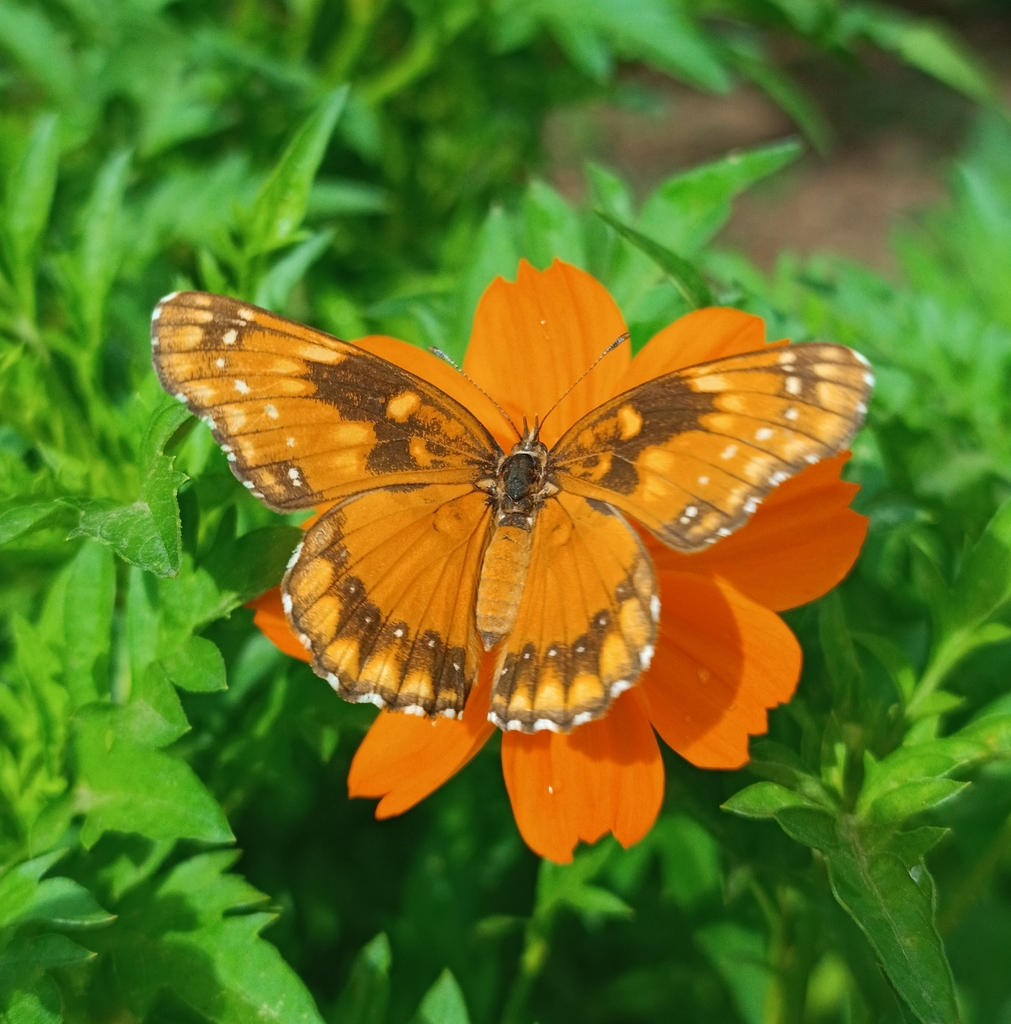
(c) Daniel Galindo, some rights reserved (CC BY) · licence
Family: Nymphalidae · Class: Insecta · Order: Lepidoptera
Chlosyne lacinia (Bordered Patch) is a California animal in the Nymphalidae family.
The Bordered Patch (Chlosyne lacinia) is a medium-sized butterfly in the brush-footed butterfly family Nymphalidae. Adults display a wingspan of 32 to 51 mm (1.3 to 2.0 inches), with distinctive black and orange patterning that varies between sexes and seasons. The forewings feature orange patches bordered by black lines and spots, while the hindwings show alternating bands of orange and black. The ventral surface displays a pale orange to cream coloration with intricate black markings and white spots along the wing margins. Males typically exhibit brighter orange coloration than females, and spring forms tend to be smaller and more intensely colored than summer generations. The Bordered Patch ranges from Argentina north through Mexico to Texas and southeastern New Mexico, extending west through Arizona to southern California and north to southeastern Nevada. The species occurs as a casual migrant to Colorado, Nebraska, and Kansas, with rare records from western Missouri. In California, populations are primarily found in the southern counties, including Imperial, Riverside, San Bernardino, and occasionally Los Angeles and Orange counties. The species demonstrates considerable seasonal movement, with populations expanding northward during favorable conditions. This butterfly inhabits open, sunny areas including desert washes, disturbed ground, agricultural edges, roadsides, and urban gardens. The species thrives in areas with abundant host plants and nectar sources, typically at elevations from sea level to approximately 1,500 meters (4,900 feet). Bordered Patches prefer areas with some moisture availability, often concentrating around irrigation ditches, streams, or other water sources in arid regions. Bordered Patches are multivoltine, producing multiple generations per year in favorable climates. Adults are active year-round in southern California and Arizona, with peak abundance during warmer months. Females deposit clusters of 20 to 100 pale yellow eggs on the undersides of host plant leaves. Larvae are gregarious in early instars, feeding together in silk webbing before dispersing as they mature. The caterpillars are black with white spots and orange-based spines, reaching approximately 25 mm in length when fully grown. Pupation occurs in a brown chrysalis attached to host plants or nearby structures. Host plants include various species in the sunflower family (Asteraceae), particularly sunflowers (Helianthus species), giant ragweed (Ambrosia trifida), crownbeard (Verbesina species), and cockleburs (Xanthium species). Adults nectar on a wide variety of flowering plants, showing particular preference for composite flowers, lantana, and pentas. The Bordered Patch is not federally or state listed and appears to maintain stable populations throughout most of its range. However, local populations may be affected by habitat loss due to urban development and agricultural intensification. The species benefits from its ability to utilize disturbed habitats and weedy host plants, which has likely helped maintain population stability. Climate change may affect the species' northern range limits and seasonal movement patterns, though the full implications remain uncertain.
Classification
Class: Insecta · Order: Lepidoptera · Family: Nymphalidae
Frequently asked questions
How is Chlosyne lacinia classified?
Chlosyne lacinia belongs to class Insecta, order Lepidoptera, family Nymphalidae.
What family does Chlosyne lacinia belong to?
Chlosyne lacinia is in the Nymphalidae family.
What is Chlosyne lacinia?
The Bordered Patch (Chlosyne lacinia) is a medium-sized butterfly in the brush-footed butterfly family Nymphalidae.
Is Chlosyne lacinia found in California?
Yes. Chlosyne lacinia is recorded in California in The California Species Project's catalogue.
Related species
Other California species in the same genus, family, or bioregion.
Data from The California Species Project — 14,000+ California species with verified data from CNPS, CDFW, USFWS, and more.