Chlosyne leanira elegans
Oso Flaco Patch Butterfly
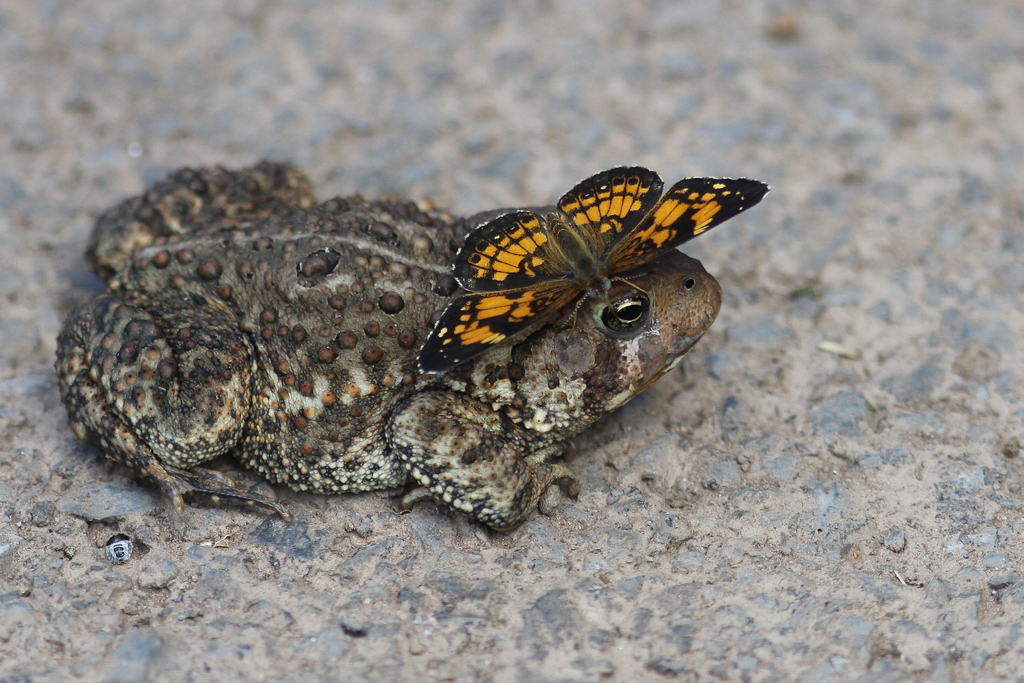
no rights reserved · CC0
Family: Nymphalidae · Class: Insecta · Order: Lepidoptera
Conservation status: G4G5T1T2 S1S2
Chlosyne leanira elegans (Oso Flaco Patch Butterfly) is a California animal in the Nymphalidae family.
The Oso Flaco Patch Butterfly (Chlosyne leanira elegans) is a subspecies of the Leanira Checkerspot, distinguished by its distinctive orange and black checkered wing pattern with white spotting. Adults have a wingspan of approximately 32-38 mm (1.3-1.5 inches). The dorsal wing surfaces display bright orange patches separated by black lines forming a checkerboard pattern, while the ventral surfaces are lighter with more prominent white markings. Males tend to be slightly smaller and more vibrant in coloration than females. This subspecies is endemic to a very restricted range along the central California coast, specifically in the Oso Flaco Lake area of San Luis Obispo County. The population is centered around the Oceano Dunes State Vehicular Recreation Area and adjacent lands near Pismo Beach. Historical records indicate the subspecies once occurred more broadly in coastal dune systems, but current distribution is limited to a few square kilometers of suitable habitat. Oso Flaco Patch Butterflies inhabit coastal dune scrub and adjacent freshwater marsh edges. The species requires areas with native vegetation communities that include both larval host plants and adult nectar sources. These habitats are characterized by sandy soils, moderate salinity influence from ocean proximity, and specific plant associations adapted to coastal conditions. The butterflies typically occur at elevations from sea level to approximately 100 meters (330 feet). Adults are active from March through October, with peak flight periods occurring in spring and early fall. Males establish territories and engage in patrolling behavior to locate females. Females deposit eggs in clusters on host plant leaves, and larvae develop through five instars before pupating. The species appears to have multiple broods per year when conditions are favorable. Adults feed on nectar from various native flowering plants, while larvae are specialized feeders on specific host plants in the coastal dune community. The Oso Flaco Patch Butterfly has a Global/State Rank of G4G5T1T2 S1S2, indicating the subspecies is critically imperiled in California despite the species as a whole being relatively secure globally. The extremely limited range makes this subspecies vulnerable to habitat loss and degradation. Primary threats include coastal development, recreational vehicle use in dune areas, invasion by non-native plants, and habitat fragmentation. Climate change poses additional risks through altered precipitation patterns and increased storm intensity affecting coastal dune systems. The small population size increases vulnerability to stochastic events and genetic bottlenecks. Conservation efforts focus on habitat protection and restoration within the Oceano Dunes complex, though the species lacks formal state or federal listing status. Monitoring programs track population trends and habitat conditions to inform management decisions for this rare coastal endemic.
Classification
Class: Insecta · Order: Lepidoptera · Family: Nymphalidae
Conservation status
G4G5T1T2 S1S2
Frequently asked questions
How is Chlosyne leanira elegans classified?
Chlosyne leanira elegans belongs to class Insecta, order Lepidoptera, family Nymphalidae.
What family does Chlosyne leanira elegans belong to?
Chlosyne leanira elegans is in the Nymphalidae family.
Is Chlosyne leanira elegans protected or of conservation concern?
Chlosyne leanira elegans carries the following status: G4G5T1T2 S1S2.
What is Chlosyne leanira elegans?
The Oso Flaco Patch Butterfly (Chlosyne leanira elegans) is a subspecies of the Leanira Checkerspot, distinguished by its distinctive orange and black checkered wing pattern with white spotting.
Is Chlosyne leanira elegans found in California?
Yes. Chlosyne leanira elegans is recorded in California in The California Species Project's catalogue.
Related species
Other California species in the same genus, family, or bioregion.
Data from The California Species Project — 14,000+ California species with verified data from CNPS, CDFW, USFWS, and more.