Chlosyne palla
Northern Checkerspot
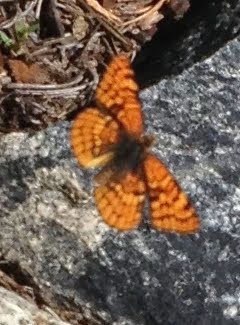
(c) 101595408250610106310, some rights reserved (CC BY) · licence
Family: Nymphalidae · Class: Insecta · Order: Lepidoptera
Chlosyne palla (Northern Checkerspot) is a California animal in the Nymphalidae family.
The Northern Checkerspot is a medium-sized butterfly with a wingspan measuring 38 to 51 mm (1.5 to 2.0 inches). The dorsal wing surfaces display a distinctive checkerboard pattern of orange, black, and cream-colored patches, with the forewings showing prominent black borders and white spotting along the margins. Males typically exhibit brighter orange coloration than females, while females tend to be larger with more subdued tones. The ventral wing surfaces are paler, with a cream to yellowish base color marked by black lines and orange patches. The species can be distinguished from similar checkerspots by its specific wing pattern arrangement and the presence of white marginal spots on the hindwings. The Northern Checkerspot ranges from southern British Columbia and Alberta south to southern California, extending through the Rocky Mountains to Utah and Colorado. In California, the species occurs primarily in the northern and eastern portions of the state, including the Cascade Range, Sierra Nevada, and northeastern plateau regions. Populations are documented from Siskiyou, Modoc, Lassen, and Plumas counties, with scattered occurrences in adjacent mountain areas at appropriate elevations. This species inhabits open meadows, grasslands, and woodland clearings at elevations ranging from 1,200 to 3,000 meters (4,000 to 10,000 feet). The Northern Checkerspot requires areas with abundant nectar sources and suitable host plants, typically favoring sites with moderate moisture and partial sun exposure. Adults are commonly found in mountain meadows, forest edges, and riparian corridors where their larval host plants occur naturally. Adult Northern Checkerspots are active from May through August, with peak flight periods varying by elevation and local climate conditions. Males engage in hilltopping behavior, establishing territories on elevated sites to locate mates. Females deposit eggs in clusters on the undersides of host plant leaves, primarily goldenrod (Solidago species), rabbitbrush (Chrysothamnus species), and various asters (Asteraceae family). Larvae feed gregariously in early instars before becoming solitary in later stages. The species overwinters as partially grown caterpillars, resuming feeding in spring before pupating. Adults feed on nectar from a variety of flowering plants including their host species, thistles, and other composite flowers. The Northern Checkerspot is not currently listed under federal or state endangered species acts. However, local populations may face pressure from habitat modification, particularly in areas where development encroaches on mountain meadow systems. Climate change poses potential long-term challenges through shifts in plant community composition and altered precipitation patterns at higher elevations. Fire management practices and grazing regimes can significantly impact habitat quality, as the species depends on maintaining appropriate vegetation structure and host plant abundance. Population monitoring is limited across much of the species' range, making comprehensive status assessment difficult.
Classification
Class: Insecta · Order: Lepidoptera · Family: Nymphalidae
Frequently asked questions
How is Chlosyne palla classified?
Chlosyne palla belongs to class Insecta, order Lepidoptera, family Nymphalidae.
What family does Chlosyne palla belong to?
Chlosyne palla is in the Nymphalidae family.
What is Chlosyne palla?
The Northern Checkerspot is a medium-sized butterfly with a wingspan measuring 38 to 51 mm (1.5 to 2.0 inches).
Is Chlosyne palla found in California?
Yes. Chlosyne palla is recorded in California in The California Species Project's catalogue.
Related species
Other California species in the same genus, family, or bioregion.
Data from The California Species Project — 14,000+ California species with verified data from CNPS, CDFW, USFWS, and more.