Chlosyne whitneyi
Rockslide Checkerspot
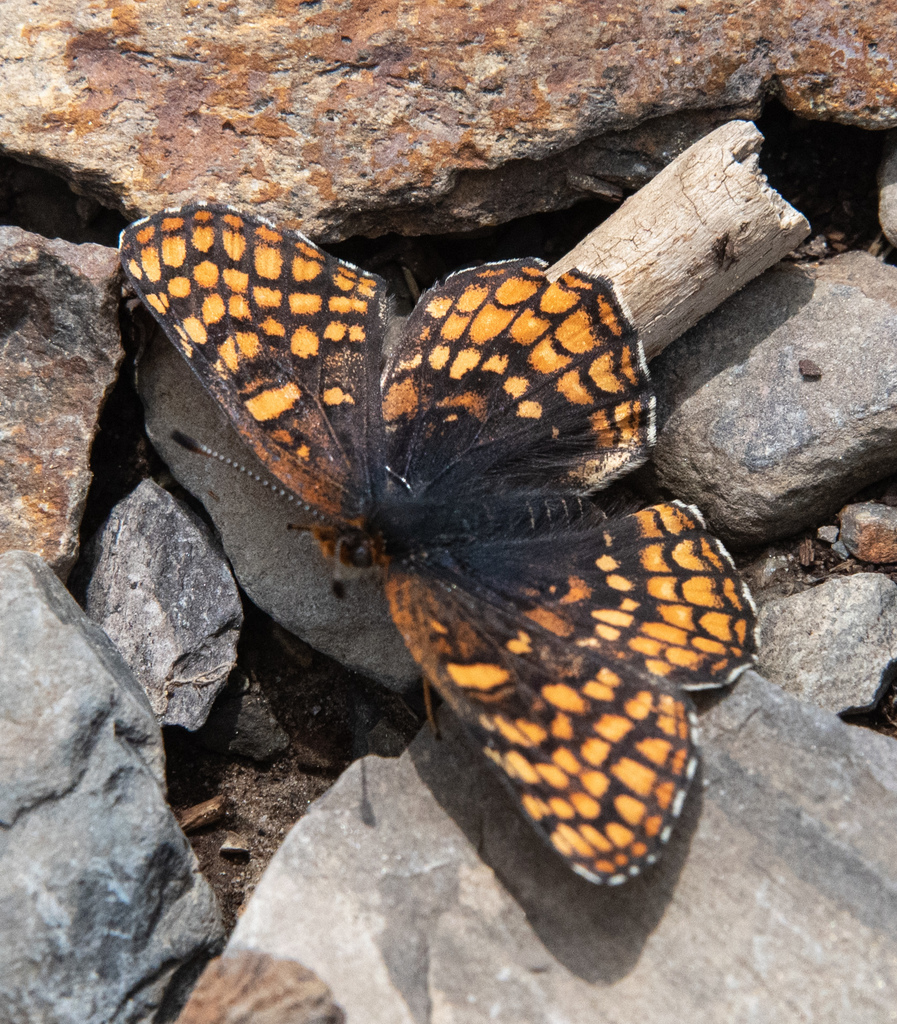
(c) Don Loarie, some rights reserved (CC BY) · licence
Family: Nymphalidae · Class: Insecta · Order: Lepidoptera
Chlosyne whitneyi (Rockslide Checkerspot) is a California animal in the Nymphalidae family.
The Rockslide Checkerspot (Chlosyne whitneyi) is a small butterfly in the brush-footed butterfly family Nymphalidae. This species exhibits the typical checkerspot pattern with alternating patches of orange, black, and white markings across the wings, though specific morphological details for this species remain poorly documented in the scientific literature. The species has a disjunct montane distribution across western North America, ranging from British Columbia and Alberta south through the mountains to California and Colorado. In California, the Rockslide Checkerspot occurs in high-elevation sites primarily in the Sierra Nevada, though specific county records and population locations have not been comprehensively documented. The species is considered rare throughout its range, with few recorded occurrences reported in recent decades. Rockslide Checkerspots inhabit rocky slopes, benches, and rockslides at or above treeline (Butterflies and Moths of North America). These alpine and subalpine environments are characterized by exposed rock faces, talus slopes, and sparse vegetation adapted to harsh montane conditions. The species' common name reflects its strong association with rockslide habitats, where host plants grow in the crevices and disturbed soil between rocks. Larvae feed on alpine plants in the sunflower family (Asteraceae), particularly Erigeron species (fleabanes) and Solidago species (goldenrods). These host plants are well-adapted to the harsh growing conditions found in high-elevation rocky environments, providing essential resources for caterpillar development. The timing of the species' life cycle is likely closely synchronized with the short growing season of these alpine environments, though specific details about flight periods, overwintering stages, and generation number remain undocumented. Adult flight activity presumably occurs during the brief alpine summer when host plants are actively growing and flowering. Like other high-elevation checkerspots, this species likely has a single generation per year, with larvae potentially requiring multiple years to complete development due to the short growing seasons at high elevations. Specific information about mating behavior, egg-laying preferences, and larval development times has not been documented in the available literature. The conservation status of the Rockslide Checkerspot reflects the challenges facing many high-elevation specialist species. NatureServe assigns the species a global rank indicating it is fairly widespread but known from few occurrences with insufficient recent records to estimate population trends. Climate change poses a significant potential threat to this alpine specialist, as warming temperatures may shift suitable habitat upslope and reduce available habitat area. The species' dependence on specific host plants and rocky habitat requirements makes it particularly vulnerable to environmental changes. Scientific documentation for this species remains limited. The information presented here is based on available sources including NatureServe Explorer and Butterflies and Moths of North America. If you have additional verified information about this species' biology, distribution, or ecology, please contact us to help improve this species account.
Classification
Class: Insecta · Order: Lepidoptera · Family: Nymphalidae
Frequently asked questions
How is Chlosyne whitneyi classified?
Chlosyne whitneyi belongs to class Insecta, order Lepidoptera, family Nymphalidae.
What family does Chlosyne whitneyi belong to?
Chlosyne whitneyi is in the Nymphalidae family.
What is Chlosyne whitneyi?
The Rockslide Checkerspot (Chlosyne whitneyi) is a small butterfly in the brush-footed butterfly family Nymphalidae.
Is Chlosyne whitneyi found in California?
Yes. Chlosyne whitneyi is recorded in California in The California Species Project's catalogue.
Related species
Other California species in the same genus, family, or bioregion.
Data from The California Species Project — 14,000+ California species with verified data from CNPS, CDFW, USFWS, and more.