Chondestes grammacus
Lark Sparrow
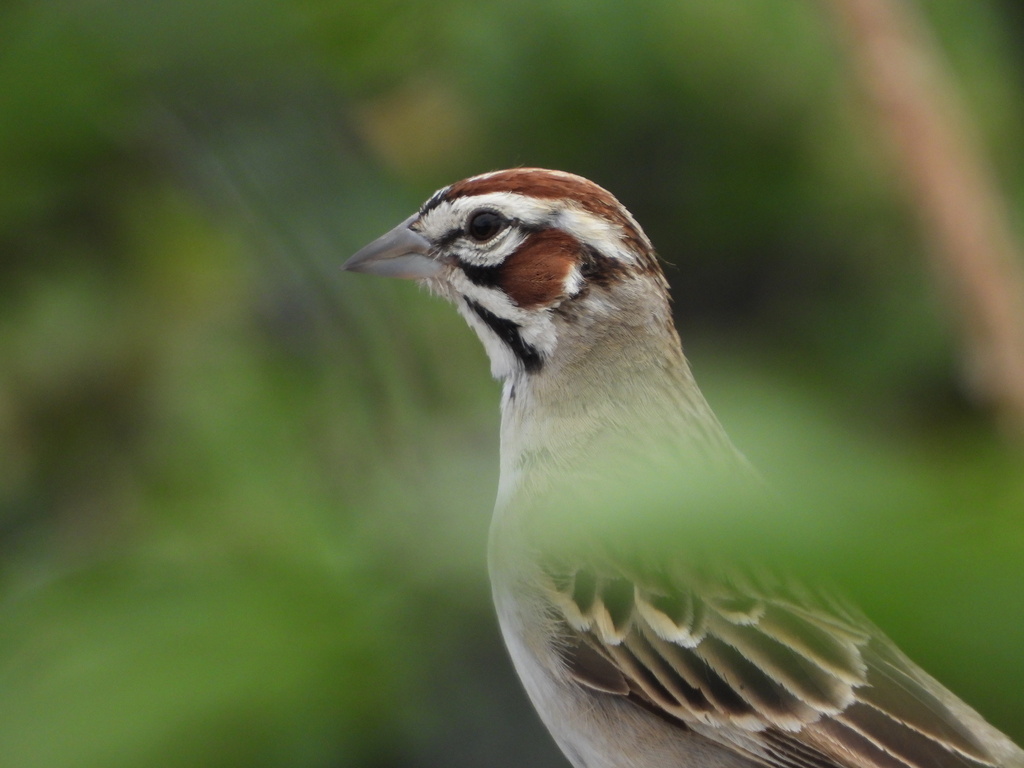
(c) Jared Shorma, some rights reserved (CC BY) · licence
Family: Passerellidae · Class: Aves · Order: Passeriformes
Chondestes grammacus (Lark Sparrow) is a California animal in the Passerellidae family.
The Lark Sparrow is a medium-sized songbird measuring 14 to 17 cm (5.5 to 6.7 inches) in length with a wingspan of 27 cm (10.6 inches). Adults weigh 24 to 32 grams. The species displays distinctive head markings with alternating chestnut, white, and black stripes forming bold facial patterns. A prominent white eyebrow contrasts with a dark eye line, while chestnut ear patches are bordered by white. The crown shows chestnut coloration with a white central stripe. The back and wings are streaked brown and buff, while the underparts are pale gray-white with a distinctive dark central breast spot. The tail is notably long and rounded with prominent white outer tail feathers visible in flight. Historically, Lark Sparrows bred throughout much of California's interior valleys and foothills, extending into coastal regions. The species' current breeding range in California has contracted significantly from historical distributions, particularly in coastal areas and the Central Valley. According to the North American Breeding Bird Survey, populations have declined by approximately 74% since 1970. The species now breeds primarily in the Sierra Nevada foothills, portions of the Central Valley, and scattered locations in southern California. During winter, most California populations migrate south, though some individuals remain in the state's southern regions. Lark Sparrows inhabit open grasslands, oak savannas, and scrubland environments with scattered trees or shrubs. The species requires a combination of open ground for foraging and elevated perches for singing and nesting. Preferred habitats include grazed pasturelands, agricultural edges, and areas with 10 to 40 percent tree or shrub cover. Elevation ranges from sea level to approximately 2,000 meters (6,560 feet). The species avoids dense forests and completely open areas without perching sites. Breeding occurs from April through August, with peak activity in May and June. Males establish territories through elaborate song displays from prominent perches. The distinctive song consists of melodic phrases interspersed with buzzes and trills, often lasting 5 to 10 seconds. Nests are constructed on the ground or in low shrubs, typically less than 2 meters high. The female builds a cup-shaped nest of grasses lined with fine materials. Clutch size ranges from 3 to 5 eggs, which are incubated for 12 to 13 days. Young fledge after 10 to 12 days but remain dependent on parents for several weeks. Lark Sparrows primarily consume seeds of grasses and forbs, supplementing their diet with insects during the breeding season. While not federally or state listed, the Lark Sparrow is considered a species of conservation concern due to significant population declines. Primary threats include habitat loss from agricultural intensification, urban development, and conversion of grasslands to other land uses. Livestock overgrazing eliminates nesting habitat, while pesticide use reduces insect prey availability. Climate change may further restrict suitable habitat through altered precipitation patterns affecting grassland ecosystems. Conservation efforts focus on maintaining appropriate grazing regimes and preserving oak woodland-grassland mosaics essential for breeding success.
Classification
Class: Aves · Order: Passeriformes · Family: Passerellidae
Frequently asked questions
How is Chondestes grammacus classified?
Chondestes grammacus belongs to class Aves, order Passeriformes, family Passerellidae.
What family does Chondestes grammacus belong to?
Chondestes grammacus is in the Passerellidae family.
What is Chondestes grammacus?
The Lark Sparrow is a medium-sized songbird measuring 14 to 17 cm (5.5 to 6.7 inches) in length with a wingspan of 27 cm (10.6 inches).
Is Chondestes grammacus found in California?
Yes. Chondestes grammacus is recorded in California in The California Species Project's catalogue.
Related species
Other California species in the same genus, family, or bioregion.
Data from The California Species Project — 14,000+ California species with verified data from CNPS, CDFW, USFWS, and more.