Chordeiles minor henryi
Common Nighthawk (Henry's)
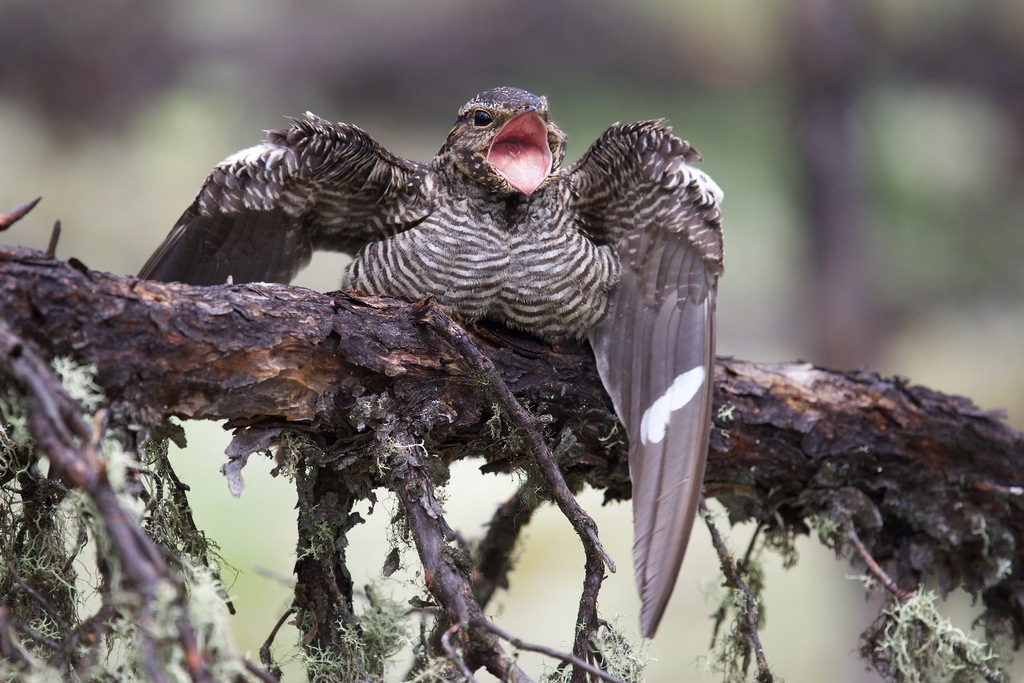
(c) Owen Strickland, some rights reserved (CC BY) · licence
Family: Caprimulgidae · Class: Aves · Order: Caprimulgiformes
Chordeiles minor henryi (Common Nighthawk (Henry's)) is a California animal in the Caprimulgidae family.
Henry's Common Nighthawk (Chordeiles minor henryi) is a subspecies of the Common Nighthawk, a medium-sized nocturnal bird in the nightjar family Caprimulgidae. Adults measure 21 to 25 centimeters (8.3 to 9.8 inches) in length with a wingspan of 51 to 61 centimeters (20 to 24 inches). The species exhibits cryptic plumage with mottled brown, gray, and white coloration that provides camouflage against bark and ground surfaces. Males display distinctive white throat patches and white bars across the primaries that become visible during flight displays. Henry's Common Nighthawk occurs in the southwestern United States and northwestern Mexico. According to the U.S. Fish and Wildlife Service taxonomic database, this subspecies represents one of nine recognized subspecies of Chordeiles minor. The subspecies' range includes portions of California, Arizona, Nevada, and adjacent regions, distinguishing it geographically from other Common Nighthawk subspecies such as C. m. minor in eastern North America. This subspecies inhabits open and semi-open landscapes including desert scrublands, pinyon-juniper woodlands, chaparral, and grasslands. The species demonstrates adaptability to human-modified environments, utilizing urban areas, agricultural lands, and disturbed habitats for foraging and nesting. Nesting occurs on bare ground, gravel surfaces, flat rooftops, or sparsely vegetated areas without constructing formal nests. Females typically lay two buff-colored eggs with dark markings directly on the substrate. Common Nighthawks are aerial insectivores that feed almost exclusively while flying, capturing moths, beetles, flying ants, mosquitoes, and other flying insects. Peak foraging activity occurs during dawn and dusk periods, though the species may hunt throughout the night when prey is abundant. During breeding season, males perform distinctive courtship flights characterized by steep dives that produce booming sounds created by air rushing through wing feathers. This acoustic display, combined with nasal "peent" calls, serves territorial and mate attraction functions. Breeding occurs from late spring through mid-summer, with timing varying by elevation and latitude. Incubation lasts approximately 18 to 19 days, with both parents sharing responsibilities. Young fledge after 17 to 18 days but remain dependent on adults for several additional weeks. The species exhibits strong migratory behavior, with populations traveling to South American wintering grounds. The U.S. Fish and Wildlife Service identifies Henry's Common Nighthawk as a Bird of Conservation Concern as of 2021, indicating populations may face conservation challenges without additional management actions. The subspecies faces threats including habitat loss from development, pesticide use reducing insect prey availability, light pollution disrupting nocturnal behaviors, and climate change affecting migration timing and breeding success. Vehicle strikes pose additional mortality risks as birds often forage over roadways and rest on pavement surfaces that retain heat.
Classification
Class: Aves · Order: Caprimulgiformes · Family: Caprimulgidae
Frequently asked questions
How is Chordeiles minor henryi classified?
Chordeiles minor henryi belongs to class Aves, order Caprimulgiformes, family Caprimulgidae.
What family does Chordeiles minor henryi belong to?
Chordeiles minor henryi is in the Caprimulgidae family.
What is Chordeiles minor henryi?
Henry's Common Nighthawk (Chordeiles minor henryi) is a subspecies of the Common Nighthawk, a medium-sized nocturnal bird in the nightjar family Caprimulgidae.
Is Chordeiles minor henryi found in California?
Yes. Chordeiles minor henryi is recorded in California in The California Species Project's catalogue.
Related species
Other California species in the same genus, family, or bioregion.
Data from The California Species Project — 14,000+ California species with verified data from CNPS, CDFW, USFWS, and more.