Choristostigma elegantalis
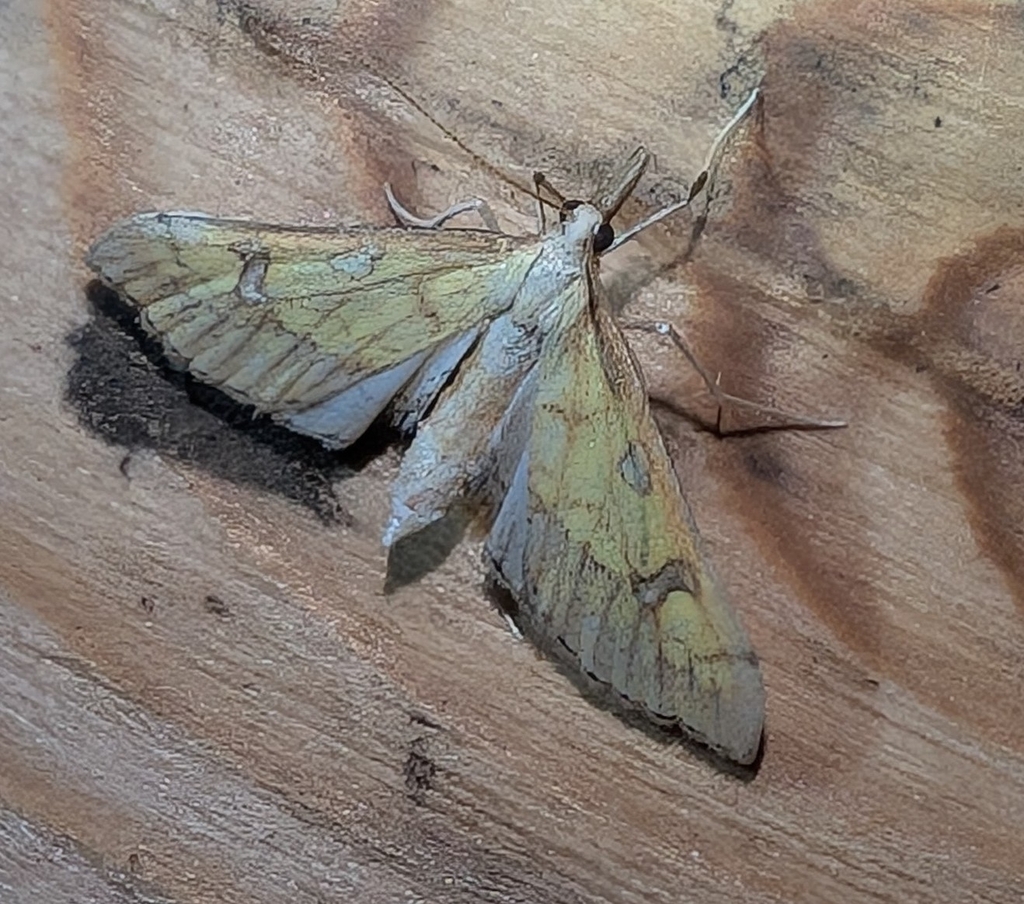
(c) Brodie Cass Talbott, some rights reserved (CC BY) · licence
Family: Crambidae · Class: Insecta · Order: Lepidoptera
Choristostigma elegantalis is a California animal in the Crambidae family.
Choristostigma elegantalis is a moth species belonging to the family Crambidae, commonly known as grass moths or snout moths. This lepidopteran represents one of the numerous micromoths found along the Pacific Coast of North America. The species exhibits the typical crambid characteristics, including relatively narrow forewings and distinctive labial palps that project forward from the head, giving many family members their 'snout moth' appearance. The range of Choristostigma elegantalis extends from California northward through Oregon to Washington, representing a Pacific coastal distribution pattern common among many western North American Lepidoptera. This range encompasses diverse climatic zones from Mediterranean conditions in California to temperate rainforest environments in the Pacific Northwest. The species likely occurs at various elevations within this latitudinal range, though specific elevation data requires further documentation. Habitat preferences for C. elegantalis remain poorly documented in the scientific literature. As a member of Crambidae, the species likely inhabits areas supporting its larval host plants, which remain unknown. Many crambid moths are associated with grasses, sedges, or other monocotyledonous plants, though some utilize broadleaf herbaceous species. The habitat likely includes coastal scrublands, grasslands, oak woodlands, or mixed coniferous forests depending on the specific host plant relationships and regional vegetation patterns. The life history and ecological behavior of Choristostigma elegantalis require additional research for comprehensive documentation. Like most Crambidae, the species likely exhibits complete metamorphosis with distinct egg, larval, pupal, and adult stages. Adults are presumably active during specific seasonal periods, possibly coinciding with host plant phenology and optimal environmental conditions. The larvae likely bore within plant stems, feed on roots, or consume leaves depending on the unknown host plant relationship. Flight periods, mating behaviors, and overwintering strategies remain undocumented for this species. No specific conservation status has been assigned to Choristostigma elegantalis at federal, state, or global levels. The absence of formal conservation rankings may reflect limited taxonomic research and ecological studies rather than actual population stability. Many microlepidoptera species remain poorly studied, with basic biological information gaps hindering conservation assessment. The species' apparent restriction to the Pacific Coast region from California to Washington suggests potential vulnerability to habitat modification, climate change, and urbanization pressures affecting coastal ecosystems. Coastal development, agricultural intensification, and altered fire regimes may impact populations if the species depends on specific, threatened habitat types. Without knowledge of host plant requirements, population trends, and ecological tolerances, determining conservation needs remains challenging. Further taxonomic verification, host plant identification, and population monitoring would provide essential baseline data for any future conservation evaluation of this Pacific Coast endemic moth species.
Classification
Class: Insecta · Order: Lepidoptera · Family: Crambidae
Frequently asked questions
How is Choristostigma elegantalis classified?
Choristostigma elegantalis belongs to class Insecta, order Lepidoptera, family Crambidae.
What family does Choristostigma elegantalis belong to?
Choristostigma elegantalis is in the Crambidae family.
What is Choristostigma elegantalis?
Choristostigma elegantalis is a moth species belonging to the family Crambidae, commonly known as grass moths or snout moths.
Is Choristostigma elegantalis found in California?
Yes. Choristostigma elegantalis is recorded in California in The California Species Project's catalogue.
Related species
Other California species in the same genus, family, or bioregion.
Data from The California Species Project — 14,000+ California species with verified data from CNPS, CDFW, USFWS, and more.