Chroicocephalus philadelphia
Bonaparte's Gull
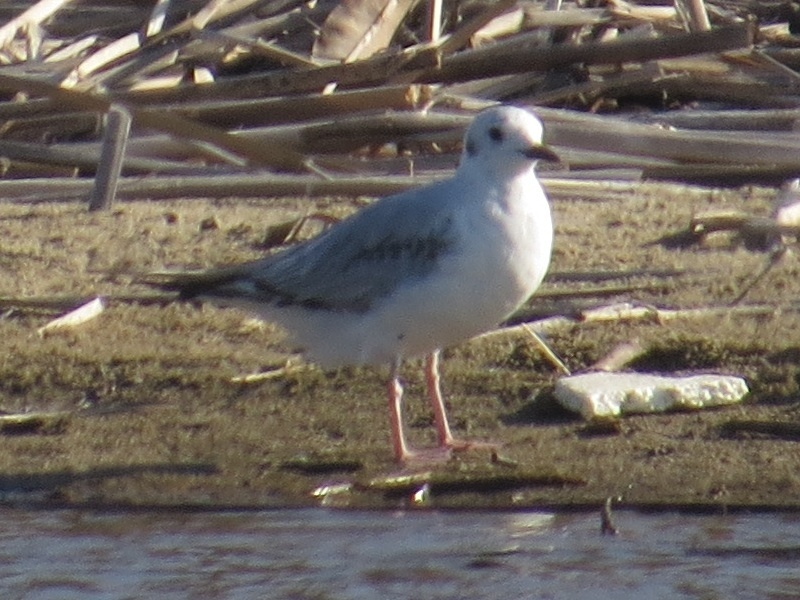
(c) Theo Rickert, some rights reserved (CC BY) · licence
Family: Laridae · Class: Aves · Order: Charadriiformes
Chroicocephalus philadelphia (Bonaparte's Gull) is a California animal in the Laridae family.
Bonaparte's Gull is a small, graceful seabird measuring 28 to 38 cm (11 to 15 inches) in length with a wingspan of 76 to 84 cm (30 to 33 inches). Adults weigh between 180 to 225 grams (6.3 to 7.9 ounces). During breeding season, adults display a distinctive black hood that extends from the bill to the nape, contrasting sharply with white underparts and pale gray upperparts. The bill is thin and black, while the legs are orange-red. In winter plumage, the black hood is replaced by a dark ear spot and partial dark cap. Juveniles show brownish markings on the wings and back, with a dark terminal band on the tail. The species can be distinguished from other small gulls by its buoyant flight pattern and triangular white wing patches visible from below. Bonaparte's Gull breeds primarily in the boreal forests of Alaska and western and central Canada, nesting unusually for gulls in coniferous trees rather than on the ground. In California, the species occurs as a migrant and winter visitor along the entire coastline, with peak numbers present from October through March. Major wintering areas include San Francisco Bay, Monterey Bay, and the Salton Sea. The species also utilizes large inland lakes and reservoirs during migration, including Lake Tahoe and various Central Valley locations. During winter in California, Bonaparte's Gulls inhabit coastal waters, estuaries, harbors, and large inland water bodies. They prefer areas with abundant small fish and are commonly observed in nearshore marine environments, tidal flats, and protected bays. The species shows flexibility in habitat use, adapting to both saltwater and freshwater environments. They often forage in areas where currents or upwelling concentrate prey organisms. Bonaparte's Gulls are highly gregarious outside the breeding season, often forming large flocks that may number in the thousands. Their diet consists primarily of small fish, marine invertebrates, insects, and crustaceans. They employ various foraging techniques including surface dipping, shallow diving, and aerial hawking for insects. During winter, they frequently associate with other gull species and terns. The species exhibits a light, tern-like flight pattern with rapid wingbeats. Breeding occurs from May to July in their northern range, with pairs constructing stick nests in coniferous trees, typically 1 to 6 meters above ground. Clutch size ranges from 2 to 4 eggs. Bonaparte's Gull is not federally or state-listed in California and maintains stable global populations. The species benefits from its wide distribution and habitat flexibility. Climate change may affect wintering distributions and food availability, but current population trends show no significant declines. The North American population is estimated at approximately 200,000 individuals, with California hosting a substantial portion during winter months. Conservation efforts focus on protecting key wintering habitats, particularly in San Francisco Bay and other critical coastal areas.
Classification
Class: Aves · Order: Charadriiformes · Family: Laridae
Frequently asked questions
How is Chroicocephalus philadelphia classified?
Chroicocephalus philadelphia belongs to class Aves, order Charadriiformes, family Laridae.
What family does Chroicocephalus philadelphia belong to?
Chroicocephalus philadelphia is in the Laridae family.
What is Chroicocephalus philadelphia?
Bonaparte's Gull is a small, graceful seabird measuring 28 to 38 cm (11 to 15 inches) in length with a wingspan of 76 to 84 cm (30 to 33 inches).
Is Chroicocephalus philadelphia found in California?
Yes. Chroicocephalus philadelphia is recorded in California in The California Species Project's catalogue.
Related species
Other California species in the same genus, family, or bioregion.
Data from The California Species Project — 14,000+ California species with verified data from CNPS, CDFW, USFWS, and more.