Chrysaora colorata
Purple-striped Sea Nettle
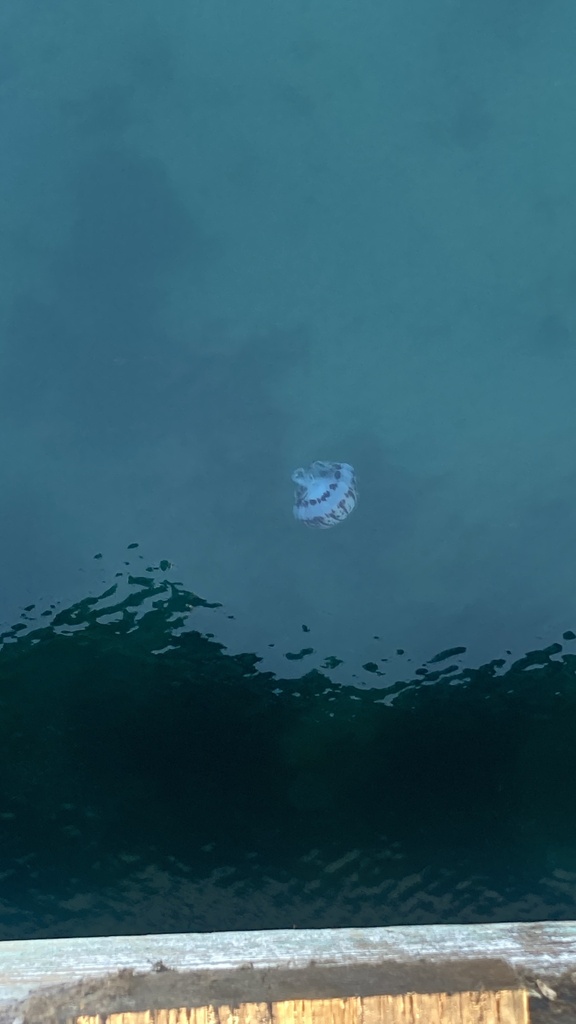
no rights reserved · CC0
Family: Pelagiidae · Class: Scyphozoa · Order: Semaeostomeae
Chrysaora colorata (Purple-striped Sea Nettle) is a California animal in the Pelagiidae family.
The purple-striped sea nettle is a large, conspicuous jellyfish belonging to the family Pelagiidae. This scyphozoan exhibits a bell diameter that can reach up to 70 centimeters (28 inches), making it one of the larger jellyfish species found along the Pacific coast. The bell displays a translucent white to pinkish coloration with distinctive purple or reddish-brown radial stripes extending from the center toward the bell margin. Four long, trailing oral arms extend from the central mouth, accompanied by numerous marginal tentacles that can extend several meters in length. The bell margin is scalloped with eight primary lobes, each containing sensory structures called rhopalia that help the animal navigate and detect prey. The purple-striped sea nettle occurs along the Pacific coast from British Columbia to Baja California, Mexico. In California waters, this species is commonly observed in nearshore and offshore environments, particularly abundant in the waters around Monterey Bay, San Francisco Bay, and Southern California coastal areas. The species exhibits seasonal migration patterns, typically moving closer to shore during warmer months and retreating to deeper waters during winter. This jellyfish inhabits both coastal and oceanic waters, typically found from the surface to depths of approximately 30 meters (100 feet). Purple-striped sea nettles prefer temperate waters with temperatures ranging from 10 to 20 degrees Celsius (50 to 68 degrees Fahrenheit). They are commonly encountered in areas with moderate to high productivity, including upwelling zones, estuaries, and areas where different water masses converge. The species can tolerate a range of salinity conditions but is most abundant in full-strength seawater. As active predators, purple-striped sea nettles feed primarily on zooplankton, small fish, and other gelatinous organisms. Their tentacles and oral arms are equipped with specialized stinging cells called nematocysts that inject venom to immobilize prey. The species exhibits a complex life cycle typical of scyphozoans, alternating between a sessile polyp stage and the free-swimming medusa stage. Reproduction occurs when mature medusae release gametes into the water column, where fertilization takes place. The resulting larvae settle and develop into polyps, which eventually produce new medusae through a process called strobilation. The purple-striped sea nettle is not currently listed under federal or state endangered species legislation. Population levels appear stable throughout their range, though localized fluctuations occur in response to oceanographic conditions, prey availability, and climate variability. El Niño events and other climatic phenomena can significantly influence their abundance and distribution patterns. While not considered threatened, the species faces potential impacts from ocean acidification, rising sea temperatures, and marine pollution. Their ecological role as both predator and prey makes them important indicators of marine ecosystem health along the Pacific coast.
Classification
Class: Scyphozoa · Order: Semaeostomeae · Family: Pelagiidae
Frequently asked questions
How is Chrysaora colorata classified?
Chrysaora colorata belongs to class Scyphozoa, order Semaeostomeae, family Pelagiidae.
What family does Chrysaora colorata belong to?
Chrysaora colorata is in the Pelagiidae family.
What is Chrysaora colorata?
The purple-striped sea nettle is a large, conspicuous jellyfish belonging to the family Pelagiidae.
Is Chrysaora colorata found in California?
Yes. Chrysaora colorata is recorded in California in The California Species Project's catalogue.
More California species
This species has no close relatives in our California data — here are other species to explore.
Data from The California Species Project — 14,000+ California species with verified data from CNPS, CDFW, USFWS, and more.