Chrysemys picta
Painted Turtle
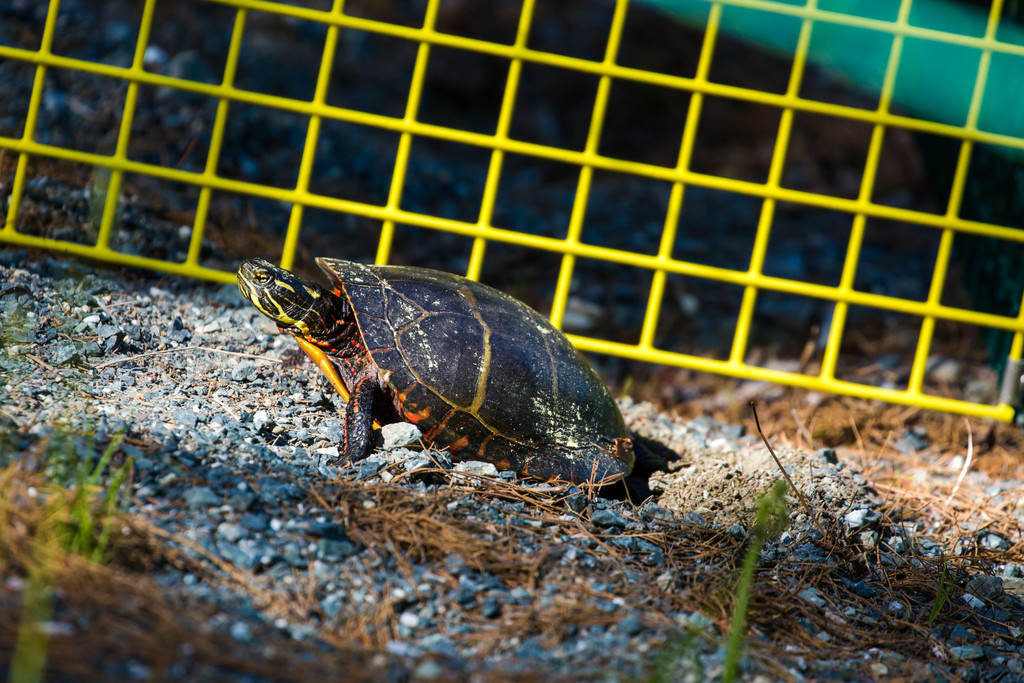
(c) Melissa McMasters, some rights reserved (CC BY) · licence
Family: Emydidae · Class: Reptilia · Order: Testudines
Chrysemys picta (Painted Turtle) is a California animal in the Emydidae family.
The painted turtle is North America's most widely distributed turtle species and the only native turtle found in California. Adults typically measure 100 to 250 mm (4 to 10 inches) in carapace length, with females generally larger than males. The carapace is relatively flat and smooth, ranging from olive to black with red markings along the marginal scutes. The plastron is yellow with a dark central figure that varies in size and complexity among subspecies. The head, neck, and limbs display distinctive red and yellow striping patterns, with males exhibiting longer front claws and a more concave plastron than females. In California, painted turtles occur primarily in the northeastern counties, including Modoc, Lassen, and Siskiyou counties. The species' range extends eastward across much of North America, from southern Canada to northern Mexico. California populations represent the western edge of the species' continental distribution. Historically, painted turtles may have been more widespread in California, but current populations are limited to specific watersheds in the northeastern region. Painted turtles inhabit slow-moving or still freshwater bodies including ponds, marshes, sloughs, and quiet sections of streams and rivers. They prefer waters with soft substrates and abundant aquatic vegetation. Basking sites such as logs, rocks, or emergent vegetation are essential habitat components. The species tolerates a wide range of water temperatures and can survive in waters that freeze during winter months. Elevation ranges from near sea level to approximately 1,800 meters (6,000 feet). Painted turtles are omnivorous, feeding on aquatic plants, algae, insects, crustaceans, mollusks, fish, and carrion. Juveniles tend to be more carnivorous, while adults consume increasing amounts of plant material. The species is known for its basking behavior, often gathering in groups on preferred sites during warm periods. Mating occurs in spring and fall, with courtship involving the male's distinctive claw display near the female's face. Females nest from May through July, digging nests in sandy or loose soil within 200 meters of water. Clutch size ranges from 2 to 11 eggs, with an average of 4 to 7 eggs per nest. Sex determination is temperature-dependent, with females produced at higher incubation temperatures. The painted turtle is not federally or state listed in California, reflecting its stable status across most of its range. However, California populations may face localized threats including habitat loss from agricultural conversion, urban development, and water diversions. Collection for the pet trade historically impacted some populations. Road mortality affects individuals moving between aquatic habitats and nesting areas. Climate change may alter the thermal regimes of aquatic habitats and affect temperature-dependent sex determination. Water pollution and introduced predatory fish species pose additional conservation concerns for California's peripheral populations.
Classification
Class: Reptilia · Order: Testudines · Family: Emydidae
Frequently asked questions
How is Chrysemys picta classified?
Chrysemys picta belongs to class Reptilia, order Testudines, family Emydidae.
What family does Chrysemys picta belong to?
Chrysemys picta is in the Emydidae family.
What is Chrysemys picta?
The painted turtle is North America's most widely distributed turtle species and the only native turtle found in California.
Is Chrysemys picta found in California?
Yes. Chrysemys picta is recorded in California in The California Species Project's catalogue.
Related species
Other California species in the same genus, family, or bioregion.
Data from The California Species Project — 14,000+ California species with verified data from CNPS, CDFW, USFWS, and more.