Chrysis tularensis
Tulare Cuckoo Wasp
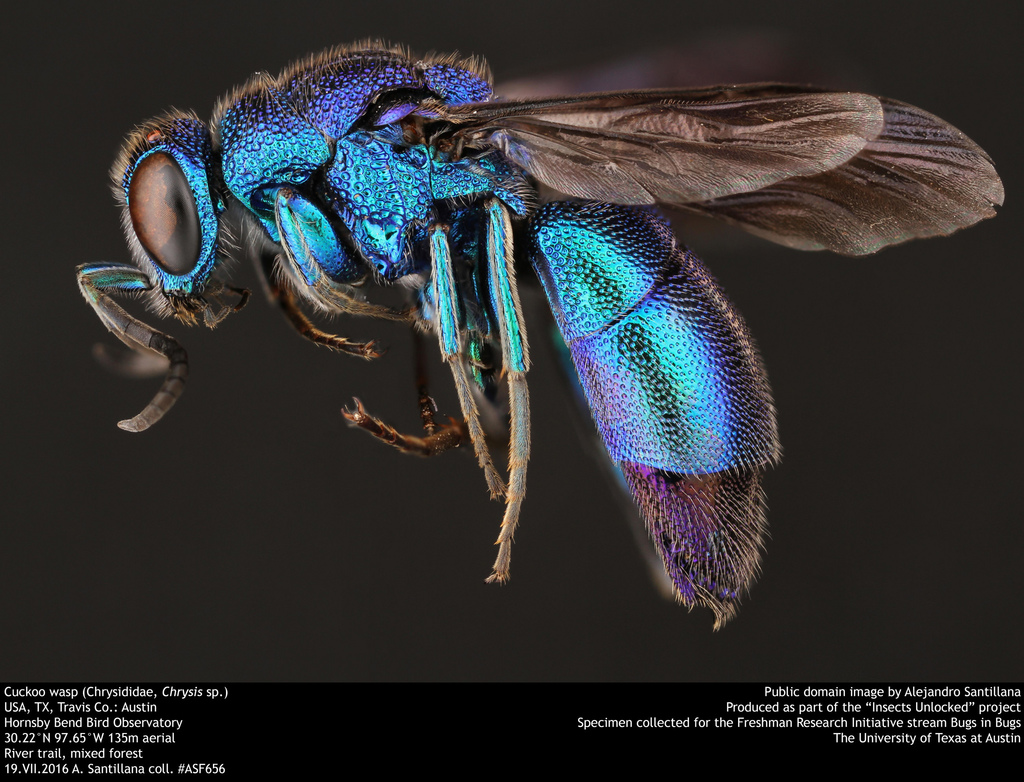
no rights reserved · CC0
Family: Chrysididae · Class: Insecta · Order: Hymenoptera
Conservation status: G1G2 S2
Chrysis tularensis (Tulare Cuckoo Wasp) is a California animal in the Chrysididae family.
Chrysis tularensis, known as the Tulare Cuckoo Wasp, is a small parasitoid wasp in the family Chrysididae. Adult cuckoo wasps typically measure 3-12 mm in length and are characterized by their metallic green, blue, or bronze coloration with a sculptured, often dimpled body surface. The Tulare Cuckoo Wasp displays the typical chrysidid features including a compact, robust build and brilliant metallic sheen that gives the family its common name of "jewel wasps." Like other cuckoo wasps, females possess a telescoping ovipositor used for depositing eggs in host nests. This species is endemic to California's Central Valley region, specifically documented in Tulare County, from which it derives its common name. The historical and current range appears to be extremely limited, contributing to its conservation concern. The species' distribution coincides with the heavily modified agricultural landscape of the southern Central Valley, where native habitats have been extensively converted. Chrysis tularensis inhabits remnant native grassland and scrubland communities within the Central Valley ecosystem. The species likely occurs in areas supporting native bee populations, as cuckoo wasps are obligate parasites or parasitoids of solitary bees and wasps. Specific elevation ranges and microhabitat preferences have not been well documented, but the species presumably requires areas with sufficient host bee diversity and nesting sites such as bare ground, plant stems, or existing cavities. As a member of the Chrysididae, the Tulare Cuckoo Wasp exhibits the characteristic cleptoparasitic behavior of the family. Adult females locate and invade the nests of solitary bees or wasps, where they deposit their eggs. The developing cuckoo wasp larvae consume the host's provisioned food stores and may also parasitize the host larva itself. Adult cuckoo wasps are typically active during warm months and can be observed visiting flowers for nectar. Specific host relationships, seasonal activity patterns, and reproductive details for C. tularensis remain poorly studied. The species carries a global rank of G1G2, indicating it is critically imperiled to imperiled globally, and a state rank of S2, reflecting its imperiled status within California. This ranking system suggests the species faces a high risk of extinction due to extreme rarity, very restricted range, or other factors making it vulnerable. The primary threats to the Tulare Cuckoo Wasp likely include habitat loss and fragmentation from agricultural conversion, urban development, and altered land management practices that have eliminated or degraded native grassland communities throughout the Central Valley. The species' apparent dependence on native bee hosts makes it particularly vulnerable to factors affecting pollinator communities, including pesticide use, invasive plant species, and loss of floral resources. Detailed ecological studies of this species are lacking, and current population status remains undocumented. The extremely limited known range and high conservation ranks underscore the urgent need for additional surveys and research to better understand the species' distribution, ecology, and conservation requirements.
Classification
Class: Insecta · Order: Hymenoptera · Family: Chrysididae
Conservation status
G1G2 S2
Frequently asked questions
How is Chrysis tularensis classified?
Chrysis tularensis belongs to class Insecta, order Hymenoptera, family Chrysididae.
What family does Chrysis tularensis belong to?
Chrysis tularensis is in the Chrysididae family.
Is Chrysis tularensis protected or of conservation concern?
Chrysis tularensis carries the following status: G1G2 S2.
What is Chrysis tularensis?
Chrysis tularensis, known as the Tulare Cuckoo Wasp, is a small parasitoid wasp in the family Chrysididae.
Is Chrysis tularensis found in California?
Yes. Chrysis tularensis is recorded in California in The California Species Project's catalogue.
Related species
Other California species in the same genus, family, or bioregion.
Data from The California Species Project — 14,000+ California species with verified data from CNPS, CDFW, USFWS, and more.