Chrysobothris mali
Pacific Flat-Headed Borer
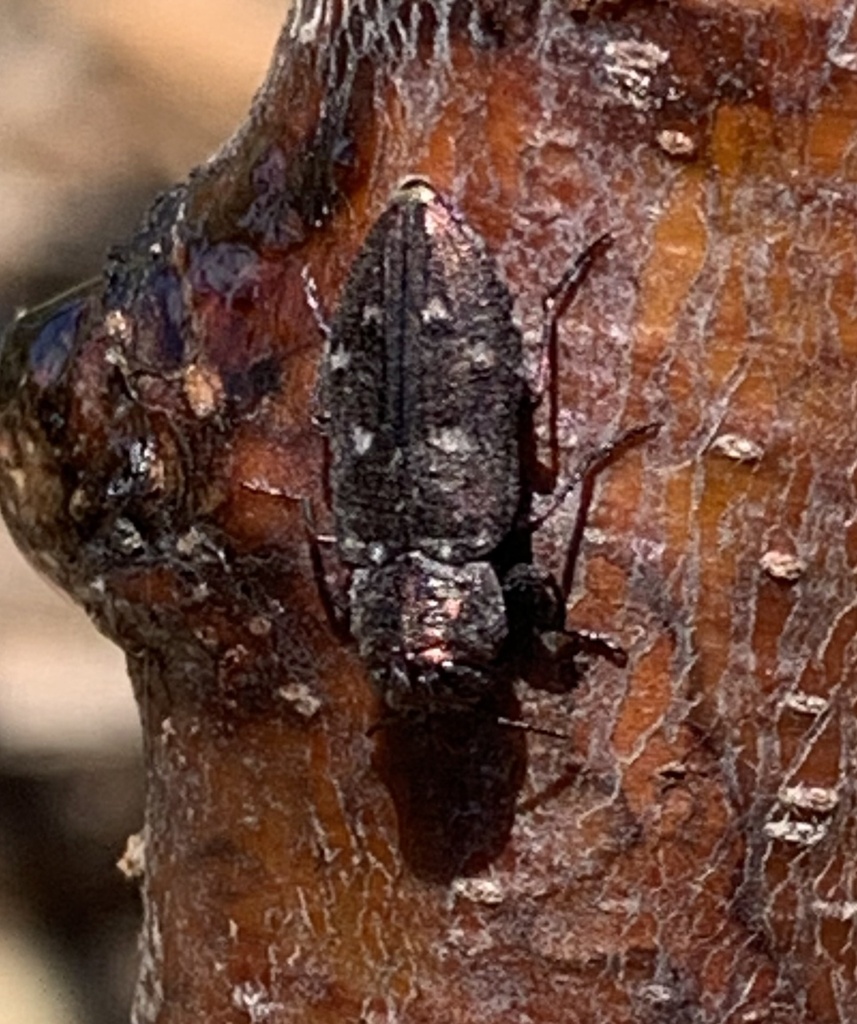
no rights reserved · CC0
Family: Buprestidae · Class: Insecta · Order: Coleoptera
Chrysobothris mali (Pacific Flat-Headed Borer) is a California animal in the Buprestidae family.
The Pacific Flat-Headed Borer (*Chrysobothris mali*) is a metallic wood-boring beetle belonging to the family Buprestidae, commonly known as jewel beetles. Like other members of the genus *Chrysobothris*, this species exhibits the characteristic flattened body form that gives flat-headed borers their common name. Adults display the metallic bronze to copper coloration typical of the genus, with a somewhat flattened thorax and elytra that may show subtle patterning or textural variations. The species occurs along the Pacific Coast region, as indicated by its common name, though specific distributional records within California require further documentation. *Chrysobothris* species are generally associated with forested and woodland habitats where their host trees are present. The elevation range and specific counties of occurrence in California have not been well documented in available literature. Habitat requirements for *C. mali* are closely tied to the presence of suitable host trees. Members of the genus *Chrysobothris* typically develop in stressed, dying, or recently dead woody material (Evans 2014). The species likely inhabits areas with mixed coniferous and deciduous forests, woodland edges, and areas where tree mortality occurs due to drought stress, disease, or disturbance. Adults are typically most active during warm conditions when they seek mates and oviposition sites. The life cycle follows the typical buprestid pattern. Females deposit eggs in bark crevices of suitable host trees, and larvae tunnel beneath the bark and into the sapwood, creating characteristic serpentine galleries. The larval stage constitutes the majority of the life cycle in buprestid beetles (Evans 2014). Larvae overwinter in their galleries and pupate prior to adult emergence. Adults feed on foliage and flowers of various plants, while larvae derive nutrition from the cambium and outer sapwood of host trees. The conservation status of *C. mali* has not been formally assessed by federal or state agencies. Many buprestid species face pressures from habitat loss, forest management practices, and climate change effects on forest health. Fire suppression and altered disturbance regimes may affect the availability of suitable breeding habitat, as these beetles often depend on trees stressed by natural disturbances. The species' population trends and specific conservation needs require further study and monitoring. Scientific documentation for this species remains limited. The information presented here is based on general knowledge of *Chrysobothris* biology and available entomological literature. Additional research is needed to fully characterize the distribution, host associations, ecological requirements, and conservation status of the Pacific Flat-Headed Borer in California. We welcome contributions of verified scientific data, photographs, or field observations to enhance this species account.
Classification
Class: Insecta · Order: Coleoptera · Family: Buprestidae
Frequently asked questions
How is Chrysobothris mali classified?
Chrysobothris mali belongs to class Insecta, order Coleoptera, family Buprestidae.
What family does Chrysobothris mali belong to?
Chrysobothris mali is in the Buprestidae family.
What is Chrysobothris mali?
The Pacific Flat-Headed Borer (*Chrysobothris mali*) is a metallic wood-boring beetle belonging to the family Buprestidae, commonly known as jewel beetles.
Is Chrysobothris mali found in California?
Yes. Chrysobothris mali is recorded in California in The California Species Project's catalogue.
Related species
Other California species in the same genus, family, or bioregion.
Data from The California Species Project — 14,000+ California species with verified data from CNPS, CDFW, USFWS, and more.