Chrysodeixis includens
Soybean Looper Moth
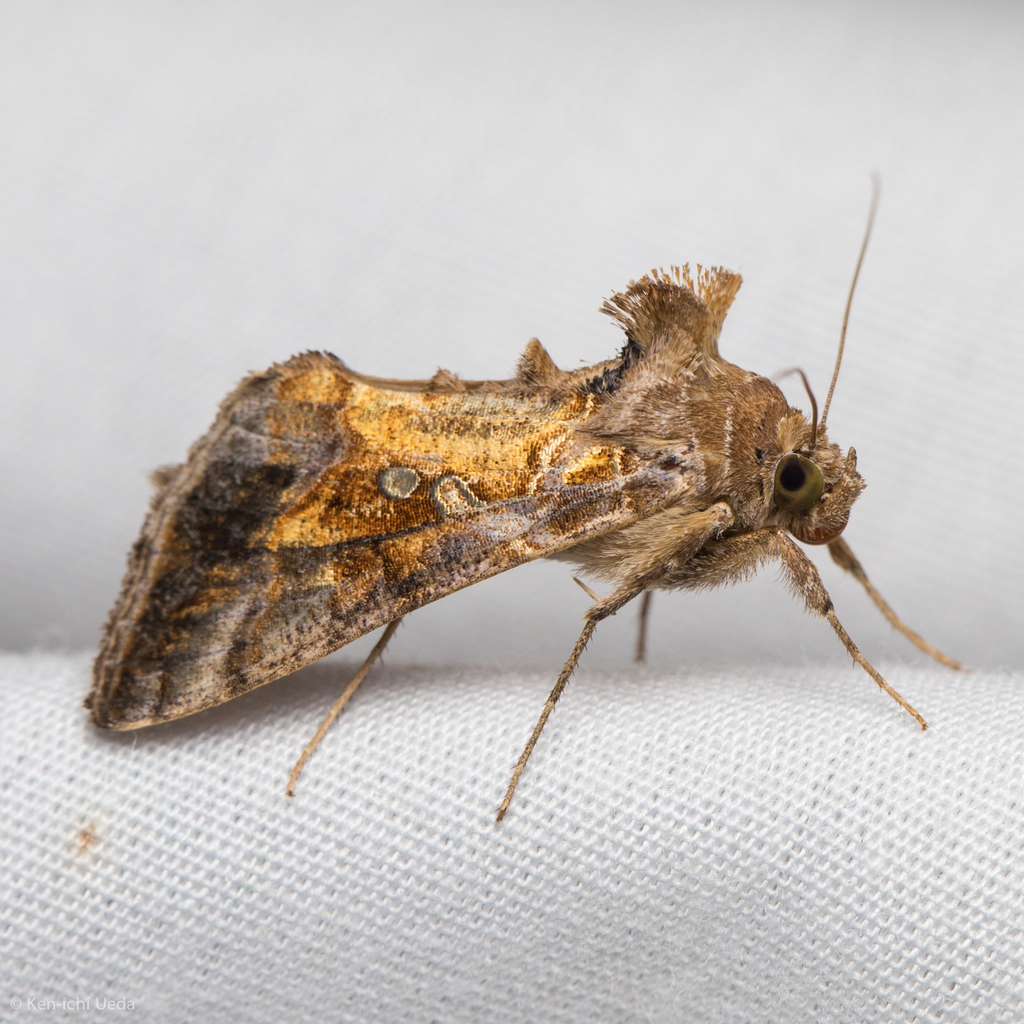
(c) Ken-ichi Ueda, some rights reserved (CC BY) · licence
Family: Noctuidae · Class: Insecta · Order: Lepidoptera
Chrysodeixis includens (Soybean Looper Moth) is a California animal in the Noctuidae family.
The soybean looper moth (Chrysodeixis includens) is a medium-sized noctuid moth with distinctive looping larval behavior. Adult moths have a wingspan of 32 to 38 millimeters (1.3 to 1.5 inches). The forewings are mottled brown and gray with metallic silver or gold markings, including a characteristic comma-shaped spot and circular mark near the center. The hindwings are pale brownish-gray with darker marginal bands. Males are typically smaller than females and possess feathery antennae, while females have thread-like antennae. This species occurs throughout much of North America, from southern Canada to Central America. In California, the soybean looper moth is found statewide in agricultural areas, urban gardens, and disturbed habitats from sea level to approximately 1,500 meters (4,900 feet) elevation. The species is particularly common in the Central Valley, coastal valleys, and southern California regions where host plants are abundant. Soybean looper moths inhabit diverse environments including agricultural fields, gardens, weedy areas, and forest edges. Adults are attracted to areas with abundant nectar sources and prefer habitats with mixed vegetation that provides both larval host plants and adult feeding opportunities. The species thrives in disturbed environments and has adapted well to human-modified landscapes. Larvae exhibit the characteristic "looping" locomotion that gives the species its common name, arching their bodies as they move due to the absence of prolegs on abdominal segments three and four. The caterpillars are pale green with white longitudinal stripes and feed on a wide variety of plants including legumes, crucifers, and other herbaceous plants. Soybeans, cabbage, lettuce, tomatoes, and various weeds serve as common hosts. Development from egg to adult takes approximately 25 to 30 days under optimal conditions, with multiple generations occurring annually in warmer regions. Adult moths are nocturnal and strongly attracted to lights. Females deposit eggs singly on host plant leaves, typically on the undersurface. Mating occurs during evening hours, with peak flight activity occurring 2 to 4 hours after sunset. In California's Mediterranean climate, the species can complete four to six generations per year, with continuous breeding in mild coastal areas and temporary winter dormancy in colder inland regions. The soybean looper moth is not listed under state or federal endangered species legislation and is considered secure throughout its range. As an agricultural pest, the species can cause economic damage to crops, particularly soybeans, cotton, and various vegetables. Population levels fluctuate with seasonal conditions, host plant availability, and natural enemy populations. The species' broad host range and adaptability to human-modified environments suggest stable populations. Climate change may expand its range northward and increase the number of annual generations in temperate regions, potentially increasing its agricultural impact.
Classification
Class: Insecta · Order: Lepidoptera · Family: Noctuidae
Frequently asked questions
How is Chrysodeixis includens classified?
Chrysodeixis includens belongs to class Insecta, order Lepidoptera, family Noctuidae.
What family does Chrysodeixis includens belong to?
Chrysodeixis includens is in the Noctuidae family.
What is Chrysodeixis includens?
The soybean looper moth (Chrysodeixis includens) is a medium-sized noctuid moth with distinctive looping larval behavior.
Is Chrysodeixis includens found in California?
Yes. Chrysodeixis includens is recorded in California in The California Species Project's catalogue.
Related species
Other California species in the same genus, family, or bioregion.
Data from The California Species Project — 14,000+ California species with verified data from CNPS, CDFW, USFWS, and more.