Chrysoesthia drurella
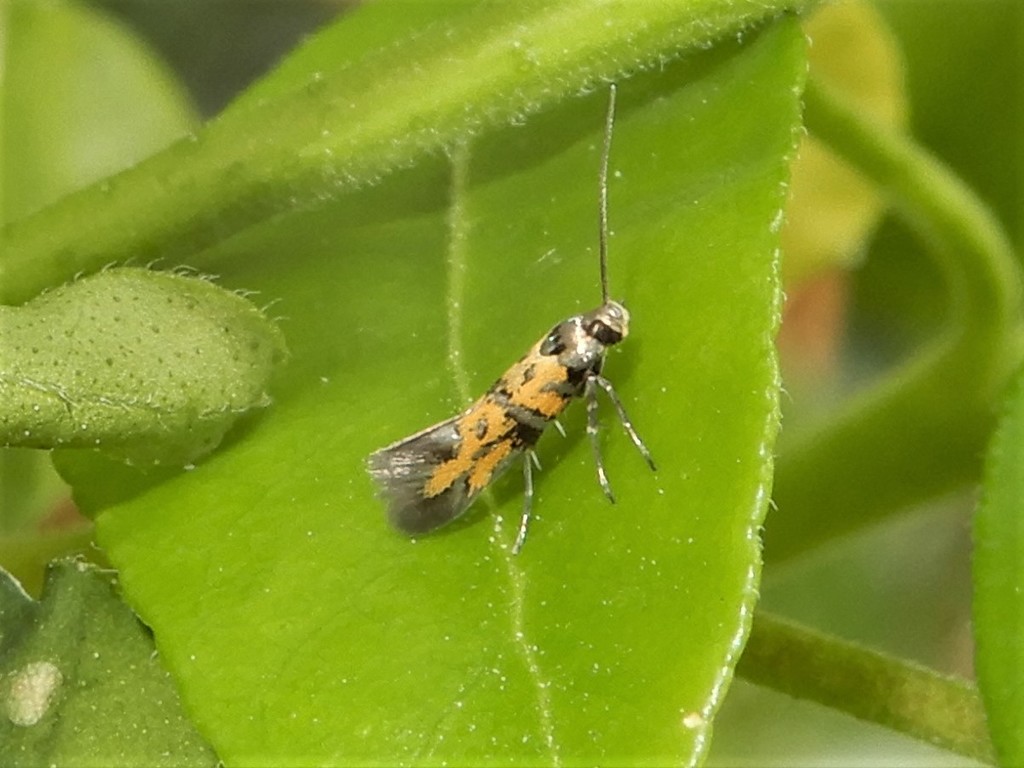
(c) Grey Smith, some rights reserved (CC BY) · licence
Family: Gelechiidae · Class: Insecta · Order: Lepidoptera
Chrysoesthia drurella is a California animal in the Gelechiidae family.
Chrysoesthia drurella is a small moth in the family Gelechiidae, commonly known as twirler moths or gelechiid moths. This species belongs to a diverse group of micro-moths characterized by narrow forewings and distinctive wing venation patterns. Adult moths typically measure 8-12 mm in wingspan, with forewings displaying subtle brown and gray coloration patterns that provide effective camouflage against tree bark and dried vegetation. The hindwings are typically pale gray with long, delicate fringes along the margins. The historical and current distribution of Chrysoesthia drurella in California remains poorly documented in available databases. Limited collection records suggest the species may occur in scattered locations throughout the state, though comprehensive range mapping has not been completed. The species appears to have a patchy distribution pattern typical of many specialized gelechiid moths that depend on specific host plant associations. Habitat requirements for Chrysoesthia drurella are not well-established, though members of the genus Chrysoesthia typically inhabit areas where their larval host plants occur. Many gelechiid moths in this group are associated with shrubland, woodland edges, and areas with mixed native vegetation. The species likely requires habitats that maintain stable populations of its host plants throughout the larval development period. The life cycle and behavioral ecology of Chrysoesthia drurella follow the typical pattern of gelechiid moths. Adults are primarily nocturnal and are attracted to artificial lights during evening hours. Mating likely occurs during spring or early summer months, with females depositing eggs on or near larval host plants. The larval stage is presumably the primary feeding phase, with caterpillars developing within plant tissues or feeding externally on leaves and stems. Pupation typically occurs in the soil or within protective cocoons attached to the host plant. Like many specialized lepidopteran species, Chrysoesthia drurella faces potential conservation challenges related to habitat modification and the availability of specific host plants. The species lacks formal conservation status designations at federal or state levels, reflecting the limited knowledge of its population status and distribution. Many gelechiid moths are particularly vulnerable to habitat fragmentation because of their specific host plant requirements and limited dispersal capabilities. Urban development, agricultural conversion, and invasive plant species may pose threats to local populations by reducing suitable habitat or eliminating critical host plants. The taxonomic status and identification of Chrysoesthia drurella require specialized expertise, as many gelechiid moths can only be reliably distinguished through examination of genitalic structures. This identification challenge has likely contributed to the limited ecological and distributional data available for the species. Future research priorities should include comprehensive surveys to determine the species' current distribution in California, identification of critical host plant relationships, and assessment of population trends to inform potential conservation needs.
Classification
Class: Insecta · Order: Lepidoptera · Family: Gelechiidae
Frequently asked questions
How is Chrysoesthia drurella classified?
Chrysoesthia drurella belongs to class Insecta, order Lepidoptera, family Gelechiidae.
What family does Chrysoesthia drurella belong to?
Chrysoesthia drurella is in the Gelechiidae family.
What is Chrysoesthia drurella?
Chrysoesthia drurella is a small moth in the family Gelechiidae, commonly known as twirler moths or gelechiid moths.
Is Chrysoesthia drurella found in California?
Yes. Chrysoesthia drurella is recorded in California in The California Species Project's catalogue.
Related species
Other California species in the same genus, family, or bioregion.
Data from The California Species Project — 14,000+ California species with verified data from CNPS, CDFW, USFWS, and more.