Chrysoesthia lingulacella
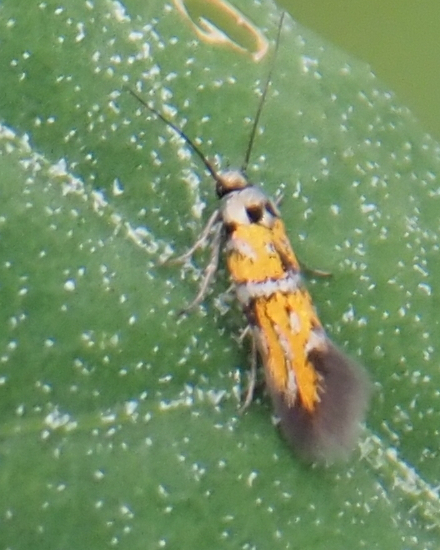
(c) yongestation, some rights reserved (CC BY) · licence
Family: Gelechiidae · Class: Insecta · Order: Lepidoptera
Chrysoesthia lingulacella is a California animal in the Gelechiidae family.
Chrysoesthia lingulacella is a small moth in the family Gelechiidae, one of the largest families of microlepidoptera. As with most members of this family, adults are characterized by narrow forewings and reduced hindwings with long fringes. The wingspan typically ranges from 8 to 12 millimeters, consistent with other Chrysoesthia species. The forewings display patterns of scales that may include metallic coloration, though specific details of this species' wing patterns are not well documented in accessible literature. The distribution of Chrysoesthia lingulacella in California remains poorly documented. The genus Chrysoesthia contains numerous species distributed across North America, with several species recorded from western states. However, specific county-level distribution data for C. lingulacella within California is not readily available in current databases. The species may have a restricted range or may be under-collected due to its small size and cryptic nature. Habitat requirements for Chrysoesthia lingulacella are not well established in published literature. Members of the Gelechiidae family typically inhabit diverse environments and often have specialized relationships with particular host plants. Many species in this family are associated with shrublands, oak woodlands, or chaparral communities common in California's mediterranean climate zones. The larvae of gelechiid moths commonly develop within plant tissues as leaf miners, stem borers, or seed feeders. The life cycle of C. lingulacella likely follows the typical pattern of other gelechiid moths, with four developmental stages: egg, larva, pupa, and adult. Adult flight periods and the number of generations per year are not documented for this species. Larvae may feed within host plant tissues, but specific host plant associations have not been established through published research. Many Chrysoesthia species are associated with plants in the Asteraceae or other herbaceous families. The conservation status of Chrysoesthia lingulacella is not established, as the species lacks federal or state listing status. The apparent lack of recent survey data or ecological studies suggests this species may be uncommon, under-surveyed, or potentially misidentified in collections. Many microlepidoptera species remain poorly known due to taxonomic challenges and limited research attention. The small size and nocturnal habits of gelechiid moths make field detection difficult without specialized collecting methods. Climate change and habitat modification may pose threats to specialized moth species, particularly those with narrow host plant requirements or restricted distributions, though specific impacts on C. lingulacella cannot be assessed without baseline population data.
Classification
Class: Insecta · Order: Lepidoptera · Family: Gelechiidae
Frequently asked questions
How is Chrysoesthia lingulacella classified?
Chrysoesthia lingulacella belongs to class Insecta, order Lepidoptera, family Gelechiidae.
What family does Chrysoesthia lingulacella belong to?
Chrysoesthia lingulacella is in the Gelechiidae family.
What is Chrysoesthia lingulacella?
Chrysoesthia lingulacella is a small moth in the family Gelechiidae, one of the largest families of microlepidoptera.
Is Chrysoesthia lingulacella found in California?
Yes. Chrysoesthia lingulacella is recorded in California in The California Species Project's catalogue.
Related species
Other California species in the same genus, family, or bioregion.
Data from The California Species Project — 14,000+ California species with verified data from CNPS, CDFW, USFWS, and more.