Chrysomela mainensis
Maine Leaf Beetle
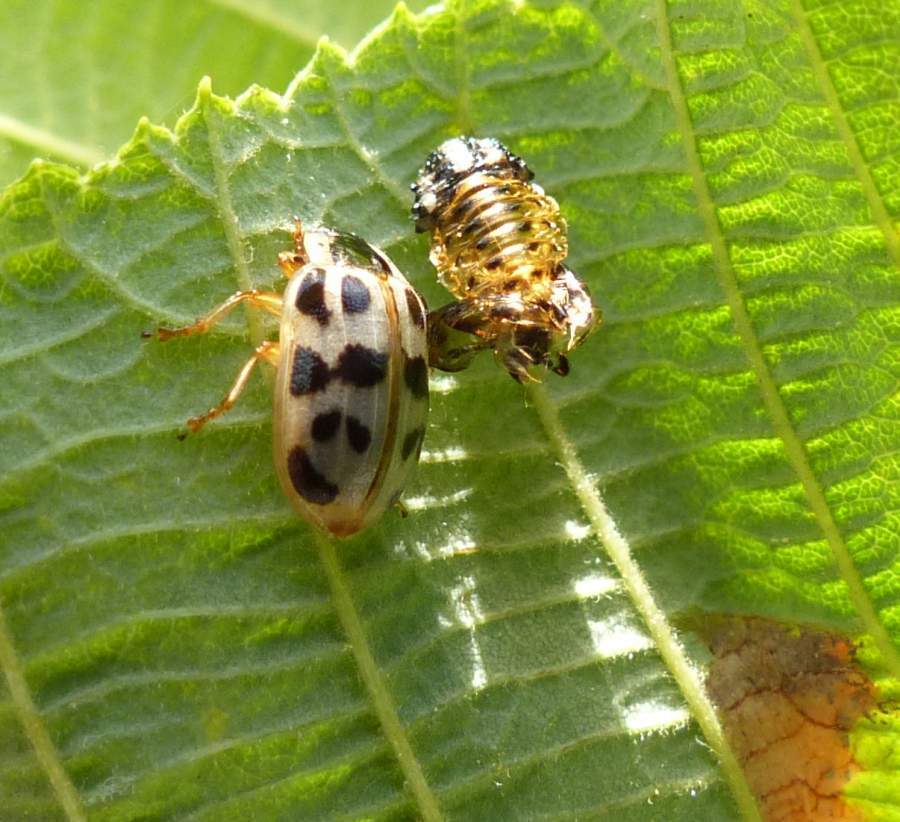
(c) christine123, some rights reserved (CC BY) · licence
Family: Chrysomelidae · Class: Insecta · Order: Coleoptera
Chrysomela mainensis (Maine Leaf Beetle) is a California animal in the Chrysomelidae family.
The Maine Leaf Beetle (Chrysomela mainensis) is a species of leaf beetle in the family Chrysomelidae. This beetle belongs to a genus known for its relatively robust, oval-shaped body form typical of chrysomelid beetles. Like other members of the genus Chrysomela, adults likely measure between 6-12 millimeters in length, though specific morphometric data for this species has not been well documented in available literature. Chrysomela mainensis occurs in North America, with its distribution extending beyond the state suggested by its common name. The species is found in both the United States and Canada, where it has been recorded from various northern regions. In Canada, the species holds a conservation rank of N5, indicating it is secure nationally (NatureServe). The species includes multiple subspecies, including C. m. mainensis, C. m. littorea, and C. m. interna, each with potentially distinct geographic ranges and ecological requirements. Habitat preferences for this species have not been thoroughly documented in the available scientific literature. As a member of the leaf beetle family, C. mainensis likely inhabits areas where its host plants occur, though specific vegetation associations remain poorly characterized. Many Chrysomela species are associated with deciduous trees and shrubs, particularly members of the willow family (Salicaceae), but the precise host plant relationships for the Maine Leaf Beetle require further research. The ecological behavior and life history of C. mainensis follow the general patterns observed in related Chrysomela species. Adults are presumably herbivorous, feeding on leaf tissue of their host plants. Like other chrysomelids, this species likely undergoes complete metamorphosis, with eggs laid on or near host plants, followed by larval development, pupation, and adult emergence. Larvae are typically external feeders on foliage, though specific details of feeding behavior, seasonal activity patterns, and reproductive cycles for this species remain undocumented in readily accessible literature. The conservation status of C. mainensis appears stable based on available assessments. In Canada, the species receives a national rank of N5, suggesting healthy, secure populations across its range. No federal listing status has been assigned under the U.S. Endangered Species Act, and the species does not appear on the Committee on the Status of Endangered Wildlife in Canada (COSEWIC) assessment list. However, like many smaller invertebrate species, comprehensive population monitoring data is limited, making detailed conservation assessments challenging. Scientific documentation for this species remains limited. The information presented here is based on available sources including NatureServe Explorer, iNaturalist observations, and taxonomic databases. If you have additional verified information about this species' biology, distribution, or ecology, please contact us to help improve this species account.
Classification
Class: Insecta · Order: Coleoptera · Family: Chrysomelidae
Frequently asked questions
How is Chrysomela mainensis classified?
Chrysomela mainensis belongs to class Insecta, order Coleoptera, family Chrysomelidae.
What family does Chrysomela mainensis belong to?
Chrysomela mainensis is in the Chrysomelidae family.
What is Chrysomela mainensis?
The Maine Leaf Beetle (Chrysomela mainensis) is a species of leaf beetle in the family Chrysomelidae.
Is Chrysomela mainensis found in California?
Yes. Chrysomela mainensis is recorded in California in The California Species Project's catalogue.
Related species
Other California species in the same genus, family, or bioregion.
Data from The California Species Project — 14,000+ California species with verified data from CNPS, CDFW, USFWS, and more.