Chrysopa coloradensis
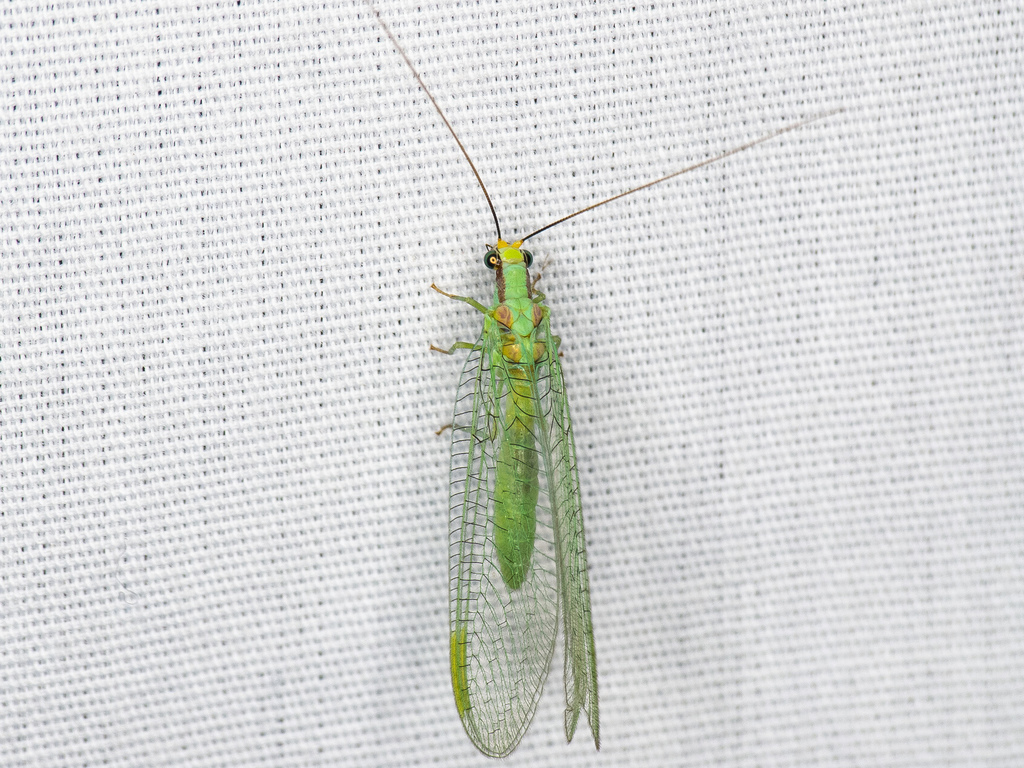
(c) Jason Alexander, some rights reserved (CC BY) · licence
Family: Chrysopidae · Class: Insecta · Order: Neuroptera
Chrysopa coloradensis is a California animal in the Chrysopidae family.
Chrysopa coloradensis is a green lacewing species belonging to the family Chrysopidae, a group of neuropteran insects commonly known for their predatory larvae. Adults typically measure 10-15 mm in body length with delicate, transparent wings that span 20-25 mm. The species exhibits the characteristic pale green coloration of most Chrysopa species, with golden or copper-colored compound eyes and long, thread-like antennae. Wings are held roof-like over the body when at rest and display intricate venation patterns typical of the family. The distribution of Chrysopa coloradensis appears to be centered in western North America, as suggested by its species name referencing Colorado. However, detailed range information for this species remains poorly documented in the scientific literature. The species is recognized in the U.S. Fish and Wildlife Service taxonomic database (TSN: 666258), indicating its presence within areas of federal wildlife management concern, though specific distributional records within California have not been comprehensively mapped. Habitat preferences for Chrysopa coloradensis have not been extensively studied or published. Like other members of the genus Chrysopa, this species likely inhabits areas with abundant vegetation that supports populations of soft-bodied arthropod prey. Most green lacewings are generalists found in diverse plant communities including agricultural areas, gardens, woodland edges, and grasslands where aphids and other small insects are plentiful. The ecology and behavior of Chrysopa coloradensis follows the typical green lacewing life cycle pattern. Adults are primarily active during evening hours and are attracted to artificial lights. Females lay eggs individually on thin stalks attached to plant surfaces, a characteristic behavior that protects developing embryos from predation and cannibalism. Larvae, known as aphid lions, are voracious predators equipped with sickle-shaped mandibles for capturing and consuming aphids, thrips, mites, and other small arthropods. The species likely undergoes multiple generations per year in suitable climates, with adults overwintering in protected locations such as leaf litter or building crevices. Pupation occurs within spherical silk cocoons attached to vegetation or substrate surfaces. Chrysopa coloradensis currently lacks formal conservation status designations at federal or state levels. The species does not appear on the U.S. Fish and Wildlife Service endangered species lists, nor does it have California Department of Fish and Wildlife protection status as of December 2025. Like many invertebrate species, population trends and conservation needs remain largely unstudied. Green lacewings generally benefit from reduced pesticide use and maintenance of diverse plant communities that support their arthropod prey base. Scientific documentation for this species remains extremely limited despite its recognition in federal taxonomic databases. Detailed ecological studies, distribution mapping, and population assessments are lacking. The information presented here synthesizes available taxonomic recognition and general knowledge of Chrysopa genus biology. We welcome contributions of verified scientific data, photographs, or field observations to enhance this species account.
Classification
Class: Insecta · Order: Neuroptera · Family: Chrysopidae
Frequently asked questions
How is Chrysopa coloradensis classified?
Chrysopa coloradensis belongs to class Insecta, order Neuroptera, family Chrysopidae.
What family does Chrysopa coloradensis belong to?
Chrysopa coloradensis is in the Chrysopidae family.
What is Chrysopa coloradensis?
Chrysopa coloradensis is a green lacewing species belonging to the family Chrysopidae, a group of neuropteran insects commonly known for their predatory larvae.
Is Chrysopa coloradensis found in California?
Yes. Chrysopa coloradensis is recorded in California in The California Species Project's catalogue.
Related species
Other California species in the same genus, family, or bioregion.
Data from The California Species Project — 14,000+ California species with verified data from CNPS, CDFW, USFWS, and more.