Chrysopa quadripunctata
Four-spotted Green Lacewing
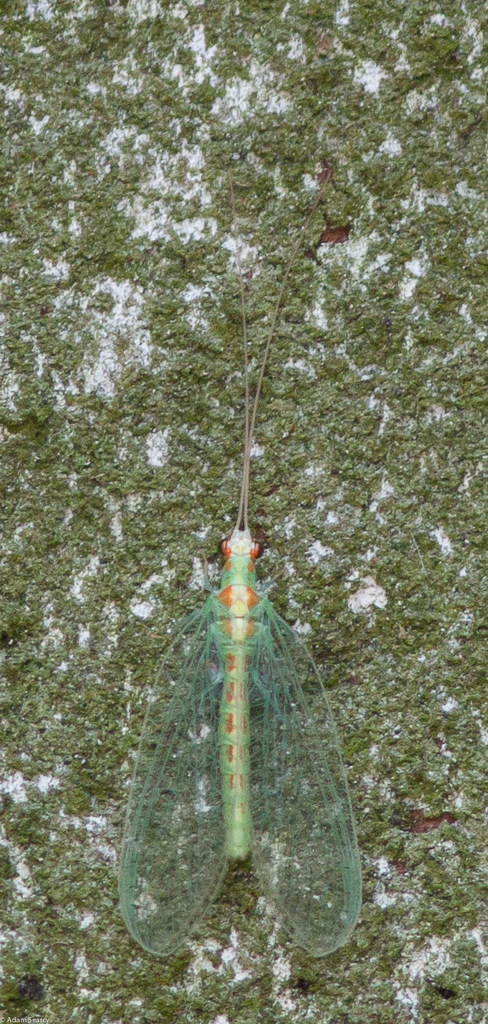
(c) Adam J. Searcy, some rights reserved (CC BY) · licence
Family: Chrysopidae · Class: Insecta · Order: Neuroptera
Chrysopa quadripunctata (Four-spotted Green Lacewing) is a California animal in the Chrysopidae family.
The Four-spotted Green Lacewing (Chrysopa quadripunctata) is a predatory insect in the family Chrysopidae, distinguished by its pale green coloration and four dark spots on the forewings. Adults typically measure 12-15 mm in body length with delicate, translucent wings that display prominent venation patterns characteristic of the neuropteran order. This species occurs throughout much of North America, with documented populations across the United States and southern Canada. In California, C. quadripunctata can be found in various regions where suitable habitat and prey populations exist, though specific distributional data within the state remains limited in published literature. Four-spotted Green Lacewings inhabit diverse environments including agricultural areas, gardens, forests, and shrublands. Adults are commonly found on vegetation where they hunt for small arthropod prey, particularly aphids, thrips, and other soft-bodied insects. The species demonstrates adaptability to both natural and managed ecosystems, making it valuable in agricultural integrated pest management programs (Xerces Society). Like other chrysopids, C. quadripunctata undergoes complete metamorphosis. Females deposit pale green eggs individually on slender stalks attached to leaves or stems, positioning them away from potential predators and cannibalistic siblings. Larvae are voracious predators known as "aphid lions," equipped with prominent mandibles for capturing and consuming prey. According to BugGuide, C. quadripunctata larvae are only occasional debris-carriers, unlike some congeners that consistently camouflage themselves with prey remains and plant material. Pupation occurs within silken cocoons attached to vegetation. Adults supplement their carnivorous diet with nectar, pollen, and honeydew, requiring access to flowering plants for optimal survival and reproduction. The species typically produces multiple generations per year in suitable climates, with adults active from spring through fall. Overwintering occurs in the adult stage, with individuals seeking sheltered locations such as leaf litter, bark crevices, or buildings. Adults are primarily nocturnal and are attracted to artificial lights. As beneficial predatory insects, Four-spotted Green Lacewings face threats from widespread pesticide use in agricultural and urban environments. Research has demonstrated that neonicotinoid insecticides can significantly reduce survival rates in related green lacewing species (Xerces Society). Habitat loss and fragmentation also impact populations by reducing prey availability and eliminating overwintering sites. However, the species shows resilience in agricultural systems where integrated pest management practices are employed, benefiting from reduced pesticide applications and habitat conservation efforts such as hedgerow plantings and cover crop maintenance. Currently, C. quadripunctata has no special conservation status at federal or state levels, reflecting its relatively stable populations across its range. The species continues to serve important ecological functions as both predator and prey within food webs, while providing valuable pest control services in agricultural systems. Conservation efforts focused on beneficial insect habitat enhancement directly support Four-spotted Green Lacewing populations alongside numerous other predatory arthropods.
Classification
Class: Insecta · Order: Neuroptera · Family: Chrysopidae
Frequently asked questions
How is Chrysopa quadripunctata classified?
Chrysopa quadripunctata belongs to class Insecta, order Neuroptera, family Chrysopidae.
What family does Chrysopa quadripunctata belong to?
Chrysopa quadripunctata is in the Chrysopidae family.
What is Chrysopa quadripunctata?
The Four-spotted Green Lacewing (Chrysopa quadripunctata) is a predatory insect in the family Chrysopidae, distinguished by its pale green coloration and four dark spots on the forewings.
Is Chrysopa quadripunctata found in California?
Yes. Chrysopa quadripunctata is recorded in California in The California Species Project's catalogue.
Related species
Other California species in the same genus, family, or bioregion.
Data from The California Species Project — 14,000+ California species with verified data from CNPS, CDFW, USFWS, and more.