Chrysoperla comanche
Comanche Green Lacewing
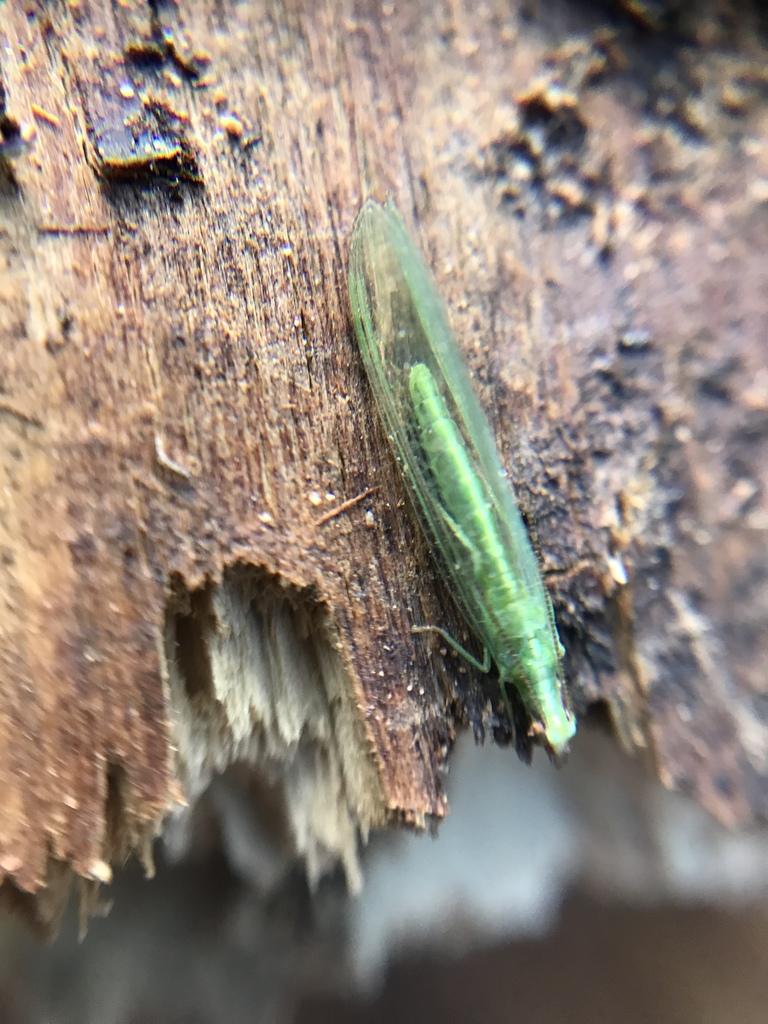
(c) Jared Shorma, some rights reserved (CC BY) · licence
Family: Chrysopidae · Class: Insecta · Order: Neuroptera
Chrysoperla comanche (Comanche Green Lacewing) is a California animal in the Chrysopidae family.
The Comanche green lacewing is a neuropteran insect in the family Chrysopidae, known for its predatory larval stage and nectar-feeding adults. Adults measure approximately 10-15 mm (0.4-0.6 inches) in length with delicate, transparent wings marked by intricate green venation. The species exhibits the characteristic pale green coloration of the genus Chrysoperla, with prominent golden or copper-colored compound eyes. According to BugGuide, C. comanche can be distinguished from closely related species by examining wing markings, particularly narrow stripe patterns on the head and thorax that differ from the broader, forked markings of C. externa. The Comanche green lacewing occurs primarily in the desert southwest of North America, with its range extending into California. BugGuide notes that this species is found primarily outside the range of C. rufilabris, occupying distinct geographic areas in the southwestern United States. NatureServe classifies the species as G5 (Secure) globally, indicating stable populations across its range (NatureServe 2025). The species appears in the U.S. Fish and Wildlife Service's taxonomic database, confirming its presence in federally tracked fauna. Habitat preferences for C. comanche include arid and semi-arid environments typical of the southwestern desert regions. Like other members of the genus Chrysoperla, this species likely inhabits areas with sufficient aphid populations to support larval development, including agricultural crops and native plant communities. The species may be found in cotton fields, vegetable crops, and other agricultural settings where prey species are abundant. Larval Comanche green lacewings are active predators, feeding primarily on aphids, scale insects, thrips, and other small arthropods. The larvae, commonly called "aphid lions," possess distinctive sickle-shaped mandibles used to capture and consume prey. Adults exhibit different feeding behavior, subsisting primarily on nectar, pollen, and honeydew secretions. Reproduction follows typical neuropteran patterns, with females laying eggs individually or in small clusters on plant surfaces. The species likely completes multiple generations per year in favorable conditions, with overwintering occurring in the adult stage. Currently, C. comanche holds no special conservation status at federal or state levels. The species' secure global ranking suggests stable populations across its range. However, like many beneficial insects, populations may face pressure from habitat modification, pesticide use in agricultural systems, and climate change effects on desert ecosystems. The species' role as a biological control agent makes it valuable for integrated pest management programs in southwestern agriculture. Limited specific research exists on this species' ecology and conservation needs, representing a knowledge gap for this potentially important predator in desert agricultural systems.
Classification
Class: Insecta · Order: Neuroptera · Family: Chrysopidae
Frequently asked questions
How is Chrysoperla comanche classified?
Chrysoperla comanche belongs to class Insecta, order Neuroptera, family Chrysopidae.
What family does Chrysoperla comanche belong to?
Chrysoperla comanche is in the Chrysopidae family.
What is Chrysoperla comanche?
The Comanche green lacewing is a neuropteran insect in the family Chrysopidae, known for its predatory larval stage and nectar-feeding adults.
Is Chrysoperla comanche found in California?
Yes. Chrysoperla comanche is recorded in California in The California Species Project's catalogue.
Related species
Other California species in the same genus, family, or bioregion.
Data from The California Species Project — 14,000+ California species with verified data from CNPS, CDFW, USFWS, and more.