Chrysoteuchia topiarius
Topiary Grass-veneer
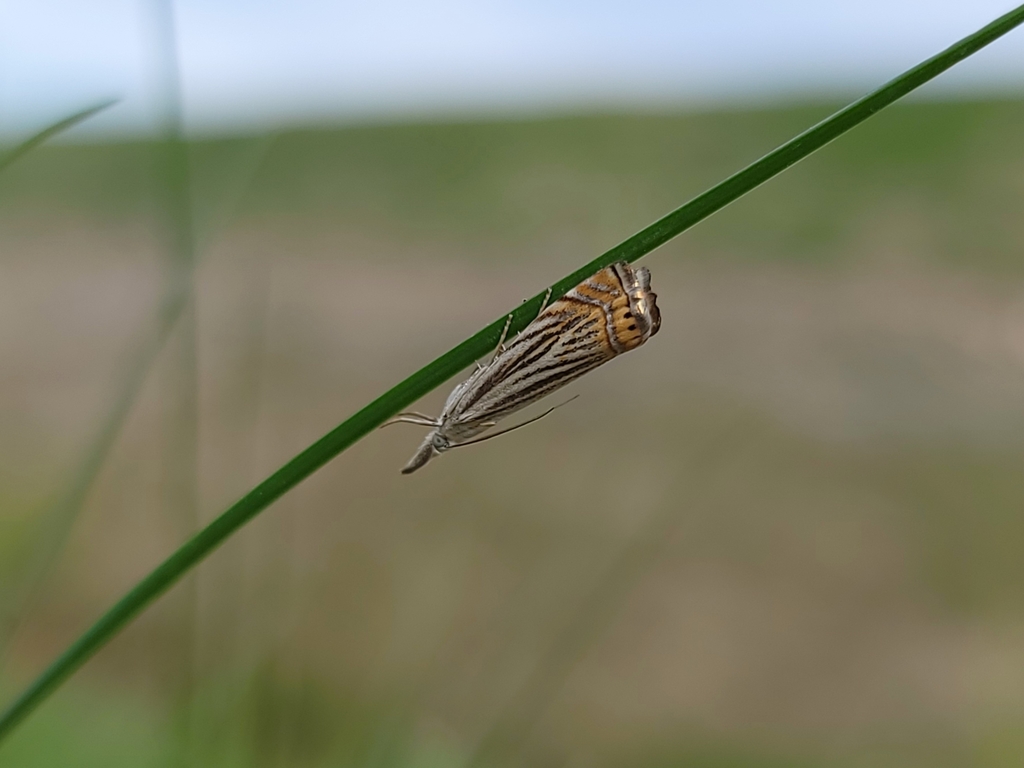
(c) Daniel S., some rights reserved (CC BY) · licence
Family: Crambidae · Class: Insecta · Order: Lepidoptera
Chrysoteuchia topiarius (Topiary Grass-veneer) is a California animal in the Crambidae family.
The Topiary Grass-veneer is a small moth in the family Crambidae, also known by its scientific name Chrysoteuchia topiarius. This species belongs to the grass-veneer moth subfamily, characterized by narrow forewings and distinctive wing patterns. Adult moths typically display mottled brown and tan coloration with subtle striping patterns along the forewings, providing effective camouflage when resting on grasses and low vegetation. Chrysoteuchia topiarius has a broad distribution across North America, extending from eastern Canada south to Florida and west to the Pacific Coast. In California, the species has been documented in various regions, including mountainous areas of the northern and central portions of the state. According to recent survey data, specimens have been collected in ponderosa pine forests at elevations around 2,350 feet, specifically in areas with associated snowberry understory vegetation (LPO 2021). The species also occurs in Washington state, with documented observations from Spokane County. The species inhabits diverse habitat types, including grasslands, forest edges, and mixed woodland areas. Based on collection records, Topiary Grass-veneer moths show particular association with ponderosa pine forest ecosystems that contain snowberry (Symphoricarpos species) in the understory. The moth's presence in these forest environments suggests adaptation to both open and partially shaded conditions. Elevation records indicate the species can be found from low elevations to at least 2,350 feet in mountainous terrain. As with most grass-veneer moths, Chrysoteuchia topiarius larvae likely feed on grasses and related monocotyledonous plants, though specific host plant relationships have not been thoroughly documented in the literature. Adult flight periods appear to include summer months, with June and July collection records from Pacific Northwest localities. The species' ecology follows typical crambid moth patterns, with larvae developing in soil or at the base of host plants and adults emerging to mate and disperse during warmer months. Currently, Chrysoteuchia topiarius does not appear on federal or state endangered species lists and lacks formal conservation status rankings. NatureServe Explorer indicates no established conservation status rank for this species, suggesting it is not considered at immediate risk of extinction. However, like many native moth species, populations may face pressure from habitat modification, light pollution, and climate change effects on forest ecosystems. The species' association with specific forest types, particularly ponderosa pine communities, makes it potentially vulnerable to forest management practices and wildfire patterns that alter these habitats. Limited scientific documentation of this species' detailed biology and distribution patterns indicates a need for additional research to better understand population trends and conservation needs. Moth surveys in California's forested regions continue to document occurrences of this species, contributing to broader understanding of the state's lepidopteran diversity.
Classification
Class: Insecta · Order: Lepidoptera · Family: Crambidae
Frequently asked questions
How is Chrysoteuchia topiarius classified?
Chrysoteuchia topiarius belongs to class Insecta, order Lepidoptera, family Crambidae.
What family does Chrysoteuchia topiarius belong to?
Chrysoteuchia topiarius is in the Crambidae family.
What is Chrysoteuchia topiarius?
The Topiary Grass-veneer is a small moth in the family Crambidae, also known by its scientific name Chrysoteuchia topiarius.
Is Chrysoteuchia topiarius found in California?
Yes. Chrysoteuchia topiarius is recorded in California in The California Species Project's catalogue.
Related species
Other California species in the same genus, family, or bioregion.
Data from The California Species Project — 14,000+ California species with verified data from CNPS, CDFW, USFWS, and more.