Chthamalus dalli
Little Brown Barnacle
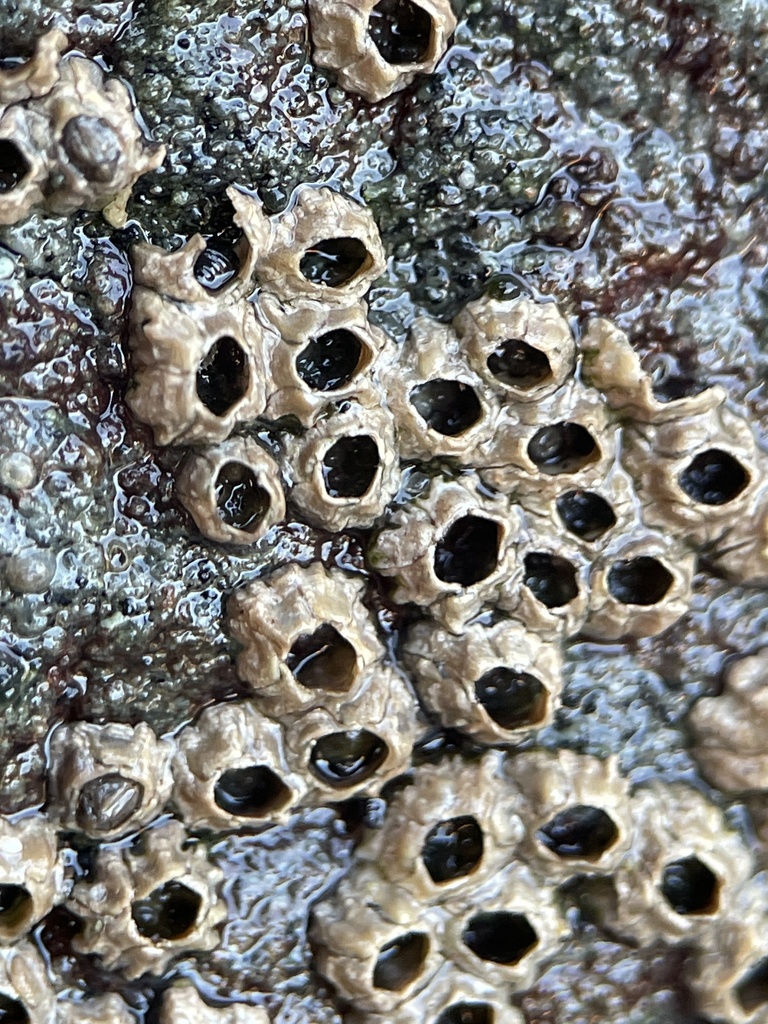
no rights reserved · CC0
Family: Chthamalidae · Class: Thecostraca · Order: Balanomorpha
Chthamalus dalli (Little Brown Barnacle) is a California animal in the Chthamalidae family.
The little brown barnacle (Chthamalus dalli) is a small acorn barnacle in the family Chthamalidae that inhabits rocky intertidal zones along the Pacific Coast of North America. This species forms cone-shaped calcareous shells typically measuring 6 to 12 mm in diameter at the base. The shell consists of six triangular plates that meet at overlapping sutures, creating a protective enclosure for the soft body within. The exterior surface is typically brownish-gray to dark brown, often with lighter colored growth rings that reflect seasonal variations in shell deposition. Chthamalus dalli ranges along the Pacific Coast from British Columbia, Canada, south to Baja California, Mexico. The species is commonly found throughout California's rocky coastline, occurring on exposed headlands, wave-swept shores, and protected rocky areas within bays and estuaries. This barnacle demonstrates a broad latitudinal distribution, adapting to varying ocean temperatures and wave exposure conditions across its range. The species inhabits the upper to middle intertidal zone, typically settling on hard substrates including natural rock surfaces, concrete seawalls, pier pilings, and other artificial structures. Chthamalus dalli shows preference for areas with moderate to high wave action, where water circulation provides adequate food supply and prevents sediment accumulation. The barnacles often form dense aggregations in favorable locations, creating extensive colonies that can cover substantial portions of suitable rocky habitat. They demonstrate tolerance for extended periods of aerial exposure during low tides, a critical adaptation for upper intertidal survival. As filter feeders, little brown barnacles extend their feathery cirri (modified legs) from their shells to capture phytoplankton, zooplankton, and organic detritus from the water column during high tide periods. Reproduction follows a typical barnacle pattern, with individuals functioning as simultaneous hermaphrodites. Cross-fertilization occurs through copulation between adjacent individuals using extensible reproductive organs. Larvae develop through several planktonic stages before settling and metamorphosing into the adult form. Peak spawning typically occurs during warmer months when phytoplankton productivity is highest. Recruitment success varies significantly between years, influenced by oceanographic conditions, water temperature, and food availability. The species plays an important ecological role as both a space competitor in intertidal communities and as prey for various predators including sea stars, gastropods, and crabs. Chthamalus dalli often coexists with other barnacle species, particularly Balanus glandula, with competitive interactions determining local distribution patterns based on factors such as wave exposure, tidal height, and recruitment timing. Currently, Chthamalus dalli does not hold any special conservation status and appears to maintain stable populations throughout its range. The species demonstrates resilience to natural environmental variations and has shown ability to colonize artificial substrates in urban coastal environments. However, like other intertidal organisms, populations may face future challenges from climate change effects including ocean acidification, sea level rise, and changing storm patterns that could alter suitable habitat availability.
Classification
Class: Thecostraca · Order: Balanomorpha · Family: Chthamalidae
Frequently asked questions
How is Chthamalus dalli classified?
Chthamalus dalli belongs to class Thecostraca, order Balanomorpha, family Chthamalidae.
What family does Chthamalus dalli belong to?
Chthamalus dalli is in the Chthamalidae family.
What is Chthamalus dalli?
The little brown barnacle (Chthamalus dalli) is a small acorn barnacle in the family Chthamalidae that inhabits rocky intertidal zones along the Pacific Coast of North America.
Is Chthamalus dalli found in California?
Yes. Chthamalus dalli is recorded in California in The California Species Project's catalogue.
More California species
This species has no close relatives in our California data — here are other species to explore.
Data from The California Species Project — 14,000+ California species with verified data from CNPS, CDFW, USFWS, and more.