Cicindela hirticollis gravida
Sandy Beach Tiger Beetle
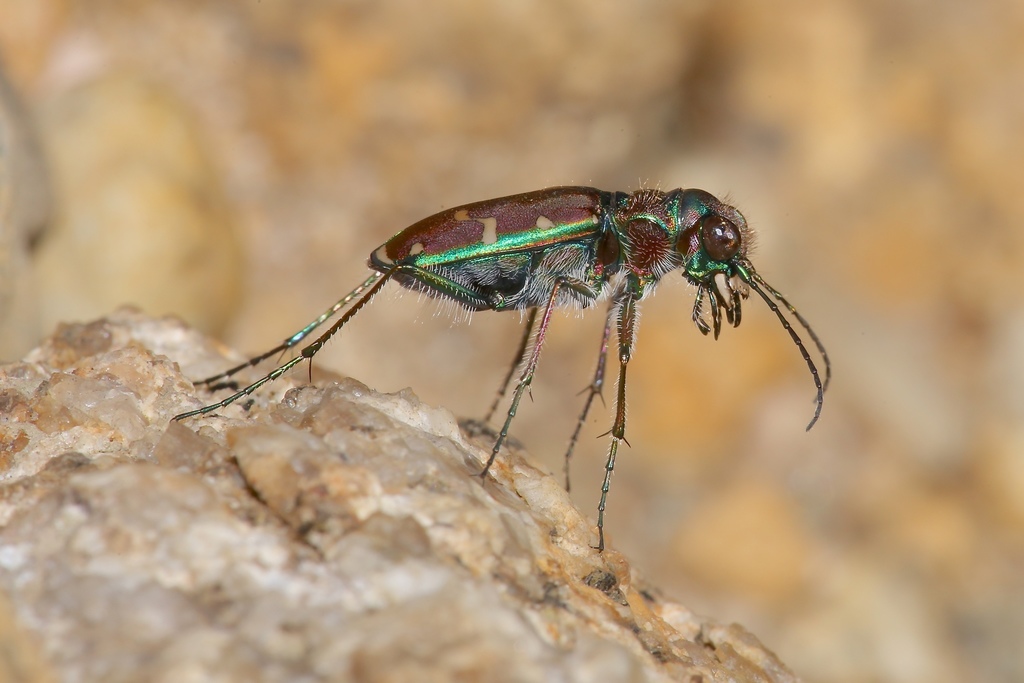
(c) Laura Gaudette, some rights reserved (CC BY) · licence
Family: Cicindelidae · Class: Insecta · Order: Coleoptera
Conservation status: G5T2 S2
Cicindela hirticollis gravida (Sandy Beach Tiger Beetle) is a California animal in the Cicindelidae family.
The sandy beach tiger beetle (Cicindela hirticollis gravida) is a subspecies of the hairy-necked tiger beetle, distinguished by its robust build and distinctive habitat preferences. Adults typically measure 12-15 mm (0.5-0.6 inches) in length, with a bronze-green head and thorax characteristic of many Cicindela species. The elytra (wing covers) display variable coloration from cream to light tan, often marked with darker maculations or lines that aid in camouflage against sandy substrates. This subspecies is endemic to California's coastal regions, with a historical range extending along sandy beaches and adjacent saline wetlands from the San Francisco Bay Area south to at least Los Angeles County. Current populations are documented in the San Francisco Bay region, including areas within the greater Ballona Wetlands complex in Los Angeles County. The subspecies has experienced significant range contraction, with many coastal populations extirpated due to habitat loss and human disturbance. Sandy beach tiger beetles inhabit dynamic coastal environments including sandy beaches, salt marshes, mudflats, and adjacent transitional zones between marine and terrestrial habitats. They occur in areas subject to tidal influence, where salinity levels fluctuate and substrate moisture varies seasonally. The species requires unvegetated or sparsely vegetated sandy areas for larval development, typically in zones that experience periodic inundation but maintain adequate drainage. Adults are most active on warm, sunny days when they hunt along the edges of tidal channels and on exposed mudflats. As active predators, adults use their prominent mandibles to capture small invertebrates including amphipods, flies, and other arthropods found along the water's edge. Like other tiger beetles, they are visual hunters that rely on rapid pursuit to capture prey. Larvae are ambush predators that construct vertical burrows in sandy substrate, waiting at burrow entrances to capture passing invertebrates. The larval stage can persist for multiple years, during which individuals remain in their burrows except when molting or relocating. Adults are strong fliers capable of dispersing considerable distances, though habitat fragmentation may limit natural recolonization of suitable sites. The sandy beach tiger beetle receives no federal protection but is assigned a Global/State Rank of G5T2 S2, indicating the subspecies is imperiled in California with 6-20 occurrences or few remaining individuals. Primary threats include coastal development, recreational activities that compact or disturb sandy substrates, altered hydrology from water diversions, and sea level rise. Beach maintenance activities, including sand grooming and debris removal, can eliminate the microhabitats essential for larval survival. The species' restriction to a narrow coastal zone makes it particularly vulnerable to habitat loss and climate change impacts. Conservation efforts focus on protecting remaining coastal wetland complexes and managing human activities in occupied habitats to minimize disturbance during critical life stages.
Classification
Class: Insecta · Order: Coleoptera · Family: Cicindelidae
Conservation status
G5T2 S2
Frequently asked questions
How is Cicindela hirticollis gravida classified?
Cicindela hirticollis gravida belongs to class Insecta, order Coleoptera, family Cicindelidae.
What family does Cicindela hirticollis gravida belong to?
Cicindela hirticollis gravida is in the Cicindelidae family.
Is Cicindela hirticollis gravida protected or of conservation concern?
Cicindela hirticollis gravida carries the following status: G5T2 S2.
What is Cicindela hirticollis gravida?
The sandy beach tiger beetle (Cicindela hirticollis gravida) is a subspecies of the hairy-necked tiger beetle, distinguished by its robust build and distinctive habitat preferences.
Is Cicindela hirticollis gravida found in California?
Yes. Cicindela hirticollis gravida is recorded in California in The California Species Project's catalogue.
Related species
Other California species in the same genus, family, or bioregion.
Data from The California Species Project — 14,000+ California species with verified data from CNPS, CDFW, USFWS, and more.