Cicindela nebraskana
Prairie Long-lipped Tiger Beetle
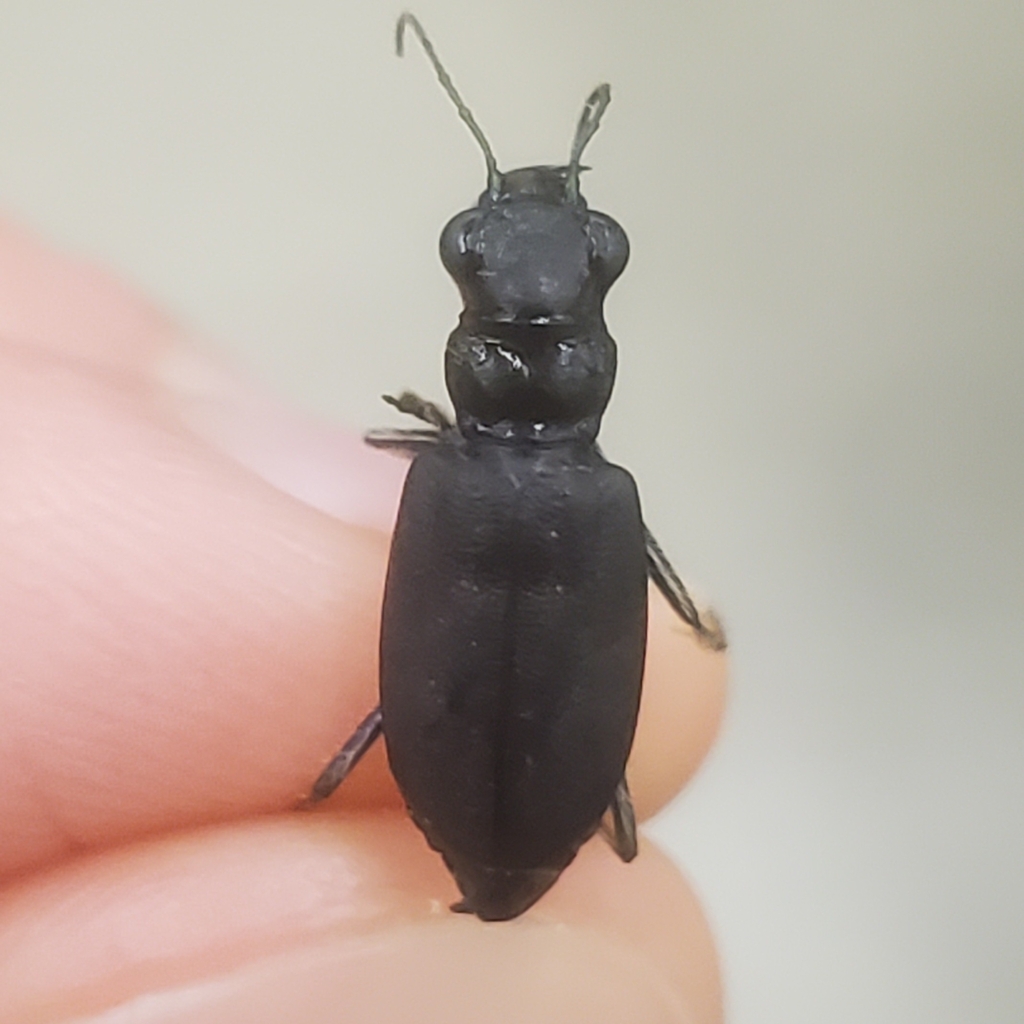
(c) Bennett Grappone, some rights reserved (CC BY) · licence
Family: Cicindelidae · Class: Insecta · Order: Coleoptera
Cicindela nebraskana (Prairie Long-lipped Tiger Beetle) is a California animal in the Cicindelidae family.
The Prairie Long-lipped Tiger Beetle (Cicindela nebraskana) is a predatory ground beetle in the family Cicindelidae. Adults are typically medium-sized for tiger beetles, measuring approximately 10 to 15 millimeters (0.4 to 0.6 inches) in length. The species displays the characteristic metallic sheen common to tiger beetles, with bronze to copper-colored elytra and a darker head and thorax. The mandibles are prominently elongated, giving rise to the "long-lipped" common name, and are well-adapted for capturing prey. Historically, C. nebraskana occurred across the Great Plains region of North America, with populations documented in Nebraska, Kansas, and surrounding prairie states. The species' range extended into areas of suitable grassland habitat throughout the central United States. However, current distribution data suggests the species may have experienced significant range reduction, though comprehensive surveys are needed to determine the full extent of remaining populations. Prairie Long-lipped Tiger Beetles inhabit native grassland ecosystems, particularly areas with sparse vegetation that allow for active hunting and thermoregulation. The species typically occurs in sandy or loamy soils that facilitate larval development. Adults are found in open prairie areas with scattered bare ground patches, which are essential for their hunting behavior and temperature regulation. Like other tiger beetles, this species requires specific microhabitat conditions including appropriate soil moisture and temperature regimes. Adult beetles are active predators that hunt during daylight hours, using their exceptional speed and vision to capture small arthropod prey including ants, flies, and other insects. The larvae are equally predacious, developing in vertical burrows in the soil where they ambush passing prey. Adults are typically most active during warm, sunny conditions and may be observed running rapidly across open ground in pursuit of prey or mates. The species likely completes one generation per year, with adults emerging in late spring or early summer. Mating occurs during peak activity periods, and females deposit eggs in suitable soil substrates. Like many prairie-associated species, the Prairie Long-lipped Tiger Beetle faces conservation challenges primarily related to habitat loss and fragmentation. The conversion of native grasslands to agriculture throughout the Great Plains has eliminated much of the species' historical habitat. Remaining prairie fragments may be too small or isolated to support viable populations. The species lacks federal protection status, and comprehensive population assessments are needed to determine current conservation needs. Prairie tiger beetles are particularly vulnerable to habitat modifications because both adults and larvae require specific soil and vegetation conditions that are easily disrupted by land use changes. Conservation efforts for this species would benefit from prairie restoration initiatives and protection of remaining native grassland habitats. Research into current population status, distribution, and specific habitat requirements is essential for developing effective conservation strategies for the Prairie Long-lipped Tiger Beetle.
Classification
Class: Insecta · Order: Coleoptera · Family: Cicindelidae
Frequently asked questions
How is Cicindela nebraskana classified?
Cicindela nebraskana belongs to class Insecta, order Coleoptera, family Cicindelidae.
What family does Cicindela nebraskana belong to?
Cicindela nebraskana is in the Cicindelidae family.
What is Cicindela nebraskana?
The Prairie Long-lipped Tiger Beetle (Cicindela nebraskana) is a predatory ground beetle in the family Cicindelidae.
Is Cicindela nebraskana found in California?
Yes. Cicindela nebraskana is recorded in California in The California Species Project's catalogue.
Related species
Other California species in the same genus, family, or bioregion.
Data from The California Species Project — 14,000+ California species with verified data from CNPS, CDFW, USFWS, and more.