Cicindela oregona
Western Tiger Beetle
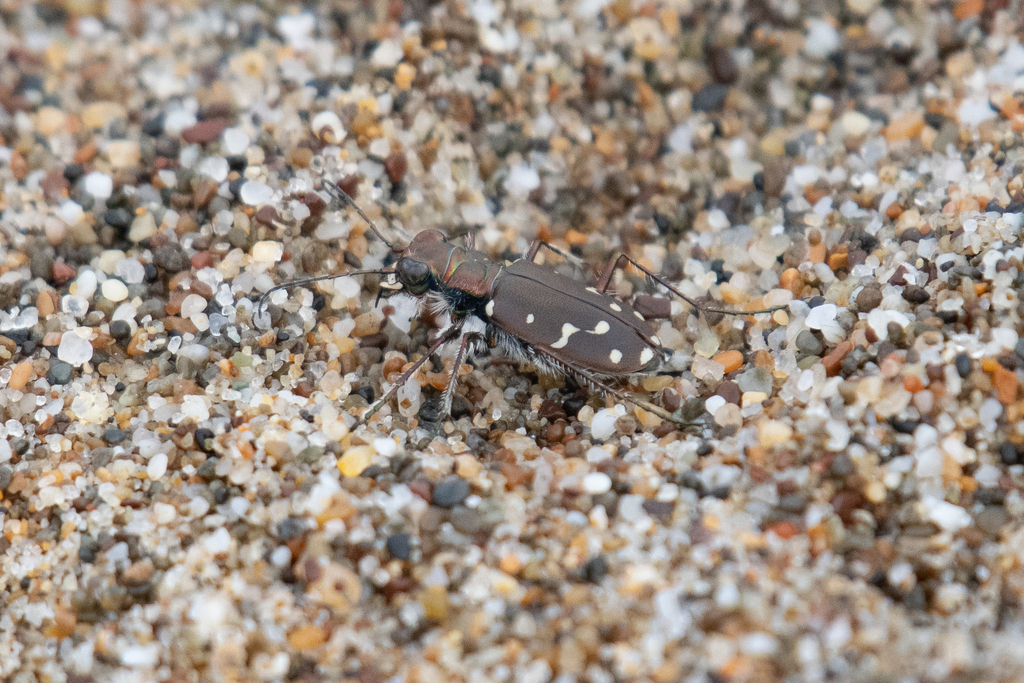
(c) Rajan Rao, some rights reserved (CC BY) · licence
Family: Cicindelidae · Class: Insecta · Order: Coleoptera
Cicindela oregona (Western Tiger Beetle) is a California animal in the Cicindelidae family.
The Western Tiger Beetle is a predatory ground beetle in the family Cicindelidae, distinguished by its metallic bronze to copper-brown elytra with pale cream or yellowish markings. Adults measure 12-15 mm (0.47-0.59 inches) in length and possess large, prominent eyes and long, sickle-shaped mandibles adapted for capturing prey. The species exhibits the characteristic tiger beetle body form with long legs built for rapid pursuit of insects across open ground. Cicindela oregona oregona historically occurred throughout the western United States, with the nominate subspecies native to California's San Francisco Bay region. According to recovery documentation, this subspecies was historically found in the San Francisco Bay Estuary, with populations reported from San Rafael, Martinez, and Port Costa, though these localities have not been resurveyed in over 40 years (USFWS 2005). The last documented population of C. o. oregona was destroyed in 1996, and the subspecies is now considered extirpated from California. Other subspecies of C. oregona persist in different regions, with the species maintaining a global conservation status of G5 (NatureServe 2016). The California populations inhabited salt marsh edges and tidal flats in the San Francisco Bay Estuary system. These beetles required areas where fresh and saltwater mixed, typically occupying sparsely vegetated mudflats and sandy shores with moderate salinity levels. The species preferred sites with open substrate for larval burrow construction and adult foraging activities. Western Tiger Beetles are active predators that hunt visually during daylight hours. Adults run rapidly across open ground to capture small arthropods, while larvae construct vertical burrows in sandy or muddy substrate, ambushing prey from burrow entrances. The species exhibits complete metamorphosis, with larvae spending 1-2 years in burrows before pupating. Adults typically emerge in late spring and summer, with peak activity during warm, sunny conditions. Mating occurs on the ground, and females deposit eggs individually in suitable substrate. The California subspecies C. o. oregona is considered extirpated, representing one of four tiger beetle species historically recorded in the San Francisco Bay Estuary. Habitat destruction through urban development, port construction, and shoreline modification eliminated suitable breeding and foraging areas. The species faced additional pressures from introduced species and altered hydrology in bay margin habitats. While the nominate subspecies no longer occurs in California, other subspecies including C. o. navajoensis persist in different regions. Conservation efforts for remaining tiger beetle populations in California focus on habitat protection and restoration of tidal marsh ecosystems that support related species such as the federally endangered Ohlone tiger beetle (Cicindela ohlone).
Classification
Class: Insecta · Order: Coleoptera · Family: Cicindelidae
Frequently asked questions
How is Cicindela oregona classified?
Cicindela oregona belongs to class Insecta, order Coleoptera, family Cicindelidae.
What family does Cicindela oregona belong to?
Cicindela oregona is in the Cicindelidae family.
What is Cicindela oregona?
The Western Tiger Beetle is a predatory ground beetle in the family Cicindelidae, distinguished by its metallic bronze to copper-brown elytra with pale cream or yellowish markings.
Is Cicindela oregona found in California?
Yes. Cicindela oregona is recorded in California in The California Species Project's catalogue.
Related species
Other California species in the same genus, family, or bioregion.
Data from The California Species Project — 14,000+ California species with verified data from CNPS, CDFW, USFWS, and more.