Cicindela tranquebarica joaquinensis
San Joaquin Tiger Beetle
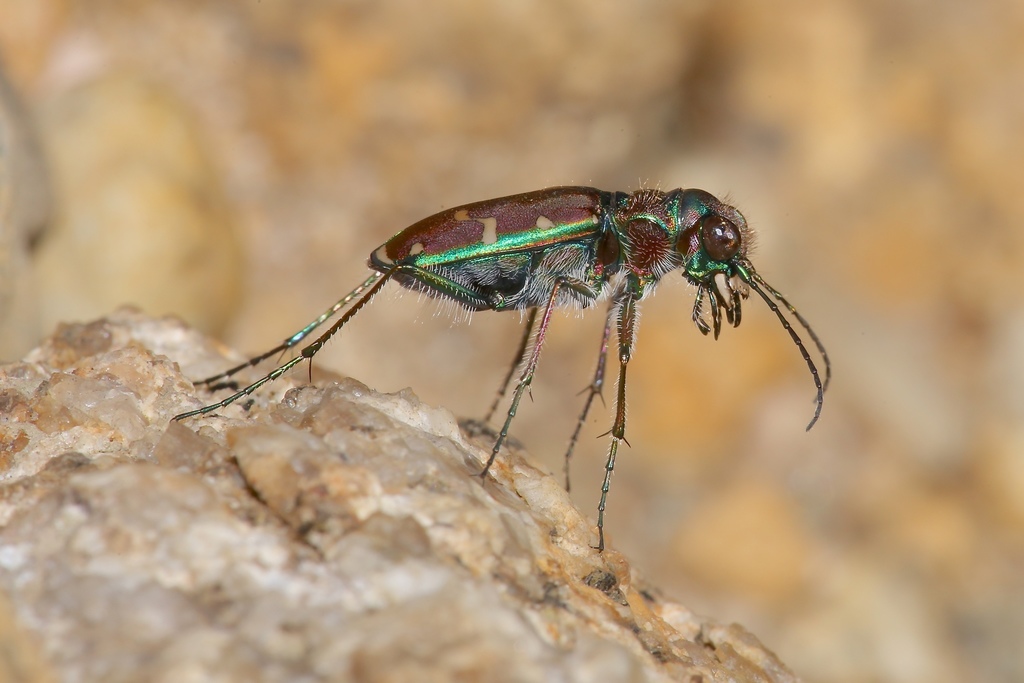
(c) Laura Gaudette, some rights reserved (CC BY) · licence
Family: Cicindelidae · Class: Insecta · Order: Coleoptera
Conservation status: G5T1 S1
Cicindela tranquebarica joaquinensis (San Joaquin Tiger Beetle) is a California animal in the Cicindelidae family.
The San Joaquin tiger beetle (Cicindela tranquebarica joaquinensis) is a subspecies of the oblique-lined tiger beetle endemic to California's Central Valley. This predatory ground beetle measures approximately 11-15 mm (0.4-0.6 inches) in length with the characteristic metallic bronze-green coloration typical of tiger beetles. The elytra (wing covers) display distinctive cream-colored markings that form interrupted bands across the dorsal surface, distinguishing it from other Cicindela subspecies. Historically, the San Joaquin tiger beetle occurred throughout suitable habitat in California's Central Valley, primarily in the San Joaquin Valley portion. The subspecies' current range is severely restricted compared to its historical distribution, with remaining populations concentrated in remnant alkali sink scrub and grassland habitats. Most documented occurrences are located in the southern Central Valley, particularly in areas that retain the specialized soil conditions required by this subspecies. The species inhabits alkali sink scrub communities and adjacent grasslands characterized by alkaline or saline soils. These habitats typically occur in low-lying areas where seasonal flooding creates distinctive soil chemistry and plant communities. The beetle requires bare or sparsely vegetated ground for hunting and nesting activities, conditions naturally maintained by the harsh alkaline environment and seasonal inundation patterns. Suitable habitat often features salt-tolerant vegetation such as alkali heath, iodine bush, and various saltgrass species. Like other tiger beetles, the San Joaquin tiger beetle is an active predator that hunts during daylight hours. Adults are fast-running hunters that pursue small arthropods across open ground, using their large mandibles to capture prey. The species exhibits seasonal activity patterns typical of Central Valley insects, with adults most active during spring and early summer months when temperatures are moderate and prey is abundant. Larvae develop in vertical burrows excavated in the alkaline soil, where they ambush passing insects from the burrow entrance. The complete life cycle from egg to adult typically requires one to two years. The San Joaquin tiger beetle holds a global rank of G5T1 and state rank of S1, indicating it is critically imperiled in California and globally. The subspecies has experienced severe population declines due to widespread conversion of Central Valley alkali sink habitats to agriculture and urban development. An estimated 95% of the Central Valley's native grassland and scrub habitats have been eliminated, with alkali sink communities being among the most severely impacted. Remaining populations are highly fragmented and vulnerable to local extinctions from habitat degradation, altered hydrology, and invasive species establishment. The specialized soil chemistry requirements make habitat restoration particularly challenging, as most converted lands cannot easily be returned to suitable conditions. Current conservation efforts focus on protecting existing remnant habitats and managing invasive species that threaten the sparse vegetation structure required by this subspecies.
Classification
Class: Insecta · Order: Coleoptera · Family: Cicindelidae
Conservation status
G5T1 S1
Frequently asked questions
How is Cicindela tranquebarica joaquinensis classified?
Cicindela tranquebarica joaquinensis belongs to class Insecta, order Coleoptera, family Cicindelidae.
What family does Cicindela tranquebarica joaquinensis belong to?
Cicindela tranquebarica joaquinensis is in the Cicindelidae family.
Is Cicindela tranquebarica joaquinensis protected or of conservation concern?
Cicindela tranquebarica joaquinensis carries the following status: G5T1 S1.
What is Cicindela tranquebarica joaquinensis?
The San Joaquin tiger beetle (Cicindela tranquebarica joaquinensis) is a subspecies of the oblique-lined tiger beetle endemic to California's Central Valley.
Is Cicindela tranquebarica joaquinensis found in California?
Yes. Cicindela tranquebarica joaquinensis is recorded in California in The California Species Project's catalogue.
Related species
Other California species in the same genus, family, or bioregion.
Data from The California Species Project — 14,000+ California species with verified data from CNPS, CDFW, USFWS, and more.