Cicindela tranquebarica viridissima
Greenest Tiger Beetle
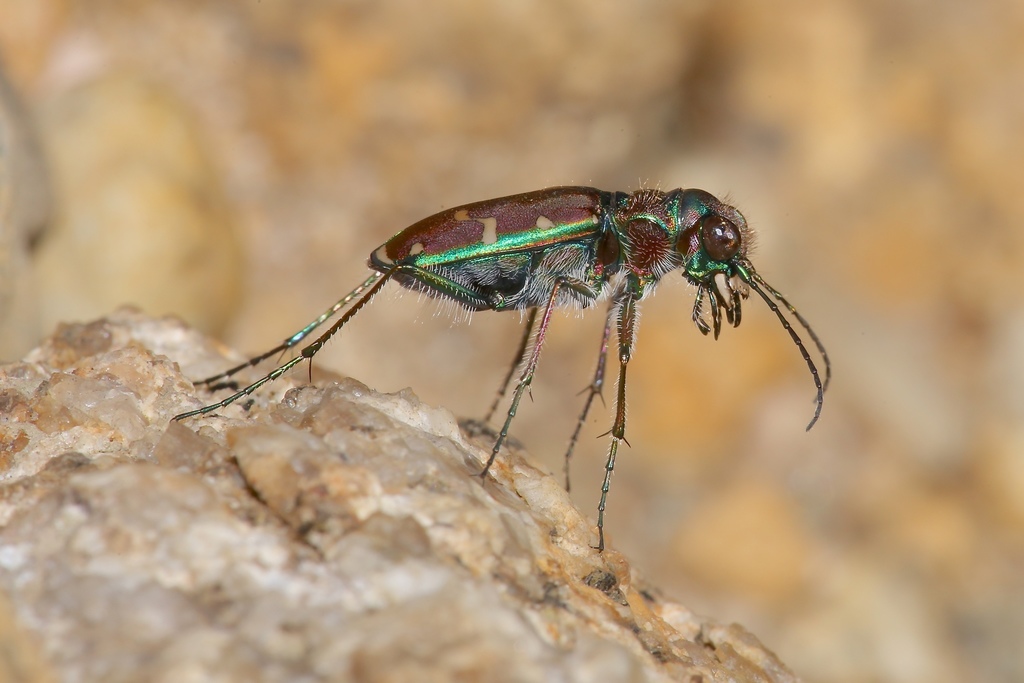
(c) Laura Gaudette, some rights reserved (CC BY) · licence
Family: Cicindelidae · Class: Insecta · Order: Coleoptera
Conservation status: G5T1 S1
Cicindela tranquebarica viridissima (Greenest Tiger Beetle) is a California animal in the Cicindelidae family.
The Greenest Tiger Beetle is a subspecies of the widespread Cicindela tranquebarica complex, distinguished by its metallic green coloration. This medium-sized tiger beetle exhibits the typical cicindelid body plan with long legs adapted for rapid pursuit of prey, prominent mandibles, and large compound eyes. The subspecies name "viridissima" refers to its distinctive bright green metallic luster, which separates it from other C. tranquebarica subspecies that display bronze, copper, or purple hues. Historically, C. t. viridissima was endemic to southern California, with populations documented in the Santa Ana River drainage system and adjacent areas of Orange and Riverside counties. The subspecies was closely associated with specific riparian and floodplain habitats within this restricted range. Current distribution is extremely limited, with the subspecies potentially extirpated from much of its historical range due to extensive habitat modification and urbanization throughout the region. This subspecies inhabited sandy and gravelly substrates along rivers and seasonal streams, particularly in areas with sparse vegetation and periodic flooding. These dynamic floodplain environments provided the specific microhabitat conditions required for successful reproduction and larval development. The larvae are fossorial predators that construct vertical burrows in suitable substrate, while adults are active predators on the soil surface during warm periods. Like other tiger beetles, C. t. viridissima adults are fast-running predators that pursue small arthropods across open ground. Mating typically occurs during peak activity periods in spring and early summer, with females depositing eggs in suitable sandy substrate. The larvae are ambush predators that remain in their burrows with only their heads and mandibles exposed, capturing prey that ventures within reach. Development from egg to adult typically requires one to two years, depending on environmental conditions. The Greenest Tiger Beetle faces critical conservation challenges, reflected in its G5T1 S1 ranking, indicating it is critically imperiled both globally as a subspecies and within California. The primary threat has been habitat loss due to urban development, flood control modifications, and altered hydrology within the Santa Ana River system. Dam construction, channelization, and water diversions have eliminated the natural flood cycles essential for maintaining suitable habitat conditions. Additionally, recreational activities and invasive plant species have degraded remaining habitat patches. Population status remains uncertain, with no recent comprehensive surveys documenting current abundance or distribution. The subspecies may persist in small, isolated populations within protected areas or less-developed portions of its historical range, but verification of extant populations requires targeted field surveys. Recovery efforts would need to focus on habitat restoration within the Santa Ana River drainage, including reestablishment of natural flow regimes and management of invasive species. The extremely restricted range and specific habitat requirements make this subspecies particularly vulnerable to local extinction, highlighting the urgent need for conservation assessment and protection measures.
Classification
Class: Insecta · Order: Coleoptera · Family: Cicindelidae
Conservation status
G5T1 S1
Frequently asked questions
How is Cicindela tranquebarica viridissima classified?
Cicindela tranquebarica viridissima belongs to class Insecta, order Coleoptera, family Cicindelidae.
What family does Cicindela tranquebarica viridissima belong to?
Cicindela tranquebarica viridissima is in the Cicindelidae family.
Is Cicindela tranquebarica viridissima protected or of conservation concern?
Cicindela tranquebarica viridissima carries the following status: G5T1 S1.
What is Cicindela tranquebarica viridissima?
The Greenest Tiger Beetle is a subspecies of the widespread Cicindela tranquebarica complex, distinguished by its metallic green coloration.
Is Cicindela tranquebarica viridissima found in California?
Yes. Cicindela tranquebarica viridissima is recorded in California in The California Species Project's catalogue.
Related species
Other California species in the same genus, family, or bioregion.
Data from The California Species Project — 14,000+ California species with verified data from CNPS, CDFW, USFWS, and more.