Circotettix maculatus
Dancing Grasshopper
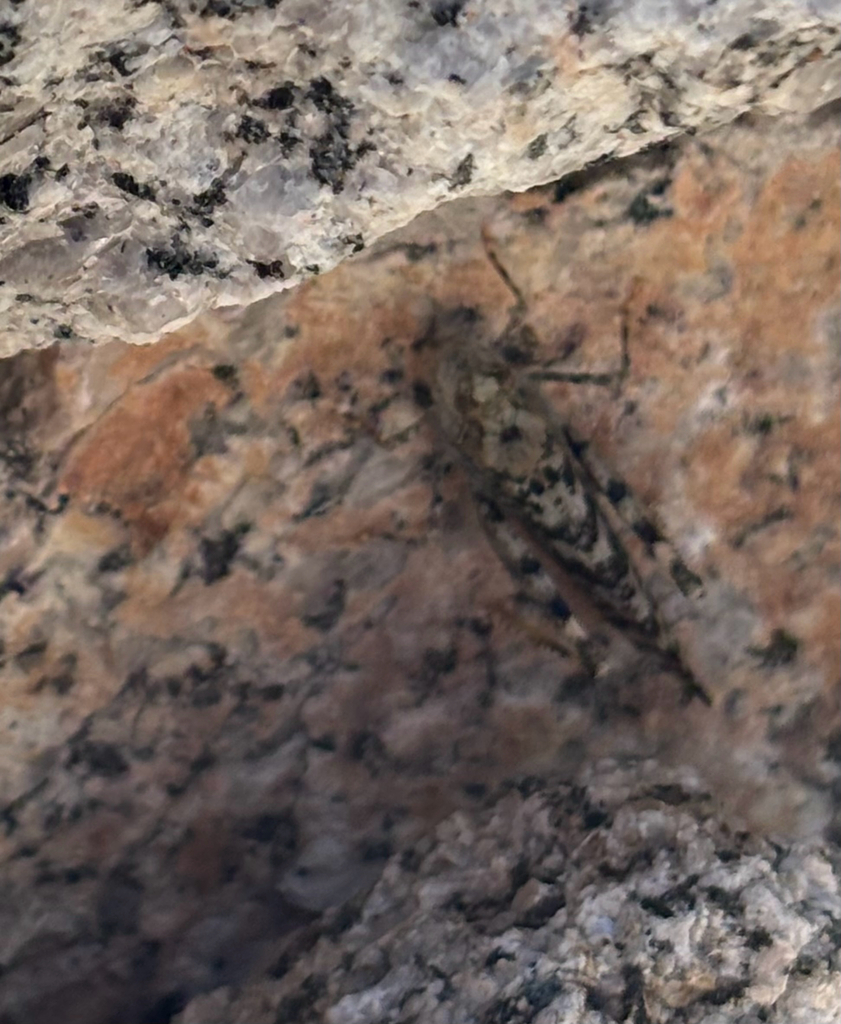
no rights reserved · CC0
Family: Acrididae · Class: Insecta · Order: Orthoptera
Circotettix maculatus (Dancing Grasshopper) is a California animal in the Acrididae family.
The Dancing Grasshopper is a medium-sized band-winged grasshopper belonging to the subfamily Oedipodinae. Adults display the characteristic features of the genus Circotettix, with mottled brown and gray coloration that provides effective camouflage against rocky substrates. The species exhibits sexual dimorphism typical of acridids, with females generally larger than males. The hind wings are distinctively blackish, distinguishing it from related species in high mountain environments (BugGuide 2012). Circotettix maculatus occurs in the western United States, with populations documented in California's high elevation regions. The species has been recorded from Yosemite National Park and other mountainous areas of California (BugGuide 2012). Its range extends beyond California to include portions of the western mountain states, though specific distribution limits require further documentation. This grasshopper inhabits high mountain environments, typically found on steep exposed rocky slopes and talus fields covered with boulders. The species demonstrates a preference for elevations above 11,000 feet, where it co-occurs with other high-altitude orthopterans including Circotettix undulatus and Cratypedes neglectus (BugGuide 2007). The habitat ranges from Great Basin Desert communities at lower elevations to alpine zones at the highest elevations. The rocky, boulder-strewn terrain provides both shelter and thermal regulation opportunities essential for this cold-adapted species. Dancing Grasshoppers exhibit seasonal activity patterns typical of high-altitude insects. Adults are active during the brief mountain summer, with peak abundance occurring in late summer months. The species overwinters as eggs, which must survive harsh alpine conditions including extended freezing temperatures and heavy snow cover. Like other band-winged grasshoppers, C. maculatus likely produces clicking or crackling sounds during flight displays, though specific acoustic behaviors have not been well documented. The species' diet consists primarily of grasses and other herbaceous vegetation available in its rocky habitat. Circotettix maculatus currently lacks formal conservation status designations at federal or state levels. However, high-altitude specialist insects face increasing pressures from climate change, as warming temperatures may compress suitable habitat toward higher elevations. The species' restriction to specific rocky slope habitats at high elevations potentially makes populations vulnerable to environmental changes. Additionally, the taxonomic position of this species has been subject to revision, as some specimens have been placed in the genus Trimerotropis rather than Circotettix, indicating ongoing systematic uncertainty (BugGuide 2012). Further research is needed to clarify the species' precise distribution, population status, and ecological requirements to assess its long-term conservation needs in California's alpine ecosystems.
Classification
Class: Insecta · Order: Orthoptera · Family: Acrididae
Frequently asked questions
How is Circotettix maculatus classified?
Circotettix maculatus belongs to class Insecta, order Orthoptera, family Acrididae.
What family does Circotettix maculatus belong to?
Circotettix maculatus is in the Acrididae family.
What is Circotettix maculatus?
The Dancing Grasshopper is a medium-sized band-winged grasshopper belonging to the subfamily Oedipodinae.
Is Circotettix maculatus found in California?
Yes. Circotettix maculatus is recorded in California in The California Species Project's catalogue.
Related species
Other California species in the same genus, family, or bioregion.
Data from The California Species Project — 14,000+ California species with verified data from CNPS, CDFW, USFWS, and more.