Cisseps fulvicollis
Yellow-collared Scape Moth
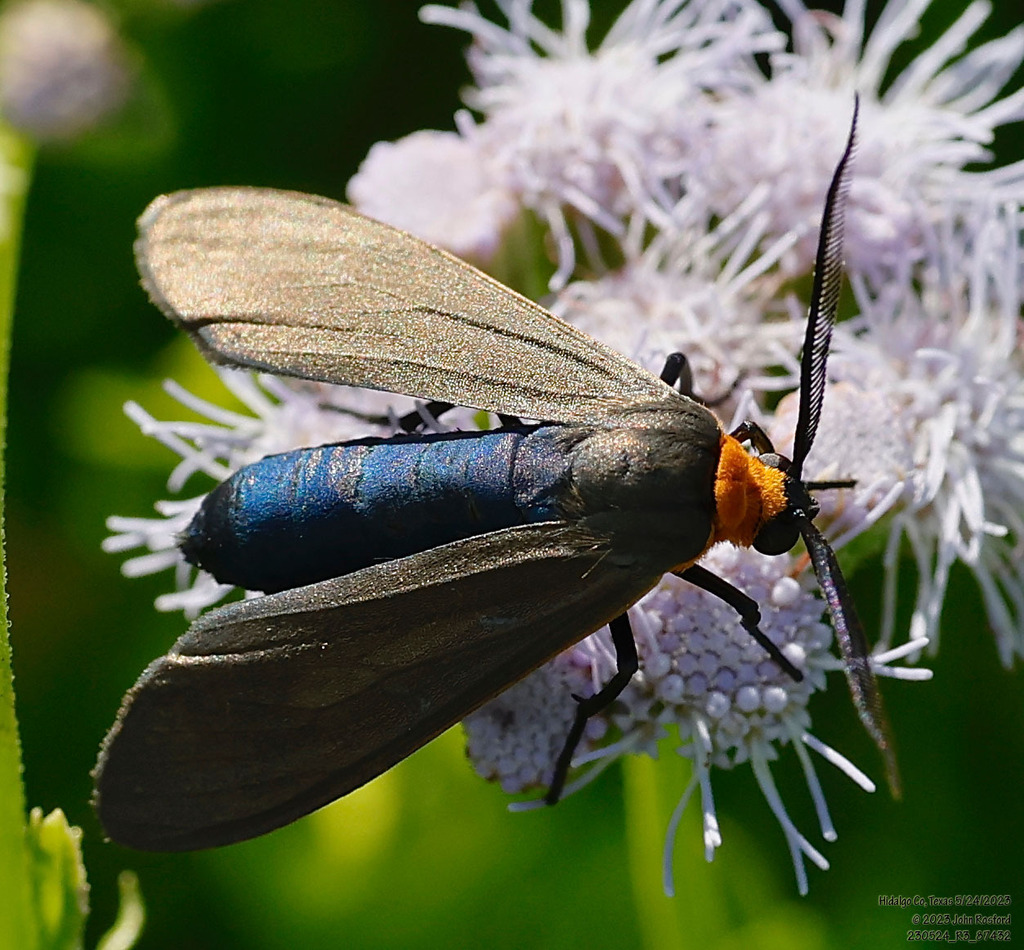
(c) John Rosford, some rights reserved (CC BY) · licence
Family: Erebidae · Class: Insecta · Order: Lepidoptera
Cisseps fulvicollis (Yellow-collared Scape Moth) is a California animal in the Erebidae family.
The Yellow-collared Scape Moth (Cisseps fulvicollis) is a small to medium-sized moth in the family Erebidae. Adults display distinctive coloration with a black head and thorax marked by a prominent yellow or orange collar behind the head, giving the species its common name. The forewings are dark gray to black with subtle metallic sheens, while the hindwings are typically lighter gray. The body measures approximately 12-18 mm in length with a wingspan ranging from 25-35 mm. Males are generally smaller than females and possess more prominent antennae. This species occurs across much of North America, with populations documented from southern Canada through the eastern and central United States, extending westward to the Rocky Mountains. In California, the Yellow-collared Scape Moth is found primarily in the northern and central regions, including the Sierra Nevada foothills and Central Valley. Records indicate presence in counties including Shasta, Butte, Placer, and Sacramento, though the full extent of the California range requires additional survey work. Yellow-collared Scape Moths inhabit a variety of open and semi-open habitats including grasslands, prairies, meadows, and woodland edges. Adults are commonly found in areas with abundant wildflowers and native forbs. The species shows preference for elevations below 1,500 meters (4,900 feet) and areas with moderate moisture levels. Disturbed habitats such as roadsides and agricultural margins can also support populations when suitable host plants are present. Adults are primarily diurnal, being active during daylight hours when they visit flowers for nectar. Flight period extends from late spring through early fall, with peak activity typically occurring from June through August. Females deposit eggs on or near host plants, which include various herbaceous plants in the families Asteraceae and Fabaceae. Larvae feed on the foliage of these host plants and overwinter as pupae in silk cocoons constructed in leaf litter or soil debris. The species completes one generation per year in most locations. The Yellow-collared Scape Moth is not currently listed under federal or California endangered species legislation. Population trends for this species are not well-documented, though habitat conversion and agricultural intensification may pose localized threats. Loss of native grasslands and reduction in wildflower diversity could impact nectar sources essential for adult survival and reproduction. Climate change may affect the timing of emergence and the availability of host plants. Conservation of native grassland habitats and maintenance of pollinator corridors would benefit this species along with other native moth and butterfly populations. Additional research is needed to better understand population status, habitat requirements, and potential threats to Yellow-collared Scape Moth populations in California and throughout its range.
Classification
Class: Insecta · Order: Lepidoptera · Family: Erebidae
Frequently asked questions
How is Cisseps fulvicollis classified?
Cisseps fulvicollis belongs to class Insecta, order Lepidoptera, family Erebidae.
What family does Cisseps fulvicollis belong to?
Cisseps fulvicollis is in the Erebidae family.
What is Cisseps fulvicollis?
The Yellow-collared Scape Moth (Cisseps fulvicollis) is a small to medium-sized moth in the family Erebidae.
Is Cisseps fulvicollis found in California?
Yes. Cisseps fulvicollis is recorded in California in The California Species Project's catalogue.
Related species
Other California species in the same genus, family, or bioregion.
Data from The California Species Project — 14,000+ California species with verified data from CNPS, CDFW, USFWS, and more.