Cistothorus palustris
Marsh Wren
no rights reserved · CC0
Family: Troglodytidae · Class: Aves · Order: Passeriformes
Cistothorus palustris (Marsh Wren) is a California animal in the Troglodytidae family.
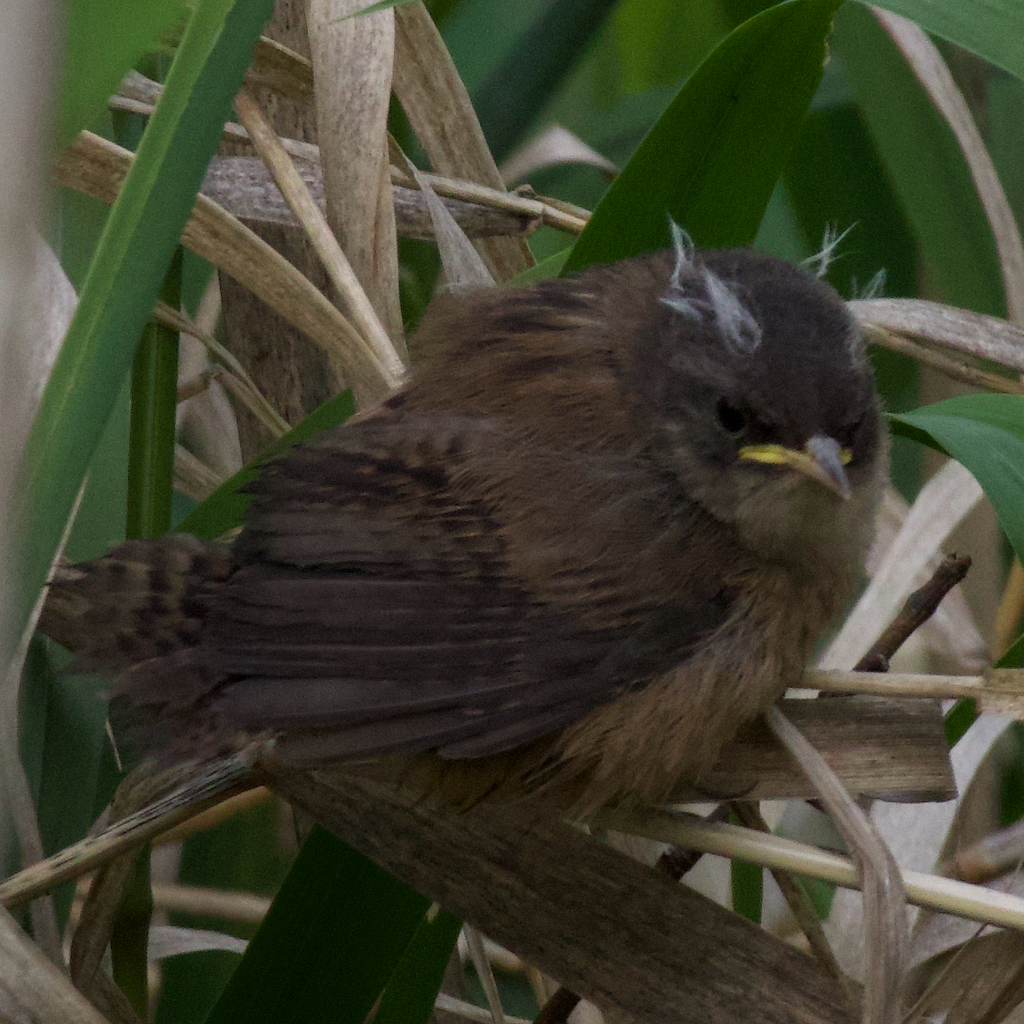
The Marsh Wren is a small, secretive songbird measuring 10-14 cm (4-5.5 inches) in length with a wingspan of 15-17 cm (6-6.7 inches). Adults weigh 9-14 grams. The species displays distinctive brown and buff plumage with prominent white streaking on the back and wings. The crown and nape are dark brown, while a conspicuous white eyebrow stripe extends from the bill to behind the eye. The underparts are pale buff to whitish, with rusty-brown flanks. Males and females appear similar, though males are slightly larger. The bill is thin, slightly curved, and well-adapted for gleaning insects from vegetation. Marsh Wrens breed across much of North America, from southern Canada through the United States. In California, the species occurs primarily in suitable wetland habitats throughout the Central Valley, San Francisco Bay Area, coastal regions, and scattered locations in the Great Basin and Colorado River Valley. Northern populations are migratory, while California residents are largely year-round inhabitants. The species shows considerable geographic variation, with Pacific Coast populations being darker and more richly colored than interior forms. This species exclusively inhabits emergent wetland vegetation, showing strong preference for cattail (Typha) marshes, bulrush (Scirpus) stands, and sedge meadows. Optimal habitat consists of dense stands of emergent vegetation 0.5-2 meters in height over standing or slow-moving water. Marsh Wrens require water depths of 15-60 cm and vegetation coverage exceeding 50 percent. The species occurs from sea level to approximately 1,500 meters elevation in California. Marsh Wrens are highly territorial during breeding season, with males establishing territories of 0.1-0.5 hectares. Males are polygynous, potentially mating with multiple females within their territory. The breeding season extends from April through August, with peak activity in May and June. Males construct multiple dome-shaped nests woven from wet marsh vegetation, typically 30-100 cm above water level. Females select one nest for egg-laying and line it with fine materials. Clutch size ranges from 3-5 eggs, with incubation lasting 12-16 days. Young fledge after 11-16 days but remain dependent on parents for an additional week. The diet consists primarily of small invertebrates, including spiders, beetles, caterpillars, aphids, and flies. During winter months, some seeds are consumed. Foraging occurs by gleaning prey from vegetation surfaces and stems, rarely venturing into open water. Marsh Wrens are not federally or state-listed as threatened or endangered. However, populations have declined in some regions due to wetland habitat loss and degradation. In California, wetland restoration projects and water management practices that maintain appropriate water levels benefit the species. Climate change poses potential future threats through altered precipitation patterns affecting wetland hydrology and increasing wildfire frequency in marsh habitats.
Classification
Class: Aves · Order: Passeriformes · Family: Troglodytidae
Frequently asked questions
How is Cistothorus palustris classified?
Cistothorus palustris belongs to class Aves, order Passeriformes, family Troglodytidae.
What family does Cistothorus palustris belong to?
Cistothorus palustris is in the Troglodytidae family.
What is Cistothorus palustris?
The Marsh Wren is a small, secretive songbird measuring 10-14 cm (4-5.5 inches) in length with a wingspan of 15-17 cm (6-6.7 inches).
Is Cistothorus palustris found in California?
Yes. Cistothorus palustris is recorded in California in The California Species Project's catalogue.
Related species
Other California species in the same genus, family, or bioregion.
Data from The California Species Project — 14,000+ California species with verified data from CNPS, CDFW, USFWS, and more.