Citharichthys stigmaeus
Speckled Sanddab
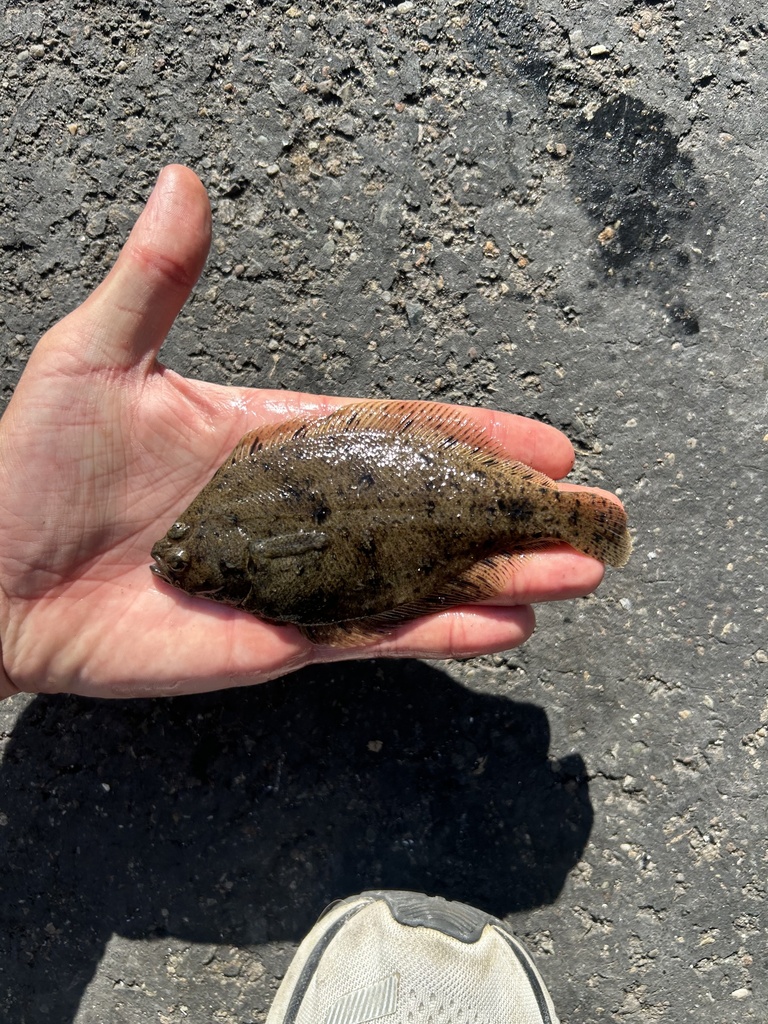
(c) James-LaFontaine, some rights reserved (CC BY) · licence
Family: Paralichthyidae · Class: Actinopterygii · Order: Pleuronectiformes
Citharichthys stigmaeus (Speckled Sanddab) is a California animal in the Paralichthyidae family.
The speckled sanddab is a small, left-eyed flatfish native to the eastern Pacific Ocean. Adults typically measure 15 to 17 cm (6 to 6.7 inches) in total length, with females growing slightly larger than males. The body is oval-shaped and compressed laterally, with both eyes positioned on the left side of the head. The species is distinguished from the closely related Pacific sanddab (Citharichthys sordidus) by the presence of distinct dark spots scattered across the eyed side of the body, giving rise to its common name. The background coloration is typically brown to olive-gray on the eyed side, with the blind side appearing white or pale yellow. Speckled sanddabs occur along the Pacific coast from British Columbia to Baja California, Mexico. In California, the species is found in nearshore waters from the Oregon border south to the Mexican border. According to California Department of Fish and Wildlife surveys, speckled sanddabs are present year-round in California coastal waters, with documented occurrences in central and northern California estuarine systems including the Sacramento-San Joaquin Delta region. The species inhabits sandy and muddy bottoms in depths ranging from shallow intertidal zones to approximately 200 meters (656 feet). Speckled sanddabs prefer areas with soft substrates where they can partially bury themselves for camouflage and ambush feeding. They are commonly found in bays, estuaries, and open coastal waters, often associated with eelgrass beds and other nearshore habitats. The species demonstrates seasonal movements, with peak abundance in specific areas varying throughout the year. Speckled sanddabs are opportunistic bottom feeders that consume a variety of small invertebrates and fish. Their diet consists primarily of polychaete worms, small crustaceans, mysid shrimp, and occasionally small fish. They are ambush predators that lie partially buried in sand or mud, using their cryptic coloration to remain undetected by prey. Spawning occurs during spring and summer months, typically from March through October, with females releasing pelagic eggs that develop in the water column. Juveniles settle to bottom habitats after a planktonic larval stage. Speckled sanddabs serve as both predator and prey in nearshore marine ecosystems. They are consumed by larger flatfish, rockfish species, lingcod (Ophiodon elongatus), and various marine mammals. The species supports both commercial and recreational fisheries, though it is often caught incidentally with other flatfish species. California recreational fishery surveys have documented speckled sanddabs in nearshore catches, indicating their continued presence in California waters. Currently, the species has no special conservation status and populations appear stable throughout its range. The speckled sanddab's adaptability to various nearshore habitats and its broad diet contribute to its ecological resilience in California's marine environments.
Classification
Class: Actinopterygii · Order: Pleuronectiformes · Family: Paralichthyidae
Frequently asked questions
How is Citharichthys stigmaeus classified?
Citharichthys stigmaeus belongs to class Actinopterygii, order Pleuronectiformes, family Paralichthyidae.
What family does Citharichthys stigmaeus belong to?
Citharichthys stigmaeus is in the Paralichthyidae family.
What is Citharichthys stigmaeus?
The speckled sanddab is a small, left-eyed flatfish native to the eastern Pacific Ocean.
Is Citharichthys stigmaeus found in California?
Yes. Citharichthys stigmaeus is recorded in California in The California Species Project's catalogue.
Related species
Other California species in the same genus, family, or bioregion.
Data from The California Species Project — 14,000+ California species with verified data from CNPS, CDFW, USFWS, and more.