Cladius pectinicornis
Bristly rose sawfly
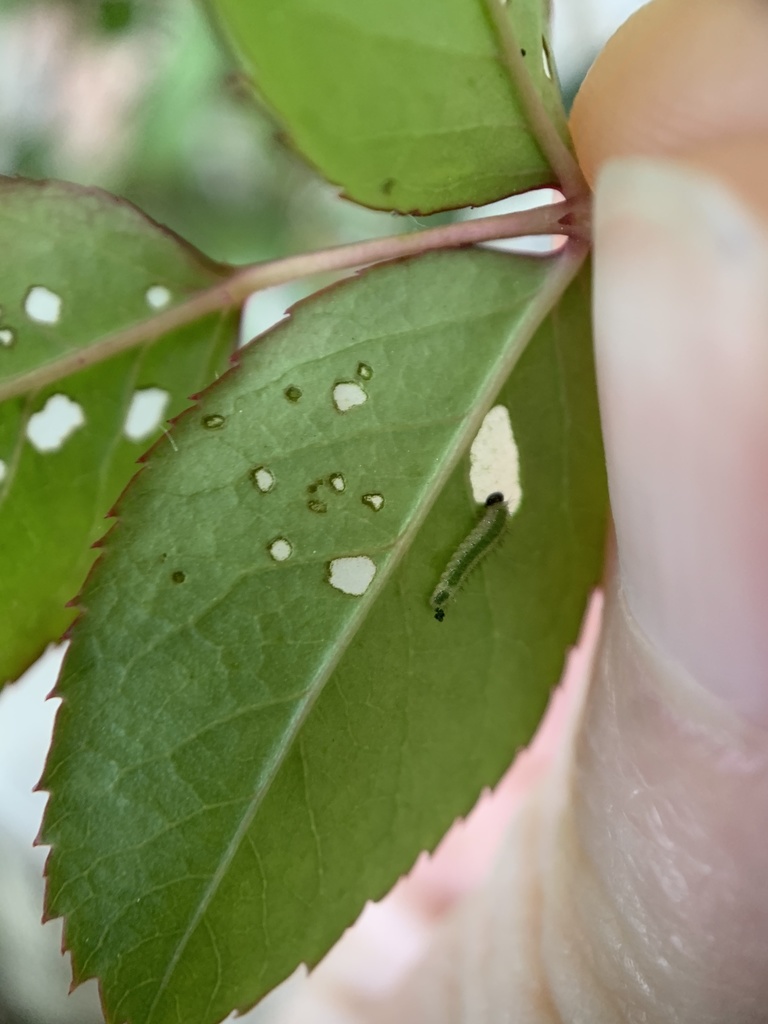
(c) Carrie Seltzer, some rights reserved (CC BY) · licence
Family: Tenthredinidae · Class: Insecta · Order: Hymenoptera
Cladius pectinicornis (Bristly rose sawfly) is a California animal in the Tenthredinidae family.
The bristly rose sawfly (Cladius pectinicornis) is a small hymenopteran insect in the family Tenthredinidae, commonly known as the true sawflies. Adults are typically 4-7 mm in length with dark bodies and characteristic pectinate (comb-like) antennae that give the species its scientific name. Males possess more prominently branched antennae than females, which have shorter, less elaborate antennal structures. The body is generally black to dark brown with possible yellowish markings on the legs and tegulae. This European species has established populations across much of North America, including California. In California, C. pectinicornis has been recorded from multiple counties, particularly in areas with cultivated and wild roses. The species appears to be widely distributed across temperate regions of the state, from coastal areas to inland valleys where suitable host plants occur. The bristly rose sawfly inhabits gardens, parks, natural areas, and anywhere roses (Rosa species) are present. Adults are most commonly found on or near rose bushes during the growing season. The species shows no particular elevation preference but requires the presence of its specific host plants. Urban and suburban environments with ornamental roses provide suitable habitat, as do natural areas supporting wild rose species. Larvae are external feeders on rose leaves, creating characteristic feeding damage by consuming leaf tissue between major veins, leaving a skeletonized appearance. Adult females use their saw-like ovipositor to insert eggs into rose stems or leaf petioles. The species typically produces multiple generations per year in California's mild climate, with peak activity during spring and early summer months. Adults feed on nectar and pollen from various flowering plants, not restricting themselves to roses for adult nutrition. Mating occurs on or near host plants, and females may lay 20-50 eggs during their lifespan. The bristly rose sawfly is not listed under state or federal endangered species legislation as of December 2025. As an introduced species, it is considered established in California without special conservation status. While sometimes regarded as a minor pest of ornamental roses due to larval feeding damage, populations appear stable across its introduced range. The species benefits from widespread rose cultivation and generally mild California climate conditions that support multiple annual generations. No specific conservation measures are directed toward this species, and its population trend appears stable to increasing in suitable habitat areas. The bristly rose sawfly represents one of many sawfly species that have successfully established in California following introduction from Europe. Its close association with roses makes it readily observable in urban and suburban environments where these plants are common landscape features.
Classification
Class: Insecta · Order: Hymenoptera · Family: Tenthredinidae
Frequently asked questions
How is Cladius pectinicornis classified?
Cladius pectinicornis belongs to class Insecta, order Hymenoptera, family Tenthredinidae.
What family does Cladius pectinicornis belong to?
Cladius pectinicornis is in the Tenthredinidae family.
What is Cladius pectinicornis?
The bristly rose sawfly (Cladius pectinicornis) is a small hymenopteran insect in the family Tenthredinidae, commonly known as the true sawflies.
Is Cladius pectinicornis found in California?
Yes. Cladius pectinicornis is recorded in California in The California Species Project's catalogue.
Related species
Other California species in the same genus, family, or bioregion.
Data from The California Species Project — 14,000+ California species with verified data from CNPS, CDFW, USFWS, and more.