Clathroneuria coquilletti
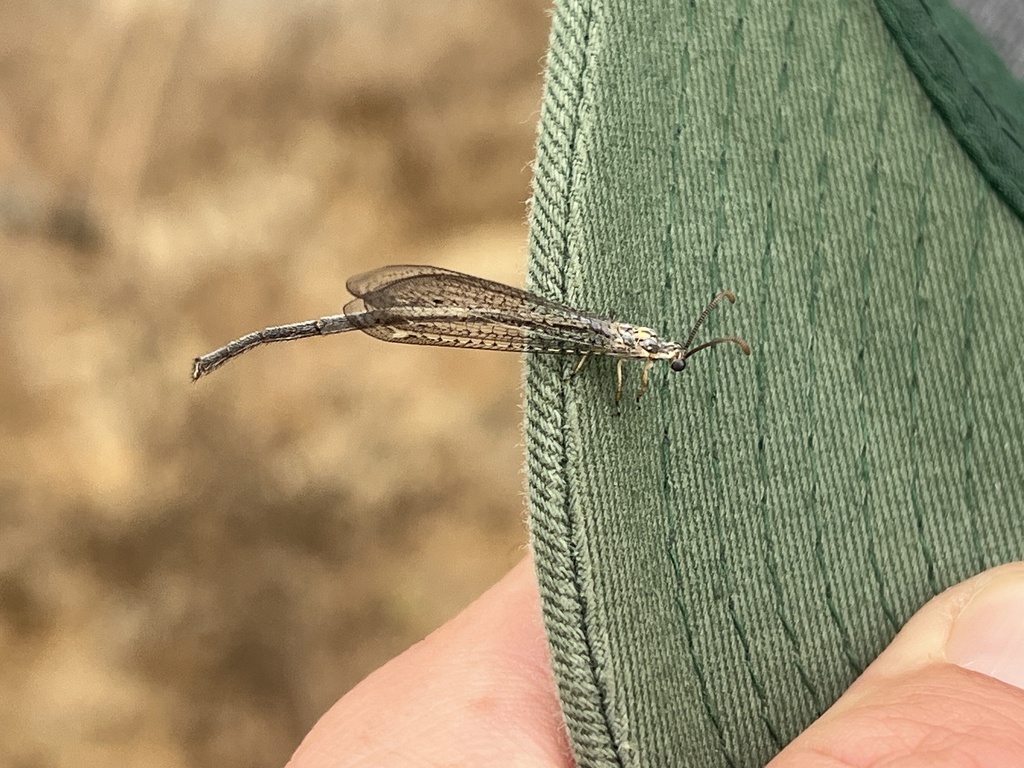
(c) Matt Felperin, some rights reserved (CC BY) · licence
Family: Myrmeleontidae · Class: Insecta · Order: Neuroptera
Clathroneuria coquilletti is a California animal in the Myrmeleontidae family.
Clathroneuria coquilletti is a long-tailed antlion in the family Myrmeleontidae, subfamily Myrmeleontinae, tribe Brachynemurini. Adults measure approximately 20 mm in length and are characterized by their elongated wings and delicate neuropteran structure typical of the genus Clathroneuria (BugGuide 2025). The species exhibits the typical antlion morphology with four membranous wings marked by intricate venation patterns, long antennae, and a slender body form. This species occurs in the southwestern United States, with documented populations in California and Arizona. In California, specimens have been recorded from Riverside County, specifically at Sycamore Canyon Wilderness Park in Riverside (BugGuide 2025). Arizona records include Pinal County, where individuals have been observed in the San Manuel area of the Sonoran Desert at elevations around 3,300 feet (BugGuide 2011). The species appears to have a limited distribution within desert and semi-arid regions of the southwestern United States. Clathroneuria coquilletti inhabits desert and chaparral environments, showing preference for areas with sandy or loose soil substrates suitable for larval development. Arizona observations indicate the species occurs in Sonoran Desert habitats at moderate elevations around 1,000 meters. The California record from Sycamore Canyon suggests the species also utilizes riparian canyon systems and adjacent upland habitats. Adults are nocturnal and attracted to artificial lights, indicating typical antlion behavior patterns. As with other antlion species, C. coquilletti undergoes complete metamorphosis with distinct larval, pupal, and adult stages. Larvae, commonly known as doodlebugs, are presumed to construct pit traps in sandy soil to capture small arthropod prey, following the typical myrmeleontid life cycle pattern. Adults are predatory, feeding on small flying insects caught during nocturnal activity periods. Flight periods appear to occur during summer months, with records from June through August. Adults likely mate and deposit eggs in suitable sandy substrates where larvae can establish territories. The conservation status of Clathroneuria coquilletti has not been formally assessed by federal or state agencies. The species is not listed under the Endangered Species Act and lacks state-level protection status in California as of December 2025. Limited distribution records suggest the species may have naturally restricted populations tied to specific habitat requirements in desert regions. Primary threats likely include habitat modification, urban development pressures in desert areas, and potential impacts from climate change on precipitation patterns affecting prey availability. The species' dependence on sandy substrates for larval development makes it potentially vulnerable to habitat degradation from recreational activities and development. Additional survey work would help clarify the species' true distribution and population status throughout its range. Scientific documentation for this species remains limited, with most information derived from community science observations and taxonomic databases (BugGuide 2025).
Classification
Class: Insecta · Order: Neuroptera · Family: Myrmeleontidae
Frequently asked questions
How is Clathroneuria coquilletti classified?
Clathroneuria coquilletti belongs to class Insecta, order Neuroptera, family Myrmeleontidae.
What family does Clathroneuria coquilletti belong to?
Clathroneuria coquilletti is in the Myrmeleontidae family.
What is Clathroneuria coquilletti?
Clathroneuria coquilletti is a long-tailed antlion in the family Myrmeleontidae, subfamily Myrmeleontinae, tribe Brachynemurini.
Is Clathroneuria coquilletti found in California?
Yes. Clathroneuria coquilletti is recorded in California in The California Species Project's catalogue.
Related species
Other California species in the same genus, family, or bioregion.
Data from The California Species Project — 14,000+ California species with verified data from CNPS, CDFW, USFWS, and more.