Clemensia umbrata
Little Shaded Lichen Moth
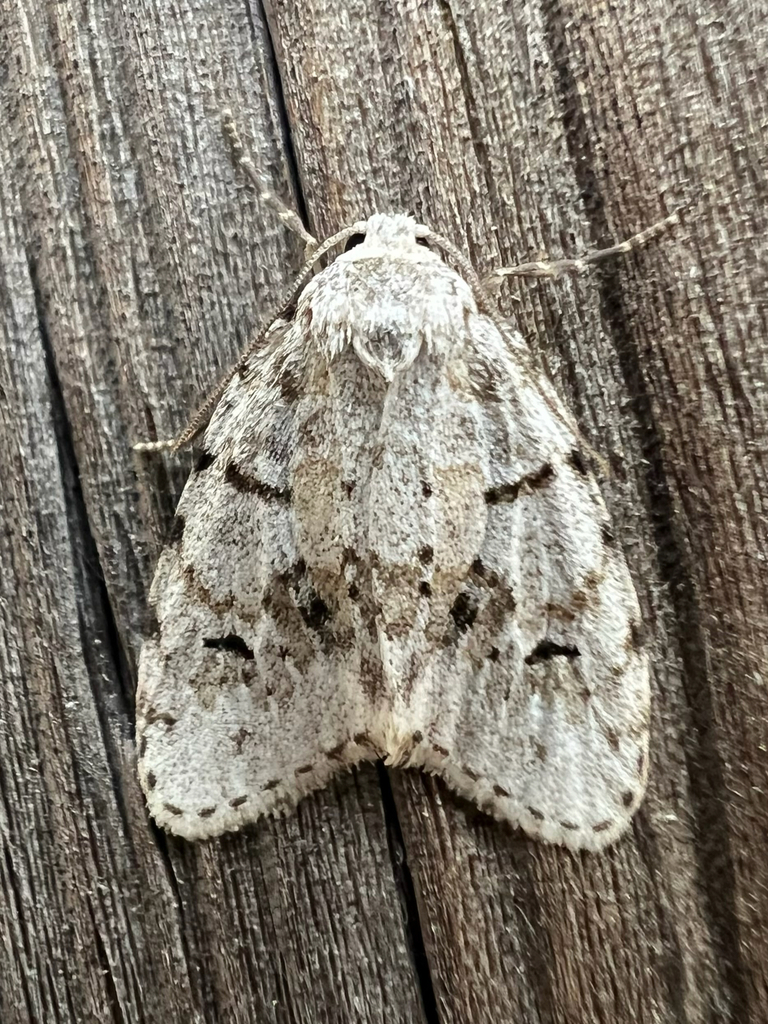
no rights reserved · CC0
Family: Erebidae · Class: Insecta · Order: Lepidoptera
Clemensia umbrata (Little Shaded Lichen Moth) is a California animal in the Erebidae family.
Clemensia umbrata is a small moth in the family Erebidae, subfamily Arctiinae. Adults typically measure 15-20 mm in wingspan, with forewings displaying a pale grayish-white to cream coloration marked by subtle darker shading patterns that give this species its common name. The hindwings are similarly pale with reduced markings. Males possess feathered antennae, while females have thread-like antennae. The thorax and abdomen are covered in pale scales matching the wing coloration. This species occurs across western North America, with records extending from British Columbia south through the western United States. In California, Clemensia umbrata has been documented in various counties, though specific distribution data remains limited in published literature. The species appears to have a broader range than many of its congeners, with confirmed records from multiple western states based on lepidopterist surveys and museum collections. Clemensia umbrata inhabits diverse habitats including mixed coniferous forests, oak woodlands, and chaparrel communities. Adults have been collected at elevations ranging from sea level to montane zones, though specific elevation preferences require further documentation. The species shows preference for areas with native plant communities, particularly those supporting its larval host plants. Moths are typically found in areas with moderate moisture and mixed vegetation structure. Adults are primarily nocturnal and are attracted to ultraviolet light sources, as evidenced by collection records from moth surveys using UV light traps (News of the Lepidopterists' Society 2012). Flight periods appear to vary geographically but generally occur from late spring through summer months. Specific host plant relationships for larvae have not been well documented in the scientific literature, though other members of the genus Clemensia are thought to feed on lichens growing on tree bark and rocks. Larval biology and development timing require further study to fully understand this species' life cycle. Clemensia umbrata lacks formal conservation status designations at federal or state levels. The species does not appear on current lists of special concern species, though comprehensive population assessments have not been conducted. Like many moths, potential threats may include habitat loss from development, forest management practices that alter lichen communities, and artificial lighting that disrupts natural behavior patterns. Climate change impacts on lichen communities could indirectly affect larval food sources. Scientific documentation for this species remains limited compared to more conspicuous moth species. Population trends, detailed ecological requirements, and specific conservation needs have not been thoroughly assessed. The information presented here synthesizes available observations from lepidopterist surveys and regional fauna studies. Enhanced monitoring and ecological studies would improve understanding of this species' status and habitat requirements across its range. Field observations of larval host plants, seasonal activity patterns, and habitat associations would contribute valuable data for future conservation assessments.
Classification
Class: Insecta · Order: Lepidoptera · Family: Erebidae
Frequently asked questions
How is Clemensia umbrata classified?
Clemensia umbrata belongs to class Insecta, order Lepidoptera, family Erebidae.
What family does Clemensia umbrata belong to?
Clemensia umbrata is in the Erebidae family.
What is Clemensia umbrata?
Clemensia umbrata is a small moth in the family Erebidae, subfamily Arctiinae.
Is Clemensia umbrata found in California?
Yes. Clemensia umbrata is recorded in California in The California Species Project's catalogue.
Related species
Other California species in the same genus, family, or bioregion.
Data from The California Species Project — 14,000+ California species with verified data from CNPS, CDFW, USFWS, and more.