Clepsis fucana
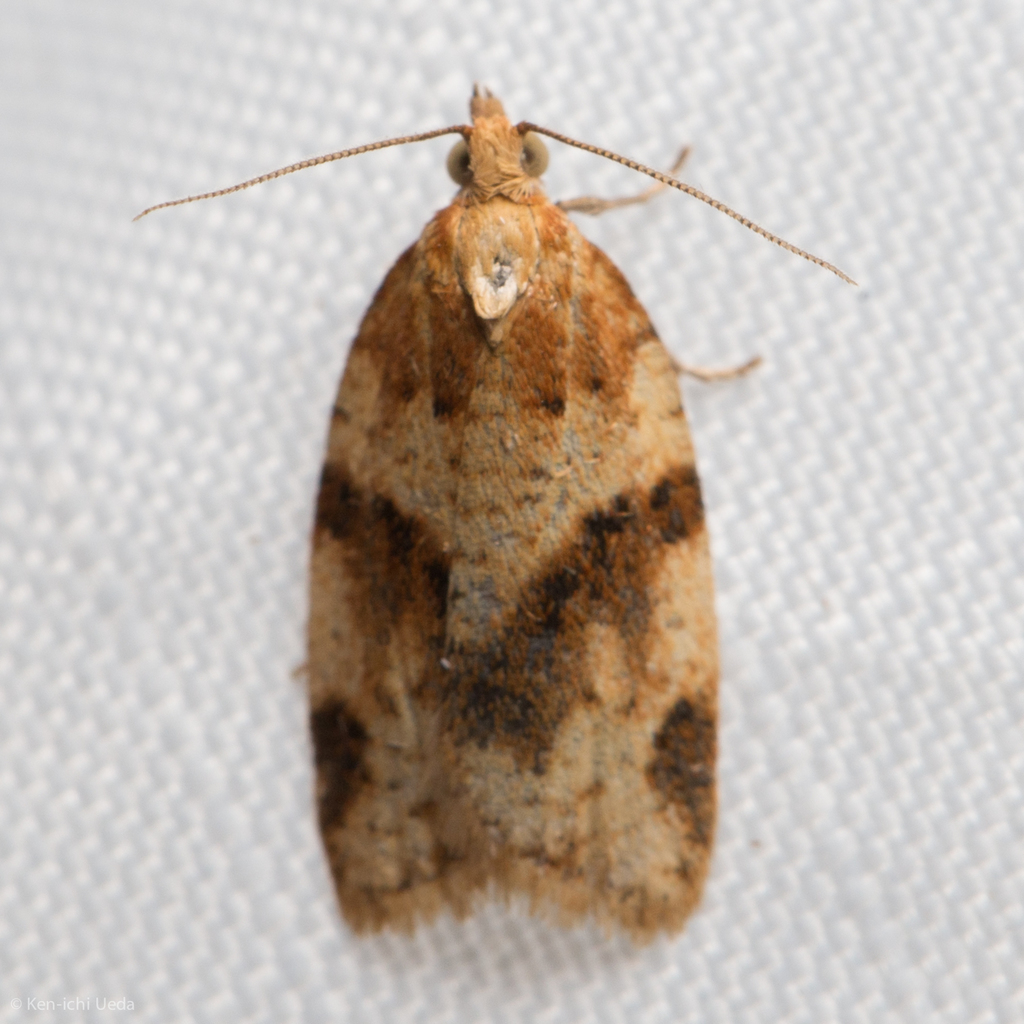
(c) Ken-ichi Ueda, some rights reserved (CC BY) · licence
Family: Tortricidae · Class: Insecta · Order: Lepidoptera
Clepsis fucana is a California animal in the Tortricidae family.
Clepsis fucana is a small tortricid moth in the family Tortricidae, commonly known as a leafroller moth. Adults typically measure 8 to 12 millimeters (0.31 to 0.47 inches) in wingspan. The forewings are generally brownish or grayish-brown with darker reticulated patterns and pale markings. The hindwings are typically paler, often whitish or light gray. Like other members of the genus Clepsis, the forewings display the characteristic bell-shaped outline when at rest, with the wings held roof-like over the body. Clepsis fucana occurs across western North America, with documented populations in California, Oregon, Washington, and British Columbia. Within California, the species has been recorded from various counties, though specific distribution data remains limited. The species appears to have a broad elevational range, occurring from sea level to montane environments. This moth inhabits diverse habitats including mixed coniferous forests, oak woodlands, chaparral, and riparian zones. Adults are typically found in areas with abundant deciduous vegetation and shrubs. The species shows adaptation to both natural and disturbed habitats, including forest edges, clearings, and areas with secondary growth vegetation. Adult Clepsis fucana are nocturnal and are attracted to artificial lights. Flight period varies by location and elevation but generally extends from late spring through early fall, with peak activity during summer months. The larvae are leaf-tiers and leaf-rollers, feeding within silken shelters they construct by folding or rolling leaves of their host plants. Documented host plants include various deciduous trees and shrubs, particularly members of the Rosaceae family, though the full range of host associations requires further study. Larvae typically feed on the upper leaf surfaces while protected within their rolled leaf shelters. The species likely completes one to two generations per year depending on local climate conditions. Clepsis fucana does not currently hold any federal or state conservation status. The species appears to be relatively widespread across its range and shows tolerance for habitat modification. Population trends are not well documented, as this species, like many small moths, receives limited systematic monitoring. Primary potential threats include habitat loss from urban development, intensive forest management practices, and pesticide applications. Climate change may affect the species through shifts in host plant phenology and distribution. The moth's apparent habitat flexibility and broad host plant associations may provide some resilience to environmental changes, though long-term population monitoring would be valuable for assessing conservation needs. As with many tortricid moths, Clepsis fucana likely plays ecological roles as both herbivore and prey species, supporting food webs that include insectivorous birds, spiders, and other predators. The species contributes to pollination services as adults visit flowers for nectar, though their specific pollination relationships remain unstudied.
Classification
Class: Insecta · Order: Lepidoptera · Family: Tortricidae
Frequently asked questions
How is Clepsis fucana classified?
Clepsis fucana belongs to class Insecta, order Lepidoptera, family Tortricidae.
What family does Clepsis fucana belong to?
Clepsis fucana is in the Tortricidae family.
What is Clepsis fucana?
Clepsis fucana is a small tortricid moth in the family Tortricidae, commonly known as a leafroller moth.
Is Clepsis fucana found in California?
Yes. Clepsis fucana is recorded in California in The California Species Project's catalogue.
Related species
Other California species in the same genus, family, or bioregion.
Data from The California Species Project — 14,000+ California species with verified data from CNPS, CDFW, USFWS, and more.