Clepsis peritana
Garden Tortrix
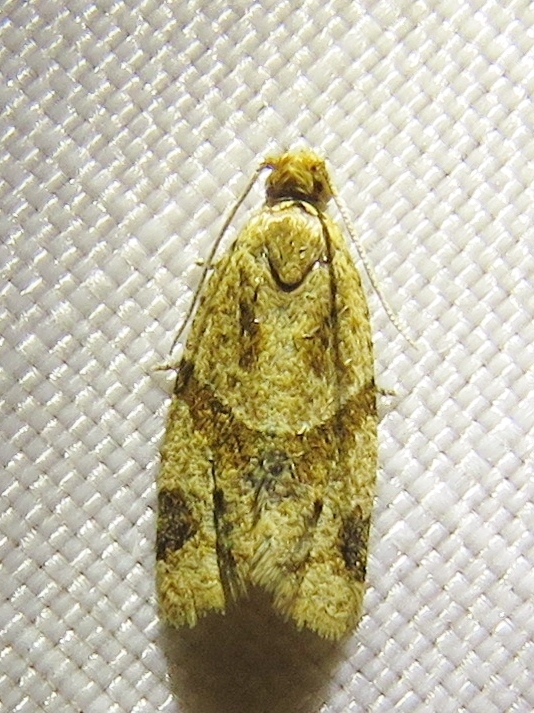
(c) Annika Lindqvist, some rights reserved (CC BY) · licence
Family: Tortricidae · Class: Insecta · Order: Lepidoptera
Clepsis peritana (Garden Tortrix) is a California animal in the Tortricidae family.
The Garden Tortrix (Clepsis peritana) is a small moth in the family Tortricidae, a group commonly known as leafroller moths. Adults typically measure 10-15 mm in wingspan, with forewings displaying variable coloration patterns. The forewings are generally brownish to grayish with darker markings and pale streaks, while the hindwings are lighter, often whitish to pale gray. The species exhibits sexual dimorphism, with males typically having more distinct wing patterns and feathered antennae compared to females. Clepsis peritana has a widespread distribution across North America, extending from Canada south through the United States. In California, the species occurs throughout much of the state, from coastal regions to inland areas. The moth is found across various elevations, from sea level to mountainous regions, demonstrating considerable habitat flexibility. Its range extends beyond California to include most western and central North American regions. The Garden Tortrix inhabits diverse environments, including gardens, orchards, agricultural areas, and natural plant communities. Adults are attracted to areas with abundant flowering plants that provide nectar sources. The species adapts to both cultivated and wild landscapes, thriving in environments that support its host plants. Larvae typically develop within rolled or folded leaves, creating protective shelters characteristic of tortricid moths. Adult Garden Tortrix moths are primarily active during warmer months, with flight periods varying by location and climate. The species is multivoltine in suitable conditions, producing multiple generations per year. Females deposit eggs on host plant foliage, and larvae feed by creating leaf rolls or folds using silk webbing. The caterpillars are polyphagous, feeding on various plant species including both native and cultivated plants. Common host plants include fruit trees, ornamental shrubs, and herbaceous garden plants. Pupation typically occurs within the larval feeding site or in nearby protected locations. Larvae can occasionally cause minor damage to ornamental and agricultural plants through their feeding activities, though they are generally not considered significant economic pests. The species may be more noticeable during outbreak years when populations increase. Natural enemies including parasitoid wasps, predatory insects, and insectivorous birds help regulate populations. The Garden Tortrix does not appear on federal or state endangered species lists and is not considered a conservation concern. The species benefits from its broad host plant range and adaptability to human-modified environments. Agricultural and horticultural practices may influence local population dynamics, but the species' widespread distribution and generalist feeding habits suggest stable populations across its range. Climate change may potentially affect distribution patterns and seasonal activity, though specific impacts on this species have not been extensively studied. The moth's ability to utilize both native and non-native plant hosts likely contributes to its persistence in modified landscapes throughout California and other parts of its range.
Classification
Class: Insecta · Order: Lepidoptera · Family: Tortricidae
Frequently asked questions
How is Clepsis peritana classified?
Clepsis peritana belongs to class Insecta, order Lepidoptera, family Tortricidae.
What family does Clepsis peritana belong to?
Clepsis peritana is in the Tortricidae family.
What is Clepsis peritana?
The Garden Tortrix (Clepsis peritana) is a small moth in the family Tortricidae, a group commonly known as leafroller moths.
Is Clepsis peritana found in California?
Yes. Clepsis peritana is recorded in California in The California Species Project's catalogue.
Related species
Other California species in the same genus, family, or bioregion.
Data from The California Species Project — 14,000+ California species with verified data from CNPS, CDFW, USFWS, and more.