Clepsis persicana
White Triangle Tortrix
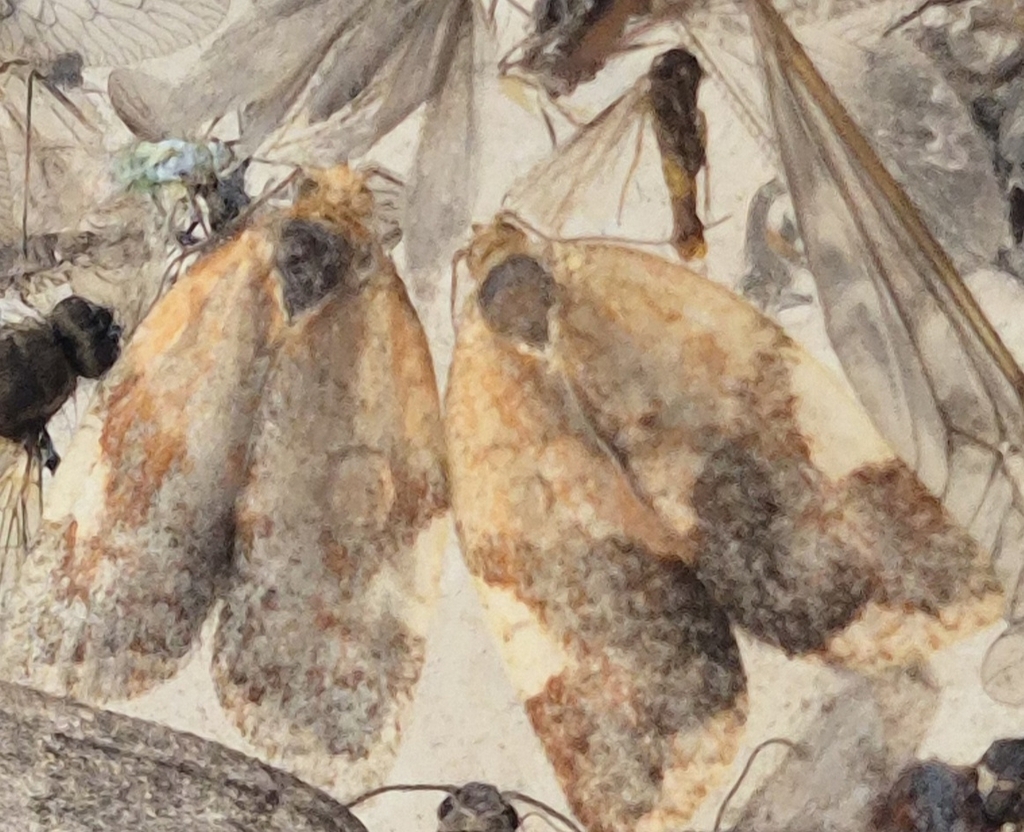
(c) Syd Cannings, some rights reserved (CC BY) · licence
Family: Tortricidae · Class: Insecta · Order: Lepidoptera
Clepsis persicana (White Triangle Tortrix) is a California animal in the Tortricidae family.
The White Triangle Tortrix (Clepsis persicana) is a small moth in the family Tortricidae, originally described by Fitch in 1856. Adults display variable wing patterns and coloration, with forewings typically showing brownish or grayish tones marked by distinctive triangular markings that give the species its common name. The moth exhibits the characteristic tortricid resting posture with wings held flat and roof-like over the abdomen, creating a bell-shaped silhouette. This species has an extensive range across North America, occurring from Alaska south through Canada and the continental United States. In California, Clepsis persicana has been documented in Trinity County, representing the species' presence in the northern part of the state (Butterflies and Moths of North America). The species extends eastward across the continent, with verified records from provinces and states including New Brunswick, Saskatchewan, Wisconsin, Pennsylvania, and Alaska, demonstrating its broad transcontinental distribution. Clepsis persicana inhabits diverse environments reflecting its wide geographic range. The species occurs in both forested and open habitats, with adults found in areas supporting various deciduous trees and shrubs. The moth's broad ecological tolerance allows it to exploit different vegetation types across its extensive range, from boreal forests in the north to temperate deciduous woodlands in more southern latitudes. The species is polyphagous, with larvae feeding on a wide variety of host plants including both herbaceous plants and woody species. According to the Moth Photographers Group, larvae have been recorded feeding on herbs as well as trees and shrubs, with the species described as a general feeder on deciduous trees. The larval stage is sometimes referred to as the Green Needleworm. Adults are active during summer months, with flight periods documented from June through August across much of the range, though timing varies with latitude and local climate conditions. As a widespread and apparently stable species, Clepsis persicana currently holds no special conservation status at federal or state levels. The moth's broad host plant range and extensive geographic distribution suggest ecological resilience, though like many lepidopteran species, populations may face localized pressures from habitat modification, pesticide use, and climate change. The species' ability to utilize various plant hosts and occupy diverse habitats across a continental range indicates relatively stable population dynamics. Detailed biological studies of this species remain limited despite its wide distribution. Taxonomic work has established several synonyms including Croesia persicana, Lozotaenia fragariana, and others, reflecting the complex nomenclatural history common among tortricid moths (BugGuide). The species is assigned Hodges number 3682 in the standardized North American moth catalog system.
Classification
Class: Insecta · Order: Lepidoptera · Family: Tortricidae
Frequently asked questions
How is Clepsis persicana classified?
Clepsis persicana belongs to class Insecta, order Lepidoptera, family Tortricidae.
What family does Clepsis persicana belong to?
Clepsis persicana is in the Tortricidae family.
What is Clepsis persicana?
The White Triangle Tortrix (Clepsis persicana) is a small moth in the family Tortricidae, originally described by Fitch in 1856.
Is Clepsis persicana found in California?
Yes. Clepsis persicana is recorded in California in The California Species Project's catalogue.
Related species
Other California species in the same genus, family, or bioregion.
Data from The California Species Project — 14,000+ California species with verified data from CNPS, CDFW, USFWS, and more.