Clepsis virescana
Blackberry Leafroller
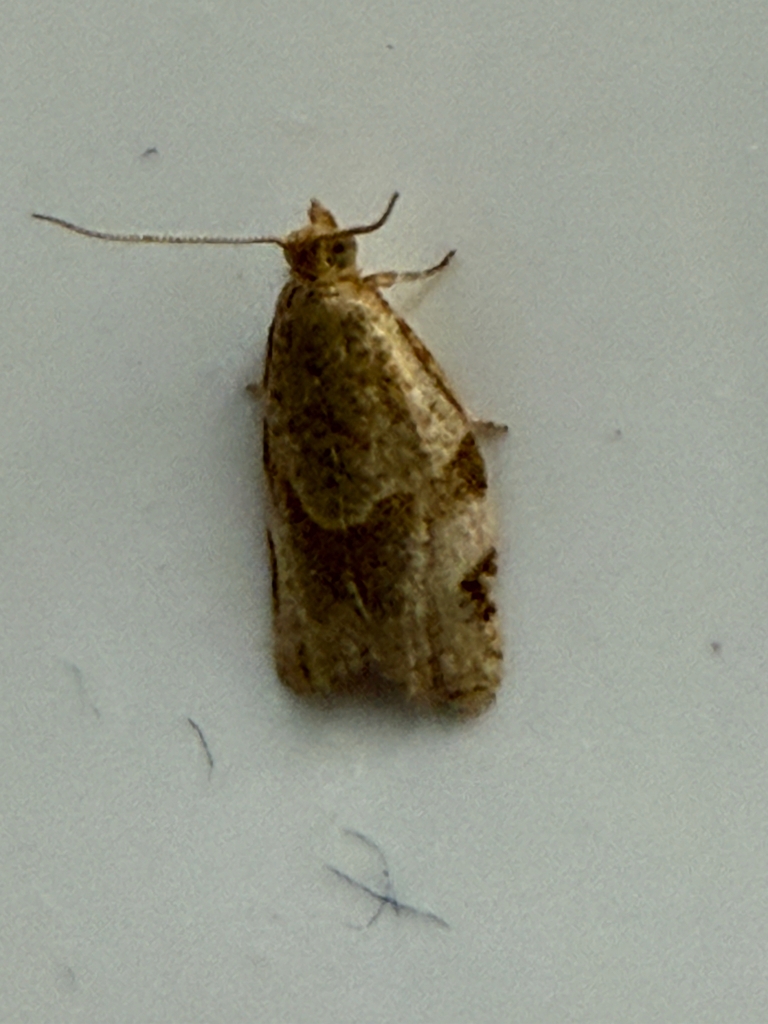
(c) nebrooks, some rights reserved (CC BY) · licence
Family: Tortricidae · Class: Insecta · Order: Lepidoptera
Clepsis virescana (Blackberry Leafroller) is a California animal in the Tortricidae family.
The Blackberry Leafroller (Clepsis virescana) is a small moth in the family Tortricidae, commonly known as leafroller moths due to their larval habit of rolling or folding leaves for shelter. Adults typically measure 10-15 mm in wingspan, with forewings that are generally pale green to grayish-brown. Males can be distinguished by the presence of a costal fold on the forewings, a characteristic that separates this species from closely related Clepsis peritana and C. penetralis (BugGuide). This species occurs across North America, with documented populations from Canada to the southern United States. In California, C. virescana has been recorded from various locations including the Toiyabe Mountains (News of the Lepidopterists' Society 1969). Recent DNA analysis suggests that California populations may represent a distinct species, as molecular studies show two separate BIN clusters: one containing specimens from the eastern United States and Canada, and another including California specimens along with those from Arizona, Colorado, Texas, Oklahoma, Florida, and Saskatchewan (BugGuide). The Blackberry Leafroller inhabits diverse environments where its host plants occur. Primary host plants belong to the family Rosaceae, specifically within the genera Prunus and Rosa (Moth Photographers Group). This includes various stone fruits, roses, and related woody plants. The species appears to be adaptable to both natural and cultivated landscapes where these host plants are present. Larvae feed within rolled or folded leaves of their host plants, creating characteristic shelters that give the family its common name. The species is multivoltine, producing several overlapping generations per year. Larvae overwinter under leaf litter, emerging in spring to pupate (BugGuide). Adults are active during warmer months, with flight records extending from spring through late summer. The larval feeding behavior can occasionally cause minor damage to ornamental roses and fruit trees, though C. virescana is not considered a major agricultural pest. Currently, Clepsis virescana has no formal conservation status at federal or state levels. The species appears to be relatively widespread and commonly collected, suggesting stable populations across its range (BugGuide). However, the taxonomic uncertainty surrounding California populations warrants further investigation, as DNA evidence indicates potential species-level differentiation. This genetic distinctiveness could have conservation implications if California populations prove to be a separate, endemic species. Climate change and habitat modification may affect local populations, particularly in areas where host plants face pressure from urban development or agricultural conversion. The species' apparent adaptability to various environments and multiple host plants within Rosaceae likely provides some resilience against environmental changes. Additional molecular studies and taxonomic revision would help clarify the conservation status of distinct genetic lineages within what is currently recognized as C. virescana.
Classification
Class: Insecta · Order: Lepidoptera · Family: Tortricidae
Frequently asked questions
How is Clepsis virescana classified?
Clepsis virescana belongs to class Insecta, order Lepidoptera, family Tortricidae.
What family does Clepsis virescana belong to?
Clepsis virescana is in the Tortricidae family.
What is Clepsis virescana?
The Blackberry Leafroller (Clepsis virescana) is a small moth in the family Tortricidae, commonly known as leafroller moths due to their larval habit of rolling or folding leaves for shelter.
Is Clepsis virescana found in California?
Yes. Clepsis virescana is recorded in California in The California Species Project's catalogue.
Related species
Other California species in the same genus, family, or bioregion.
Data from The California Species Project — 14,000+ California species with verified data from CNPS, CDFW, USFWS, and more.