Clevelandia ios
Arrow goby
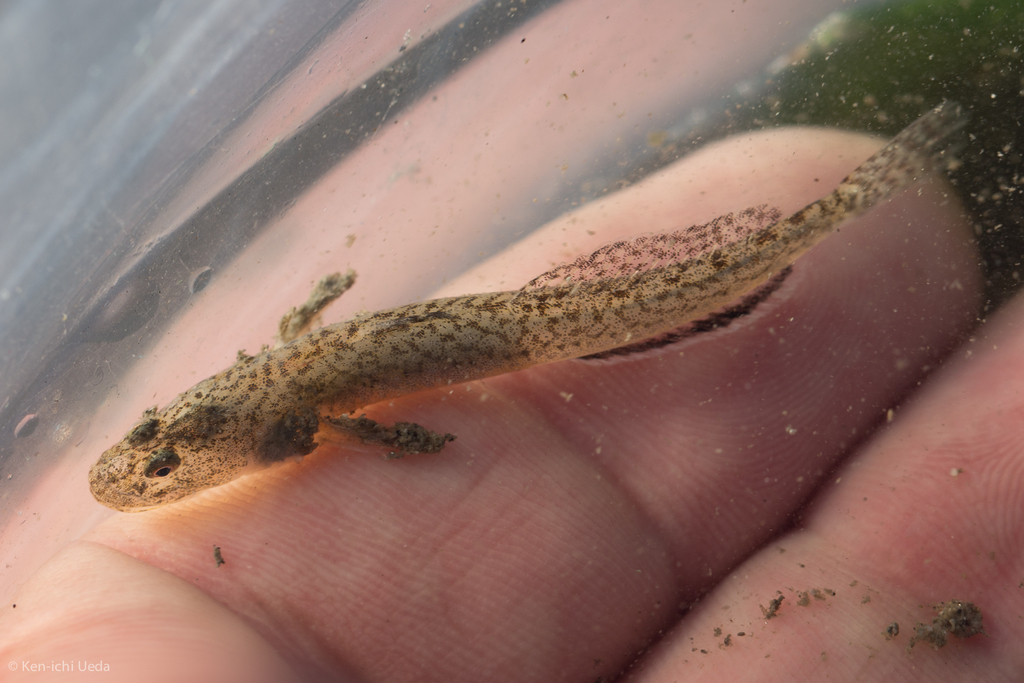
(c) Ken-ichi Ueda, some rights reserved (CC BY) · licence
Family: Gobiidae · Class: Actinopterygii · Order: Perciformes
Clevelandia ios (Arrow goby) is a California animal in the Gobiidae family.
The arrow goby (Clevelandia ios) is a small, elongated marine fish belonging to the family Gobiidae. Adults typically measure 32 to 64 mm (1.3 to 2.5 inches) in total length, with females generally growing larger than males. The body is slender and compressed laterally, with a pointed snout that gives the species its common name. Coloration ranges from pale olive to brownish-gray dorsally, becoming lighter on the ventral surface. The body displays a series of dark, irregular bars or blotches along the sides, and the head often shows a distinctive dark stripe through the eye. The dorsal fins are separate, with the first dorsal fin containing 6 to 7 spines and the second dorsal fin having 12 to 14 soft rays. The pelvic fins are fused to form a disc-like sucker that aids in maintaining position in strong currents. Arrow gobies are distributed along the Pacific coast from British Columbia, Canada, south to Baja California, Mexico. In California, the species occurs in coastal waters from Humboldt County to San Diego County. They are commonly found in estuaries, bays, and nearshore marine environments throughout their range, including San Francisco Bay, Monterey Bay, and the coastal lagoons of southern California. The species inhabits shallow coastal waters, typically at depths ranging from the intertidal zone to approximately 37 meters (121 feet). Arrow gobies prefer areas with sandy or muddy substrates near eelgrass beds, salt marshes, and rocky reefs. They are particularly abundant in estuarine environments where freshwater and saltwater mix, tolerating a wide range of salinity conditions from nearly fresh water to full seawater. The species often seeks shelter among algae, eelgrass (Zostera marina), and other aquatic vegetation, as well as under rocks and in crevices. Arrow gobies are opportunistic feeders, consuming small invertebrates including copepods, amphipods, polychaete worms, and larval insects. Their diet varies seasonally based on prey availability. Reproduction occurs from spring through early fall, with peak spawning activity typically in late spring and summer. Males establish and defend small territories in shallow areas with suitable substrate for nest construction. Females deposit clusters of adhesive eggs on hard surfaces such as rocks, shells, or artificial structures. Males provide parental care by guarding and aerating the eggs until hatching occurs after approximately 10 to 14 days, depending on water temperature. The arrow goby is not federally or state-listed as threatened or endangered and is considered relatively common throughout its range. However, like many estuarine species, populations may face localized threats from habitat degradation, pollution, and coastal development. Urban runoff, marina construction, and the loss of eelgrass beds in some areas could impact local populations. The species' broad salinity tolerance and adaptability to various coastal habitats contribute to its overall stability, though continued monitoring of estuarine health remains important for long-term conservation.
Classification
Class: Actinopterygii · Order: Perciformes · Family: Gobiidae
Frequently asked questions
How is Clevelandia ios classified?
Clevelandia ios belongs to class Actinopterygii, order Perciformes, family Gobiidae.
What family does Clevelandia ios belong to?
Clevelandia ios is in the Gobiidae family.
What is Clevelandia ios?
The arrow goby (Clevelandia ios) is a small, elongated marine fish belonging to the family Gobiidae.
Is Clevelandia ios found in California?
Yes. Clevelandia ios is recorded in California in The California Species Project's catalogue.
Related species
Other California species in the same genus, family, or bioregion.
Data from The California Species Project — 14,000+ California species with verified data from CNPS, CDFW, USFWS, and more.