Clinocardium nuttallii
Nuttall's Cockle
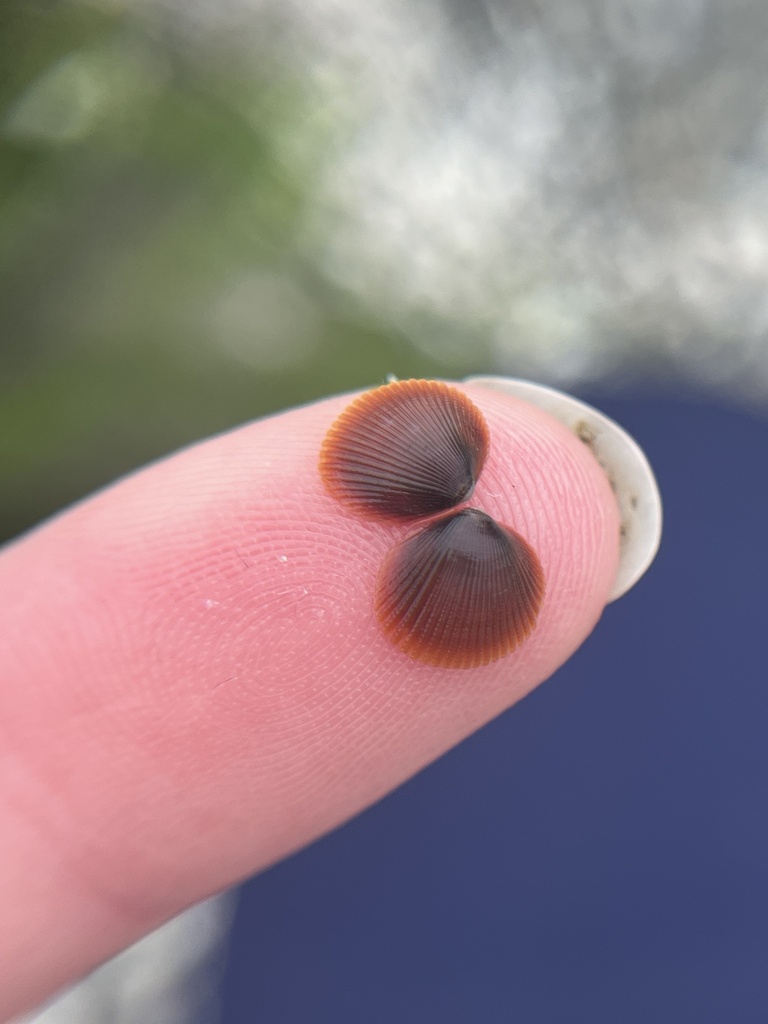
(c) Therese Phillips, some rights reserved (CC BY) · licence
Family: Cardiidae · Class: Bivalvia · Order: Veneroida
Clinocardium nuttallii (Nuttall's Cockle) is a California animal in the Cardiidae family.
Nuttall's cockle is a marine bivalve mollusk native to the Pacific Coast of North America. This medium-sized clam typically measures 50 to 90 millimeters (2.0 to 3.5 inches) in shell length, with a distinctive heart-shaped profile when viewed from the side. The shell exhibits prominent radial ribs that extend from the umbo to the shell margin, creating a distinctive ridged appearance. The exterior coloration ranges from white to tan or light brown, often with darker growth bands. The interior of the shell displays a glossy white surface with purple or pink muscle scars. Nuttall's cockle occurs along the Pacific Coast from Alaska to Baja California, Mexico. In California, the species is found in nearshore marine environments from the intertidal zone to depths of approximately 37 meters (120 feet). The species inhabits sandy and muddy substrates in protected bays, estuaries, and coastal lagoons. According to NatureServe, populations are distributed throughout suitable habitat along the California coast, with documented occurrences in major estuarine systems including San Francisco Bay, Tomales Bay, Humboldt Bay, and various Southern California coastal embayments. This species preferentially inhabits soft sediment environments where it can burrow into sand or mud substrates. Nuttall's cockles are typically found in the low intertidal zone and shallow subtidal areas where salinity levels remain relatively stable. They require areas with adequate water circulation to support filter feeding activities and prefer locations with moderate wave action that prevents excessive sedimentation while maintaining water quality. Nuttall's cockles are suspension feeders that extract plankton, organic particles, and dissolved nutrients from the water column through their specialized gill structures. The species exhibits separate sexes with external fertilization occurring in the water column during spawning events. Larvae undergo a planktonic development phase before settling and metamorphosing into juvenile clams. Adult cockles can live several years and play important ecological roles as both filter feeders that help maintain water quality and as prey species for various predators. Black oystercatchers (Haematopus bachmani) are known to select mussels over cockles when foraging on British Columbia mudflats, though cockles remain part of their diet (Hartwick and Blaylock 1979). Other predators include crabs, sea stars, and various fish species that can access buried individuals. Currently, Nuttall's cockle does not appear to have specific federal or state conservation listing status in California. However, like many estuarine species, populations may face pressures from habitat modification, water quality degradation, and coastal development. The species' dependence on clean water for filter feeding makes it potentially sensitive to pollution and sedimentation changes in coastal environments. Maintaining healthy estuarine ecosystems through habitat protection and water quality management supports stable populations of this ecologically important bivalve species.
Classification
Class: Bivalvia · Order: Veneroida · Family: Cardiidae
Frequently asked questions
How is Clinocardium nuttallii classified?
Clinocardium nuttallii belongs to class Bivalvia, order Veneroida, family Cardiidae.
What family does Clinocardium nuttallii belong to?
Clinocardium nuttallii is in the Cardiidae family.
What is Clinocardium nuttallii?
Nuttall's cockle is a marine bivalve mollusk native to the Pacific Coast of North America.
Is Clinocardium nuttallii found in California?
Yes. Clinocardium nuttallii is recorded in California in The California Species Project's catalogue.
More California species
This species has no close relatives in our California data — here are other species to explore.
Data from The California Species Project — 14,000+ California species with verified data from CNPS, CDFW, USFWS, and more.