Clinocottus analis
Woolly Sculpin
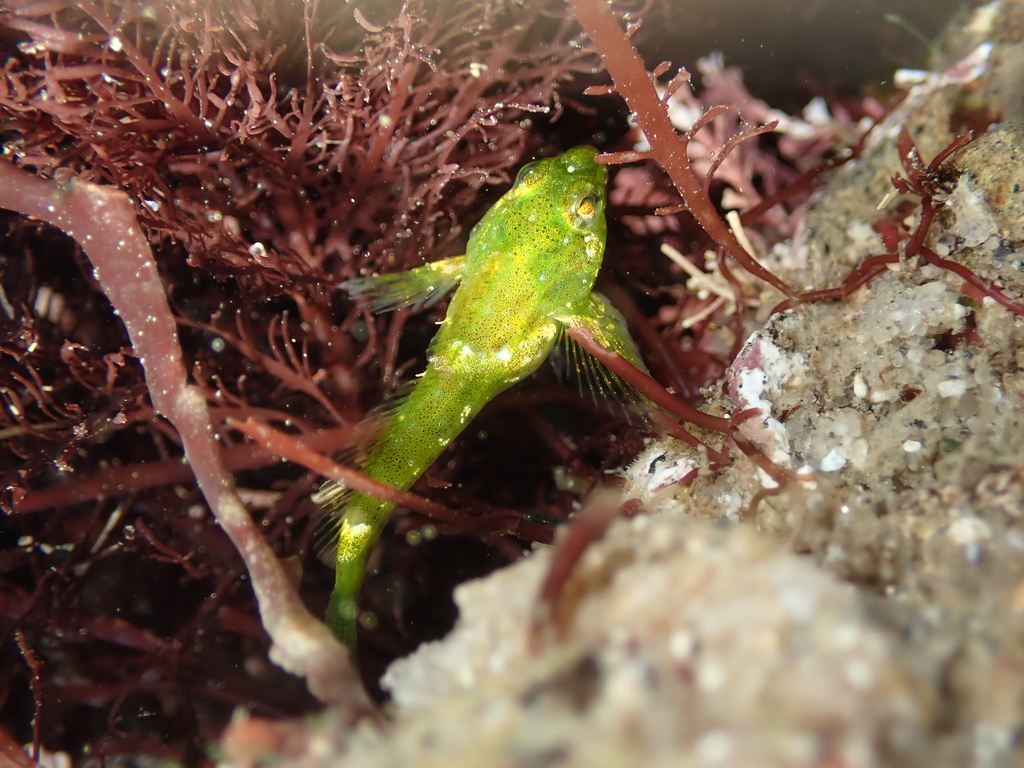
(c) Lisa Biasillo, some rights reserved (CC BY) · licence
Family: Cottidae · Class: Actinopterygii · Order: Perciformes
Clinocottus analis (Woolly Sculpin) is a California animal in the Cottidae family.
The woolly sculpin is a small coastal marine fish reaching approximately 70 mm (2.8 inches) in total length. This species exhibits cryptic coloration with mottled brown and tan patterns that provide camouflage against rocky substrates. The body is laterally compressed with a large head and mouth typical of sculpins, and the skin appears smooth rather than scaled. Males develop pronounced breeding coloration during reproductive periods, while females remain more subdued in appearance. Clincocottus analis is distributed along the Pacific coast from central California to Baja California, Mexico. Within California, this species occurs primarily in the intertidal and shallow subtidal zones of rocky coastlines. The range extends from approximately Monterey Bay southward through Southern California waters, including coastal areas around the Channel Islands. Woolly sculpins inhabit rocky intertidal pools and shallow nearshore rocky reefs, typically at depths from the low tide zone to approximately 10 meters (33 feet). They prefer areas with complex rocky structure, crevices, and algal cover that provide both shelter and foraging opportunities. The species is well-adapted to the dynamic intertidal environment, tolerating periodic exposure to air during low tide cycles. They are commonly found among beds of coralline algae, kelp holdfasts, and in tide pools with moderate to high wave exposure. This species exhibits typical sculpin behavior, remaining sedentary and relying on cryptic coloration for protection from predators. Woolly sculpins are ambush predators that feed primarily on small crustaceans, marine worms, and gastropod mollusks found within their rocky habitat. They are opportunistic feeders, consuming prey items proportional to their mouth size. Reproduction occurs during spring and summer months, with males establishing territories in suitable rocky crevices. Females deposit adhesive eggs in protected locations, often under rock overhangs or in deep crevices, where males provide parental care by guarding the egg masses until hatching. The species demonstrates strong site fidelity, with individuals often remaining within small home ranges throughout their adult lives. The woolly sculpin currently lacks federal or state conservation listing status and appears to maintain stable populations throughout its range. The species benefits from its habitat preferences for rocky intertidal areas, which are less susceptible to many anthropogenic impacts compared to soft-bottom coastal habitats. However, potential threats include coastal development, pollution from urban runoff, and climate change effects such as ocean acidification and warming temperatures that may affect prey availability. The species' restricted habitat requirements and limited mobility make local populations potentially vulnerable to site-specific disturbances. Marine protected areas along the California coast provide some protection for woolly sculpin habitat, though comprehensive population monitoring data are limited.
Classification
Class: Actinopterygii · Order: Perciformes · Family: Cottidae
Frequently asked questions
How is Clinocottus analis classified?
Clinocottus analis belongs to class Actinopterygii, order Perciformes, family Cottidae.
What family does Clinocottus analis belong to?
Clinocottus analis is in the Cottidae family.
What is Clinocottus analis?
The woolly sculpin is a small coastal marine fish reaching approximately 70 mm (2.8 inches) in total length.
Is Clinocottus analis found in California?
Yes. Clinocottus analis is recorded in California in The California Species Project's catalogue.
Related species
Other California species in the same genus, family, or bioregion.
Data from The California Species Project — 14,000+ California species with verified data from CNPS, CDFW, USFWS, and more.