Clogmia albipunctata
Bathroom Moth Fly
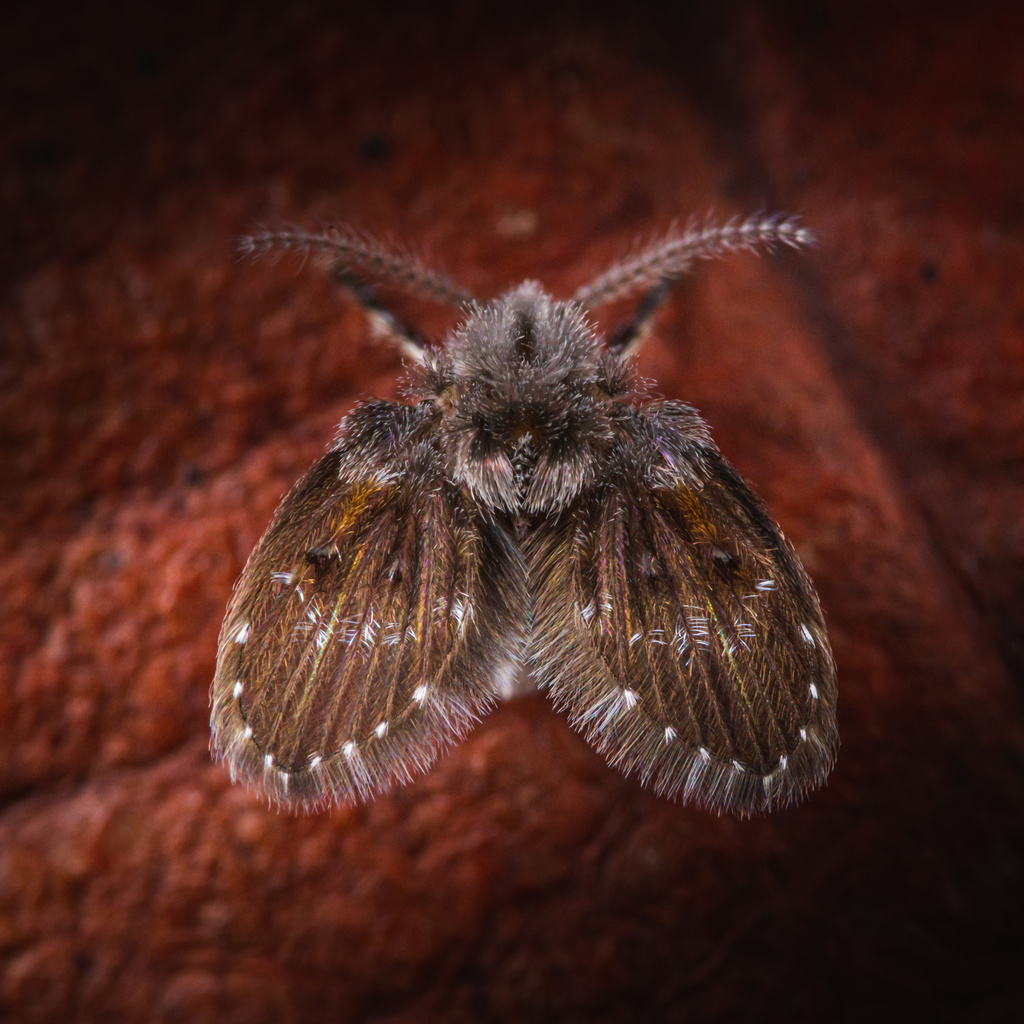
(c) Reynante Martinez, some rights reserved (CC BY) · licence
Family: Psychodidae · Class: Insecta · Order: Diptera
Clogmia albipunctata (Bathroom Moth Fly) is a California animal in the Psychodidae family.
The bathroom moth fly (Clogmia albipunctata) is a small dipteran insect in the family Psychodidae, subfamily Psychodinae. Also known as drain fly, filter fly, or bathroom mothmidge, this species is distinguished by its moth-like appearance and fuzzy, scale-covered wings that give it a distinctive hairy or woolly texture. Adults typically measure 1.5 to 5 mm in length with broad, oval-shaped wings held roof-like over the body when at rest. The body and wings are typically dark gray to black with characteristic white or pale punctate markings, giving rise to the species epithet 'albipunctata' meaning 'white-spotted' (BugGuide 2025). Clogmia albipunctata has a broad distribution across North America, occurring from British Columbia south through California and extending eastward across much of the United States. According to BugGuide observational data, the species is documented from numerous states including California, Arizona, Colorado, Florida, Georgia, Illinois, Alabama, Arkansas, and Delaware, among others. In California, specimens have been recorded year-round with peak activity during summer months from June through September (BugGuide 2025). This species is closely associated with moist, organic-rich environments, particularly human-modified habitats. Bathroom moth flies are commonly found in drains, sewers, septic systems, and other areas where organic matter accumulates in standing or slow-moving water. They also occur in natural wetland margins, seeps, and areas with decaying organic matter. The larvae develop in the biofilm and organic debris that accumulates in these moist environments. The life cycle includes egg, larval, pupal, and adult stages typical of Diptera. Larvae are aquatic or semi-aquatic, feeding on bacteria, fungi, and organic detritus in their breeding sites. Development from egg to adult typically takes 1-3 weeks depending on temperature conditions. Adults are weak fliers and are often seen making short, erratic flights near their breeding sites. They are most active during evening hours and are attracted to lights. The species can complete multiple generations per year in suitable conditions. Clogmia albipunctata is not native to North America and is considered an introduced species from tropical regions (BugGuide 2025). The species has no special conservation status and is not listed under state or federal endangered species legislation. In fact, it is often considered a minor household pest when populations become established in bathroom and kitchen drains. The species' synanthropic nature and association with human infrastructure has likely facilitated its spread and establishment across North America. Control typically involves eliminating breeding sites by cleaning drains and removing organic matter accumulation rather than chemical treatments. Despite being introduced, bathroom moth flies now appear to be permanently established across much of North America, with their distribution likely continuing to expand as urbanization increases the availability of suitable breeding habitats.
Classification
Class: Insecta · Order: Diptera · Family: Psychodidae
Frequently asked questions
How is Clogmia albipunctata classified?
Clogmia albipunctata belongs to class Insecta, order Diptera, family Psychodidae.
What family does Clogmia albipunctata belong to?
Clogmia albipunctata is in the Psychodidae family.
What is Clogmia albipunctata?
The bathroom moth fly (Clogmia albipunctata) is a small dipteran insect in the family Psychodidae, subfamily Psychodinae.
Is Clogmia albipunctata found in California?
Yes. Clogmia albipunctata is recorded in California in The California Species Project's catalogue.
Related species
Other California species in the same genus, family, or bioregion.
Data from The California Species Project — 14,000+ California species with verified data from CNPS, CDFW, USFWS, and more.